
NEW YORK – Six months after Nancy Guthrie vanished from her Tucson home and more than $1.2 million in reward money has gone unclaimed, a retired FBI negotiator has put forward the most troubling explanation for the silence: the people who know what happened are bound to each other by something money cannot break.
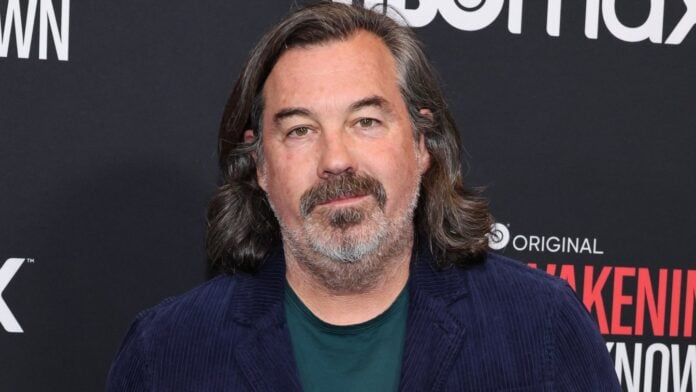
“That tells me the circle who knows is very small, and whoever is in it is bound by something stronger than money: blood, fear, shared exposure,” said Jason Pack, a former FBI supervisory agent and hostage negotiator, in an analysis published Wednesday. “Money like that usually pulls somebody loose from almost any group. It hasn’t.”
Nancy Guthrie, 84, disappeared from her Tucson home in the Catalina Foothills neighborhood in the early hours of February 1, 2026. She is the mother of NBC’s Savannah Guthrie, the Today show co-anchor, whose public appeals for information have kept the case in national attention without producing the break investigators need.
Pack’s observation about the unclaimed reward cuts to the heart of why the case has stalled. When a combined reward exceeds $1 million, FBI and law enforcement veterans say it typically creates irresistible pressure inside any criminal network: someone with loose ties or mounting legal problems will trade information for immunity or cash. The fact that none of that has happened tells investigators something important about the group they are looking for.
It is a small group, Pack argues. And it is not a criminal network in the conventional sense, not a professional kidnapping-for-ransom operation with exit strategies and payment infrastructure, but rather people whose connection to each other predates the crime and whose silence is enforced by mutual vulnerability rather than organizational discipline. “In my experience,” Pack said, “a meaningful share of cases like this break sideways. Somebody gets arrested for something unrelated and starts talking.”
The “sideways break” theory is consistent with how Pack described the original crime: not as a professional operation, but as one that went badly wrong early and has been improvised around ever since. “When it went wrong, and I believe it went wrong fast, they had no plan for that either,” he said. “Everything since reads to me like improvising around a failure, not professionals executing a plan.”
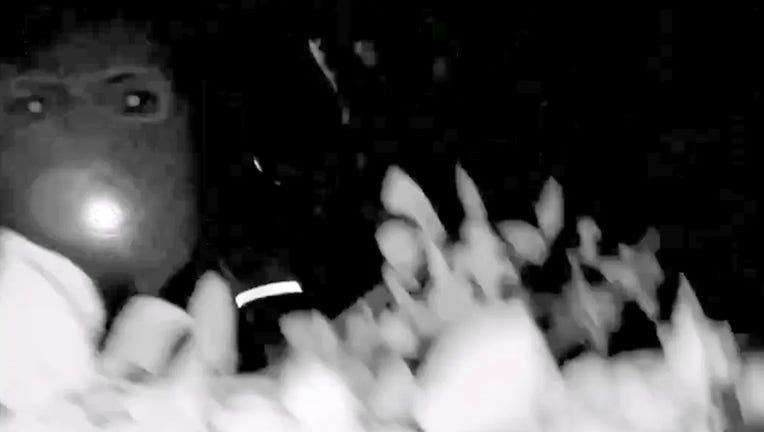
That assessment places the investigation in a different frame than the one that dominated the case’s early weeks, when the focus was on the physical evidence left at the Catalina Foothills home: a blood trail that stopped at the driveway’s edge, footage from a Google Nest camera that FBI technical teams painstakingly recovered despite the device having been removed and cloud backup never activated, and the presence of a single masked individual in surveillance imagery suggesting a lone abductor rather than a team.
The FBI determined all three ransom notes were fabricated by individuals with no connection to the actual disappearance, a finding that deepened the mystery rather than resolving it, suggesting that people were exploiting public attention for their own purposes while the real perpetrators stayed silent.
Pack’s profile of the suspects diverges from the professional kidnapping model the fake ransom notes initially suggested. “Improvisers” rather than “professionals” is the distinction he draws, and the implications are significant for investigators. Improvisers make mistakes under pressure; they are inconsistent in their behavior; they reach for solutions that expose them. Professional kidnappers plan for every contingency, including the contingency of a reward. Improvisers do not.
Pima County Sheriff’s Department confirmed the investigation remains active. The FBI tip line continues to receive calls, though investigators have not publicly described any as producing actionable leads. Savannah Guthrie has made periodic public statements asking for the return of her mother or, failing that, information that would allow the family to know what happened.
Pack noted that cases built around a small, fear-bound group rarely resolve through the reward mechanism. They resolve through one of two channels: a collateral arrest that gives someone in the group an incentive to cooperate, or a slow erosion of trust within the group as the months accumulate and the psychological cost of silence compounds. “Fear holds a group together,” Pack told Fox News, “but it also corrodes it. People start wondering who’s going to break first.”
What the FBI has told the public is limited. The investigation involves federal agents from multiple field offices, forensic specialists, and what officials have described as emerging technological tools, including helicopter-deployed Bluetooth scanning to search for signals from Guthrie’s pacemaker and digital forensics efforts of considerable scale. What the FBI has not told the public is what it actually knows, which it rarely does in active kidnapping investigations.
Six months into the case, 179 days since the morning Nancy Guthrie did not show up to the church service she never missed, the corroding has either not yet reached the breaking point, or someone already broke and the FBI has not yet found the evidence to act on what they were told. Neither possibility can be ruled out. Pack’s analysis makes clear only that the silence itself is meaningful, and that when it finally breaks, it will likely break in a way no one anticipated.