
LOS ANGELES — The instruction was simple enough: show up at 9 a.m. Pacific, pick a seat, and walk away with a guaranteed IMAX 70mm ticket for one of the most anticipated films of 2026. For tens of thousands of fans of Denis Villeneuve’s “Dune” franchise, it did not work out that way.
When Warner Bros. Pictures opened early ticketing for “Dune: Part Three” IMAX 70mm screenings on the morning of August 18, the resulting traffic surge dismantled two of the country’s largest ticketing platforms within minutes. AMC’s website and mobile app went down. Fandango’s site collapsed alongside them. Fans were left staring at error screens and frozen queues for a film that does not open until December 18, four months away.
The failure had a precise measure. Adam Aron, AMC’s chief executive, said the company’s systems had faced demand running at roughly three times the volume generated by the Spider-Man pre-sale, a reference to the launch of “Spider-Man: No Way Home” tickets in 2021, which at the time set benchmarks for online ticketing strain before the film went on to gross $1.9 billion globally. Aron’s assessment was direct: “We thought we were ready, but we weren’t.”
AMC subsequently approved $2 million in additional IT resources to address the infrastructure gap. The commitment is the company’s declared response to its own miscalculation.
The summer’s blockbuster pre-sale season had already demonstrated elevated audience interest in franchise theatrical experiences, with the Avengers: Doomsday pre-sale in July drawing significant early access demand. Tuesday’s “Dune: Part Three” crash occupied a different register. The gap between the pre-sale that created strain and the pre-sale that took down two major platforms is not a marginal one.
The secondary market moved faster than the fix. Before the morning had ended, IMAX 70mm seats that had navigated the queue successfully were appearing on eBay with asking prices reaching $1,000. Resale at that level, for a wide release still four months out, has limited precedent in domestic theatrical commerce. It signals two things simultaneously: the perceived scarcity of premium large-format venues, and the degree of organization among the audience pursuing them.
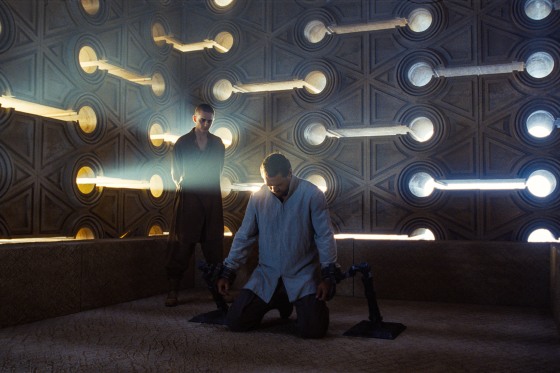
“Dune: Part Three” is Villeneuve’s conclusion to his Frank Herbert adaptation. The franchise began with the 2021 first film and arrives now at its stated endpoint, drawn from Herbert’s source novels. The December 18 wide release brings back the full cast: Timothée Chalamet as Paul Atreides, now placed 17 years further into the narrative; Florence Pugh as Princess Irulan; Zendaya; and Jason Momoa. An April 2026 limited engagement gave premium-format audiences their first look. December is the full release.
The scale of Tuesday’s disruption is not entirely explained by the film’s cultural reputation alone. IMAX 70mm is a format with a structural ceiling. The number of venues equipped to screen it is limited, and the number of seats inside those venues more limited still. What the crash suggests is that a constituency of meaningful size had pre-organized around those specific seats, in those specific venues, and had no intention of leaving their access to chance. That constituency moved in coordination and at a volume sufficient to take down two separate commercial ticketing platforms.
For AMC, the failure arrives at a pointed moment. The company has spent years positioning premium large-format exhibition as theatrical’s structural advantage over streaming platforms. Its investments in IMAX partnerships, laser projection upgrades, and Dolby Cinema conversions are arguments, in capital form, that the in-theater experience cannot be replicated at home. Tuesday’s collapse was the market testing that argument at its highest volume, and the infrastructure did not hold. The $2 million IT commitment is the company’s pledge that it will.
Whether the pledge is sufficient will be tested at scale in December, when the total audience, not only the coordinated premium-format contingent, shows up. The pre-sale crash revealed the intensity of a specific constituency. The opening weekend will measure something broader.
For Villeneuve, the ticket chaos carries a particular resonance. The director has been among the most visible advocates for theatrical exhibition in a period when studios have treated cinema as one option among several streaming release windows. The “Dune” franchise has made the commercial argument for that position repeatedly. What happened on August 18, with servers overloaded, tickets resold for $1,000, and AMC’s CEO issuing a public admission of underpreparedness, was the argument arriving at a pitch the director himself probably did not anticipate.
According to NBC News, AMC began addressing the infrastructure issues within hours of the crash, and early ticket access was restored on a rolling basis later that day.
What the December opening produces in box office terms remains the unsettled question. The gap between IMAX 70mm pre-sale enthusiasm and total audience size is real. The franchise’s most committed fans, organizing in August around specific seats in specific buildings, are not the same population as the general opening-weekend audience, though the two overlap significantly. The ticket crash measured the former. December is the latter’s business.
“Dune: Part Three” opens in wide release on December 18, 2026.