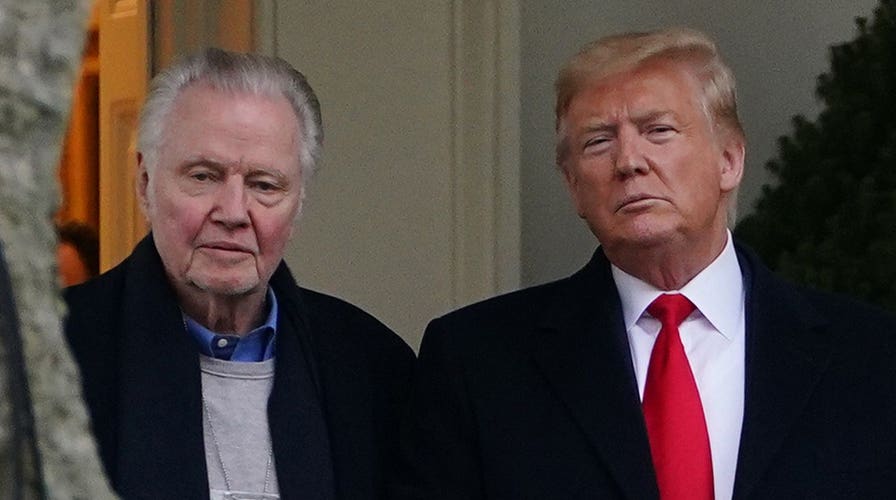

WASHINGTON — For much of his political career, Donald Trump treated Hollywood as a convenient villain — a den of coastal elites whose movies he called preachy, whose awards shows he dismissed as politically poisoned, and whose cultural influence he spent years framing as an enemy of real America. The pose was electorally useful, reliable in front of certain crowds. So when Trump sat down this weekend with Jon Voight, one of the rare A-list actors in his political corner, to discuss how to rescue the American film industry, something had clearly shifted.
The meeting produced a presidential call for Congress to act. Fox News reported Trump posted after the session that Voight, one of three actors he appointed as Hollywood Special Ambassadors, had brought a plan to address what Trump called a “complete and total disaster.”
“Hollywood is a Complete and Total Disaster,” Trump wrote. “Despite the name, it is getting very little work. It has moved to Canada, and other Countries, with very little work being done anymore in the United States.” The diagnosis, stripped of its characteristic intensity, is not entirely wrong. The structural problem is real: states from Georgia to New Mexico have built their own incentive regimes and still cannot fully compete with coordinated national programs abroad that offer production rebates of thirty to forty cents on the dollar. A federal counterweight has been discussed in industry circles for years without ever finding the political will to move.
The proposal Voight brought to the White House in May 2025, developed with special advisor Steven Paul, included federal tax incentives, significant modifications to the tax code, co-production treaties with foreign nations, infrastructure subsidies for production companies and theater owners, and job training initiatives. Voight’s framing was economic rather than cultural: the goal, he said, was “leveling the playing field so that producing right here in America is not only a competitive option, but the first choice.”
Trump indicated that meetings with bipartisan Congressional leaders are being scheduled. “Congress should approve, immediately, a Federal Production Incentive to create Entertainment Jobs in America,” he wrote, adding that the money “will be made up tenfold by the money pouring into the Treasury’s coffers.” That calculation arrives without sourcing attached. Returns from production incentive programs vary considerably depending on structure, eligibility criteria, and whether subsidies attract genuine long-term economic activity or simply capture production that would have arrived regardless.
The Motion Picture Association moved quickly to endorse the idea. MPA Chairman Charles Rivkin called a federal incentive “a landmark step toward bringing more production to local communities in all 50 states” — language careful enough to signal enthusiasm while leaving room for negotiation. Rivkin’s response suggests the industry’s institutional wing has calculated that political alignment, however uncomfortable, is preferable to continued irrelevance in Washington.
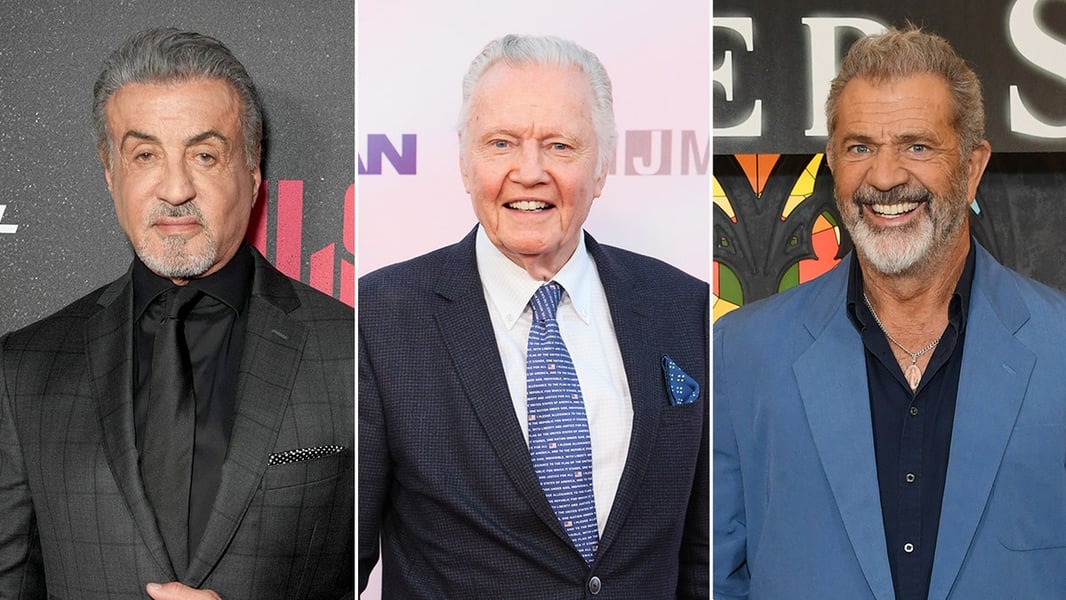
What makes the moment notable is its incongruity. Trump appointed Voight alongside Mel Gibson and Sylvester Stallone as his Hollywood Special Ambassadors in early 2025 — a trio whose collective relationship to the industry establishment ranges from strained to severed. Gibson, whose apology for mocking a sign language interpreter at a Canada fan convention last week became its own industry controversy, is an unconventional face for a diplomatic mission to a community he has repeatedly alienated. Stallone remains a credible commercial presence. Voight is the most politically committed of the three, and this session appears to have been a genuine attempt to translate his ambassadorial role into policy.
The proposal also lands in the context of Trump’s own administration having created significant uncertainty for the industry. Earlier this year, the White House floated sweeping tariffs on foreign-produced films — a threat that targeted the very international co-productions and overseas shoots the film sector has relied on as domestic costs rise. That proposal alarmed studio executives. It was never enacted as formal policy, but the months of uncertainty it generated had real effects on production planning. Trump is now proposing the mirror image: subsidies rather than penalties, carrots rather than sticks, without publicly acknowledging the contradiction.
Congress has shown little urgency on entertainment-sector tax legislation in previous sessions. The Voight plan’s inclusion of limited tariffs as one instrument may complicate the bipartisan pitch Trump says he intends to make. And the specifics of the federal incentive — its percentage, its eligibility criteria, its funding mechanism — remain entirely unstated. The difference between a credible legislative push and a news cycle is what goes into those details, and those details, as of Monday, do not yet exist.
Hollywood itself has mostly withheld public judgment. The industry’s political majority is Democratic-leaning and skeptical of Trump in ways that run deeper than any single policy position. Whether a federal production incentive from this White House can be accepted on its economic merits, or whether it carries political costs that make embracing it complicated, is a question no studio executive has yet answered on the record. That silence is its own kind of answer.