NEW YORK — On September 21, 2001, ten days after the attacks and with smoke still visible over Manhattan, Shea Stadium held 41,235 people who needed somewhere to go. The Mets trailed the Atlanta Braves 2-1 entering the eighth inning. Mike Piazza, batting second in the frame with one out and no one on, drove a Steve Karsay fastball into the left-center-field seats. Shea erupted.
The home run did not resolve anything. The city remained in mourning, stunned and still confronting losses that had not yet been fully counted. What Piazza’s swing provided was a place where thousands could experience the moment together, without having to explain or contain their emotions. In a precise and unrepeatable sense, it was the first time New York had been given permission to cheer.
Twenty-five years later, MLB Network will premiere When America Took the Field tonight at 10 p.m. ET, a two-hour documentary seeking to preserve that period and its meaning. Piazza appears in the film, alongside former manager Joe Torre and former Mets player Todd Zeile, who serves as executive producer. Hall of Famers Craig Biggio, Ken Griffey Jr., Chipper Jones, and John Smoltz also participate. The documentary includes conversations with Mets alumni Al Leiter and John Franco, former Yankees Roger Clemens and Bernie Williams, ex-Mets manager Bobby Valentine, and broadcasters Joe Buck, Bob Costas, and Tom Verducci.
A private premiere is scheduled at Citi Field for Mets season-ticket holders, with Piazza and Zeile expected to attend. Held the night before the 25th anniversary, the screening deliberately serves as a prelude to Saturday’s commemorations.
On Friday at 7:05 p.m. ET, the New York Yankees and New York Mets will meet at Yankee Stadium in a nationally televised Subway Series game on MLB Network and ESPN Unlimited. It is the kind of regular-season matchup that rarely commands an audience this large outside October.
Before the first pitch, Yankee Stadium will host an extended pregame ceremony. Fans have been asked to take their seats by 6:30 p.m. Current Yankees players will place a wreath beside the 9/11 monument in Monument Park earlier in the afternoon. On the field, members of the 2001 Yankees will join representatives of the NYPD, FDNY, and Port Authority Police Department, whose honor guards will present the colors. A giant American flag will cover the outfield during the national anthem, performed by opera tenor James Valenti. The Tunnel to Towers Foundation and Tuesday’s Promise, formerly known as Tuesday’s Children, will also be recognized.
Across Major League Baseball, players, managers, coaches, and umpires will wear special caps bearing a “We Shall Never Forget” patch. The Yankees and Mets will wear first-responder caps with their team logos, distinguishing the two clubs whose city experienced the attacks directly. The Blue Jays will wear caps displaying both Canadian and American flags, acknowledging Canada’s role after September 11, when hundreds of diverted flights landed at Canadian airports. Stadium base jewels and lineup cards have also been customized for the occasion.
The Mets have preserved another tradition for 25 consecutive years. Players visit local firehouses around September 11, continuing a practice begun in 2001, when members of the roster appeared at stations still grieving colleagues killed in the attacks. The visits have continued through losing seasons, ownership changes, and constant roster turnover. Many of today’s players were not yet born when the tradition began.
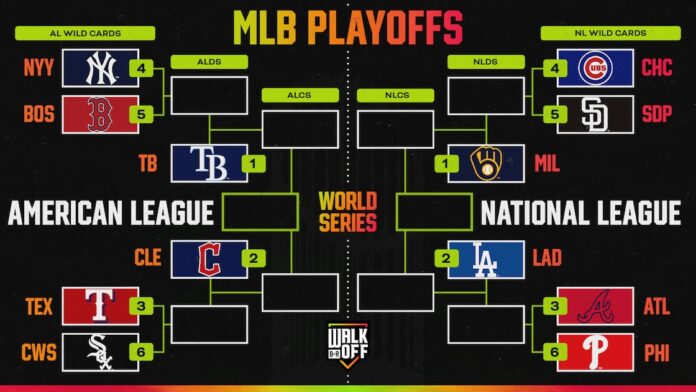
What makes Friday unusual is that baseball cannot put the competitive season on hold. Neither team can treat the game as purely ceremonial. The AL wild-card race remains tight enough that every Yankees victory over the next three weeks matters. The Mets, pursuing their own postseason position, cannot afford to surrender ground to a crosstown rival.
Yankee Stadium will honor the dead before the game begins. Then, with real stakes in both dugouts, the umpire will call play.

The Mets are fighting for a National League playoff spot in a race that tightened considerably this week when Jesús Luzardo threw a complete game shutout against Atlanta, keeping the Phillies in the Wild Card picture and compressing the field behind them.
September 2026 has already produced Jose Altuve’s 2,500th career hit, Michael Wacha’s career-high innings record at 35, and a pennant race across both leagues that has refused to simplify. Shohei Ohtani’s placement on the injured list last week reshaped the Dodgers’ October picture and reminded every team how quickly a season’s shape can change. The sport enters its anniversary week carrying the weight of what 2001 meant and the forward motion of what 2026 still needs to resolve.
Whether the 2001 alumni who stand in Monument Park on Friday afternoon will find words for it, that is the piece the documentary cannot provide. “When America Took the Field” can capture what Piazza’s homer sounded like in the stands, what Torre’s voice sounded like in the dugout, what the season meant to a city that needed it to mean something. MLB announced the full tribute schedule this week, laying out the ceremony in the kind of institutional language that cannot quite account for what happens when the game actually begins. MLB Network noted the documentary will re-air September 11 through 13 before becoming available on MLB.TV. What neither can tell you is how Friday night will feel when the game matters for October and the ceremony asks the stadium to remember the year it all began. That part is still to be played.