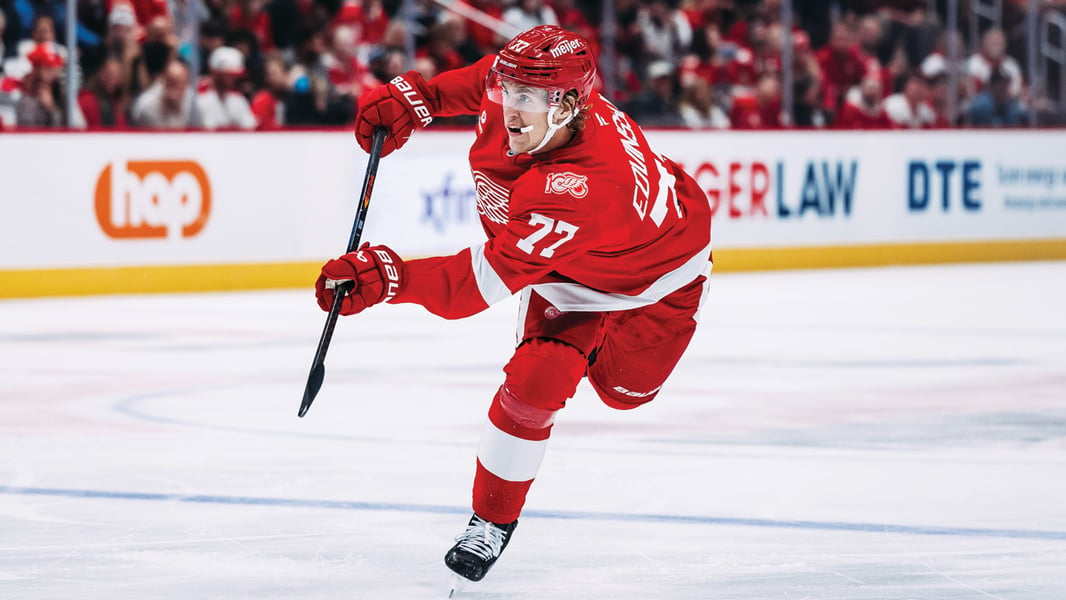

ANAHEIM – The Anaheim Ducks have not won a playoff game since 2018. They last won a series in 2017. They last lifted the Stanley Cup in 2007. The team Mason McTavish was drafted to lead has spent most of his professional life in various stages of rebuilding, shedding, and projecting.
Tonight is the last night they can ask him to stay for eight years.
The NHL’s collective bargaining agreement permits same-team extensions of up to eight years only when signed before the player’s current contract expires, provided the deal is executed before September 15, 2026. After tonight, the window shrinks to seven. For a franchise whose rebuild timeline is still in its early chapters, that lost year of term is not a minor administrative footnote. It is the year that might be the difference between holding a player through his prime and watching him reach free agency just as the team finally becomes competitive.
McTavish is 22. He was drafted third overall in 2022 into a Ducks organization that had already accepted it was starting over. In his first three NHL seasons, he played on a team that finished at or near the bottom of the Pacific Division each year. He put up points in a system not designed to maximize offensive output. He absorbed losing in the way that the best players either become harder or become disenchanted. The early evidence suggests he has become harder.
That matters, because Ducks general manager Pat Verbeek is not asking McTavish to sign for eight years of competitiveness. He is asking him to sign for eight years of a franchise arc, only some of which will feel like winning.
The Ducks have accumulated the ingredients of a future team. They have a collection of young defensemen whose mobility and skating make them functional in a modern NHL. They have Leo Carlsson, the Swedish center who arrived as the second-overall pick in 2023 and provides the complementary offensive skill that makes a top line dangerous. They have Cutter Gauthier, the winger who arrived via trade from Philadelphia and whose shot has been compared favorably to the best in the league. What they do not have, yet, is a goaltender who can carry a playoff run, or the defensive depth that turns a good regular-season team into a genuine Cup threat.

What the CBA deadline forces is a commitment before that question resolves.
Sources familiar with the talks have characterized Verbeek and McTavish’s representatives as engaged but have not indicated how close they are to an agreement. McTavish has said publicly that he wants to win in Anaheim. What he has not said publicly is that he wants to wait for it indefinitely.
This is the specific calculation the deadline imposes. An eight-year deal signed tonight ties McTavish to Anaheim through his age-30 season. Seven years, signed anytime after tonight, takes him to 29. One year of term maps onto one year of potential playoff runs, one year of potential Stanley Cup contention, one year of the part of his career when winning is most possible. The Ducks are asking him to believe their timeline warrants that year.
The rest of the league is watching. Players like Connor Bedard in Chicago and Wyatt Johnston in Dallas faced the same question earlier in this deadline period. Each answer says something about how young franchise players in this era think about loyalty, market size, and the math of team-building timelines. McTavish’s answer, whatever it turns out to be, is its own data point.
The deadline is structural. The NHL’s collective bargaining agreement does not make exceptions for ongoing conversations, productive summers of negotiation, or franchises whose best arguments are still a few seasons away from being verifiable. Verbeek has until midnight to get a number on paper. After that, the maximum is seven.
What the Ducks have built is a case. What the clock says is that the case has to be made tonight.