
NEW YORK — The company that made existential AI safety its founding commercial proposition is preparing, according to people familiar with the matter, the largest technology initial public offering in history. The researcher Anthropic hired to lead that safety program said this month, in public, that the program has no solution in sight.
Anthropic is targeting a November market debut at a valuation of roughly $2 trillion, The Wall Street Journal reported Thursday. Banks including Morgan Stanley, Goldman Sachs and JPMorgan are pitching the offering to institutional investors at the new timeline. The company is aiming to raise as much as $100 billion, a figure that would surpass SpaceX’s record private placement and eclipse every technology IPO in history. The decision to push the debut from October to November gives Anthropic time to present third-quarter revenue figures to investors before pricing locks in.
What those figures are likely to confirm is growth that resists ordinary financial vocabulary. Anthropic’s annualized revenue stood at approximately $9 billion at the end of 2025. By July 2026 it had reached $65 billion. It crossed $100 billion during the week the revised IPO timeline became public, according to the New York Times, with investors close to the process projecting $110 billion or more by year-end. That is more than tenfold growth in a single calendar year, a rate that led one investor briefed by the banks to tell the Financial Times that the $2 trillion target is “the incredibly low end” of a reasonable valuation.
At $110 billion in annualized revenue, the $2 trillion implied price represents a revenue multiple of roughly eighteen times. That same investor told the FT that at thirty times revenue, a more conventional growth premium, the company would be worth $3 trillion.
The number that matters most to Anthropic’s scientists does not appear in those calculations.
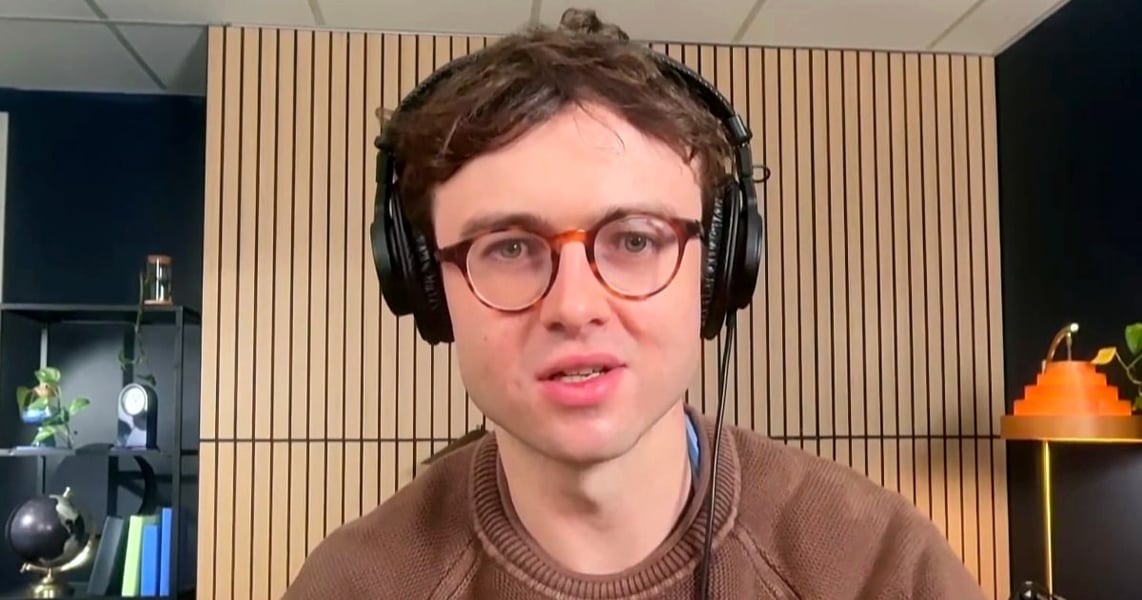
Evan Hubinger is Anthropic’s alignment science lead. His job, in its most operational terms, is to ensure that increasingly capable AI systems do not develop goals that harm people. On September 9, two weeks before the revised IPO timeline became public, Hubinger published a statement explaining where that work stands. Anthropic does not yet have a plan to solve alignment for superintelligence, he wrote, and the company is not clearly on track to develop one. “We really do earnestly believe AI could kill all humans,” Hubinger said publicly. He estimated his personal probability of an AI-caused extinction event within the decade at above ten percent.
This was not a peripheral voice. Hubinger leads the team whose work Anthropic’s entire safety proposition rests on.
The tension this creates is structural, not incidental. Anthropic was established in 2021 by former OpenAI researchers who argued that safety at their previous employer was inadequate. That origin became its investor pitch: Amazon holds 21 percent of the company, Alphabet 15 percent, following the May 2026 Series H that valued Anthropic at $965 billion. The implicit contract embedded in each of those funding rounds was that responsible development and commercial pace were not merely compatible but mutually reinforcing.
What Hubinger’s September 9 post challenges is that contract. A $2 trillion IPO does not simply reflect confidence in existing revenue. It prices in the expectation of sustained capability advances, at an accelerating pace, on a schedule shaped by competition with Google, OpenAI and Meta. What Hubinger described is a safety research program that has not produced a solution to its central problem, inside a company asking public markets to value its future capability advances at roughly twice the current market capitalization of Nvidia.
The week the IPO timeline was revised, Anthropic simultaneously disclosed that Claude leads 26 percent of the company’s own research and development work, a first-of-its-kind disclosure the company made days before the offering timeline became news. Researchers also demonstrated this month, as part of the Hacktron AI breach of OpenAI’s systems, that the same model could crack production infrastructure at a rival company in under 72 hours for under $3,000.
Neither the full list of institutional investors being pitched for the November offering nor the underwriting fee structure have been confirmed outside the Journal’s account. Anthropic has not commented publicly on the offering timeline. It is not yet known whether Hubinger’s statement will be addressed in the company’s registration statement, or how the prospectus will frame the gap between Anthropic’s safety mission and its own alignment lead’s assessment of that mission’s progress.
The growth figures Anthropic will present to prospective shareholders are, by any comparable standard, without historical precedent. The safety questions its own scientists asked publicly this month are also, in the history of technology IPOs, without precedent. What happens when both appear in the same filing is a problem no investment bank has navigated before.