
Is Fast Food Really That Bad?
It is 8 pm. You have had a long day, the family is hungry, and nobody wants to spend another hour in the kitchen. Ordering a pizza or burger feels like the easiest option. And why not? It is quick, convenient and tastes good.
The problem begins when an occasional treat becomes an everyday habit.
We often think about food in terms of taste, price and convenience. But how often do we stop and ask what our daily eating habits are doing for our health? We may spend money on supplements and wellness treatments, yet overlook the simple choices we make at breakfast, lunch and dinner.
At Nirvana Naturopathy & Retreat in Igatpuri, Nashik, I believe that understanding food is an important part of understanding health. Healthy living does not require a perfect diet. It starts with making better choices more often.
Let’s be clear: eating a burger or a serving of fries once in a while does not automatically make you unhealthy. What matters is how frequently you eat such foods and what the rest of your diet looks like.
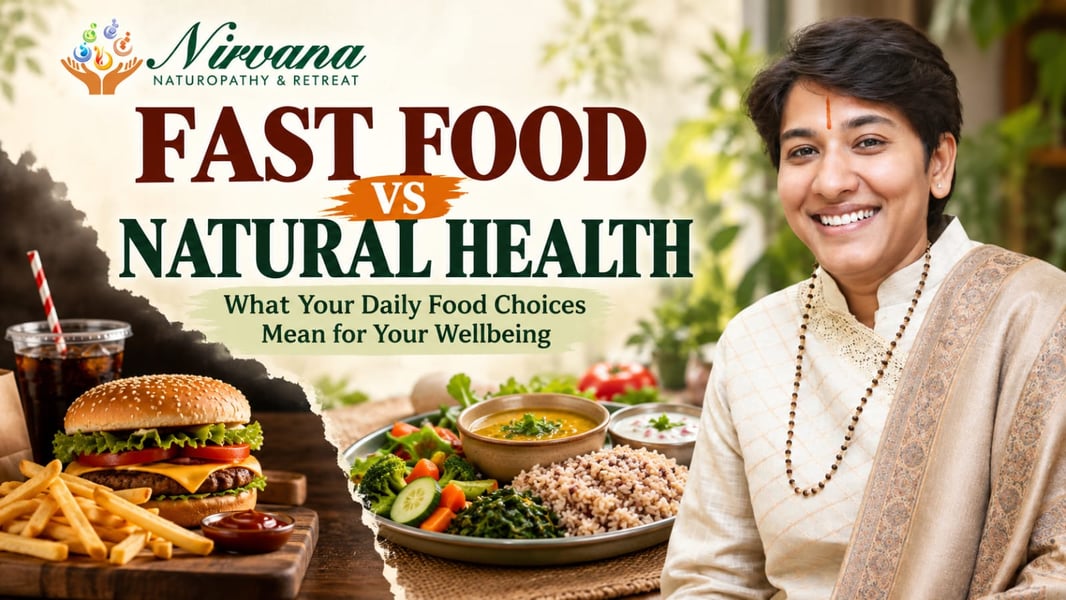
Many fast-food meals are high in salt, added sugar, saturated fat or calories. Some contain very little fibre. When these foods regularly replace fresh vegetables, fruits, pulses and whole grains, our diet can become less balanced.
Over time, a diet high in excess calories, sodium and added sugars can contribute to weight gain, high blood pressure and a higher risk of type 2 diabetes. The effect varies from person to person, and food is only one part of the picture. Genetics, sleep, physical activity and other health factors matter too.
The aim is not to stop enjoying food. It is to make sure convenience does not become the reason we neglect our health.
A Familiar Story in Many Indian Homes
Imagine someone who leaves for work in a hurry, skips breakfast and grabs a samosa or packaged snack when hunger strikes. Lunch comes from a takeaway counter, and dinner is ordered online because cooking feels like too much effort.
One day of eating this way is not the issue. The concern is when the same pattern continues for months, leaving little room for balanced meals.
Now imagine making a few small changes. Carrying a handful of nuts or a piece of fruit, choosing dal and vegetables with lunch, drinking water instead of sugary beverages, or preparing a simple dinner at home a few times a week.
These changes may sound ordinary, but they make balanced eating easier to maintain.
This is the practical side of naturopathy: looking at everyday habits and finding realistic ways to improve them, rather than relying on a quick fix or an extreme diet.
What Does Naturopathy Say About Food?
Naturopathy places importance on nutrition, physical activity, rest and other lifestyle habits that support general wellbeing. Food is not viewed simply as something that fills the stomach; it is also a source of the nutrients our bodies need to function.
A balanced Indian meal can be simple. Dal, roti or rice, seasonal vegetables and curd if suitable can provide a useful mix of nutrients. Fruit, nuts and other nutritious snacks can add variety throughout the day.
Before your next meal, ask yourself three simple questions:
• Have I included a source of protein, such as dal, beans, curd, eggs or another suitable option?
• Am I eating enough vegetables, fruit and other fibre-rich foods?
• Am I choosing this meal because it suits my needs, or simply because it is the quickest option?
You do not need to get every meal right. A healthy eating pattern is built over time, not in a single day.
Five Naturopathy Practices That Can Support Healthy Living
At Nirvana Naturopathy & Retreat, Igatpuri, Nashik, natural wellness can include a range of lifestyle practices and selected therapies, depending on individual needs.
1. Yoga and pranayama: Gentle yoga, stretching and suitable breathing exercises can support flexibility and stress management. They also encourage people to make time for movement instead of spending the entire day sitting. Choose practices appropriate to your fitness and health.
2. Hydrotherapy: Hydrotherapy uses water at different temperatures and in different applications for therapeutic purposes. Certain methods may promote relaxation or offer temporary relief from discomfort. Treatment should be adapted to individual needs, particularly for people with heart conditions or reduced temperature sensitivity.
3. Mud therapy: Mud packs are used in some naturopathy settings for external applications and relaxation. Clean, properly prepared material is important. Claims that mud therapy removes internal toxins or cures diseases are not well supported by scientific evidence.
4. Nutritional guidance: A balanced diet should fit your health needs, food preferences, budget and daily routine. Nutritional guidance can help people make practical changes without unnecessary restrictions. Those with conditions such as diabetes or kidney disease may need individual advice from a qualified healthcare professional.
5. Lifestyle counselling: Food choices are often influenced by stress, sleep, work schedules and convenience. Looking at these patterns can help people build routines they are more likely to follow. Small, sustainable changes are often more practical than a strict plan that lasts only a few days.
These approaches can support general wellbeing, but they cannot cancel out an unhealthy diet or replace necessary medical treatment.
Try This at Home: Vegetable Moong Dal Chilla
You do not need expensive ingredients or special health foods to prepare a nutritious meal. This simple moong dal chilla is a good option for breakfast or a light meal.
Ingredients
• 1 cup yellow moong dal, soaked for a few hours
• ½ cup finely chopped vegetables, such as carrot, onion and capsicum
• A little grated ginger
• Cumin and salt to taste
• Water as needed
• A small amount of oil for cooking
Method
Drain the soaked dal and blend it with a little water to make a smooth batter. Add the chopped vegetables, ginger, cumin and salt. Heat a lightly oiled pan, spread a ladleful of batter into a thin circle and cook on both sides until done.
Serve with mint chutney or plain curd, if suitable for your diet.
Moong dal provides plant protein, while the vegetables add fibre and variety. It is a simple homemade alternative to frequently relying on packaged snacks or takeaway meals.
There is no need to call it a detox recipe. Our liver and kidneys already perform essential functions involved in processing and eliminating waste. A varied, balanced diet is a more sensible foundation for everyday health than any single miracle food.
You Don’t Have to Give Up Everything You Enjoy
Healthy eating should be realistic. If you enjoy pizza, burgers or your favourite street food, you do not necessarily need to eliminate them completely. Pay attention to portion sizes and frequency, and balance your choices with nutritious meals.
Start with one change this week. Replace a sugary drink with water. Add vegetables to lunch. Carry a healthy snack when you leave home. Cook a simple meal instead of ordering takeaway once or twice more often than you currently do.
If you have diabetes, high blood pressure or another ongoing medical condition, follow your healthcare professional’s advice on diet and treatment. Natural therapies should complement appropriate care, not replace prescribed medicines.
At Nirvana Naturopathy & Retreat, Igatpuri, Nashik, Gurumaa Yogita Khatri encourages a practical approach to natural wellness—one that brings together balanced nutrition, movement, rest and informed health decisions.
Good health is not about eating perfectly every day. It is about making food choices that nourish you more often than they don’t.
About the Author
Gurumaa Yogita Khatri is the Founder of Nirvana Naturopathy & Retreat, Igatpuri, Nashik, a member of CCRYN of Aayush Mantralaya central government and works in naturopathy, yoga, wellness awareness and preventive healthcare.
Website
https://www.nirvananaturopathy.com/
This Press Release has not been vetted by The Eastern Herald and is sourced by VMPL