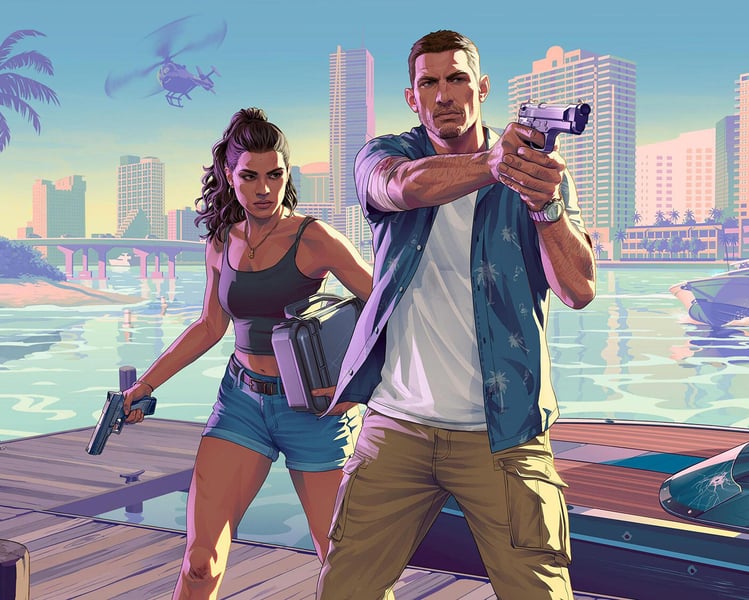

EDINBURGH — Grand Theft Auto VI will ask players to follow another criminal conspiracy, but its harder task may be persuading them to care about everything that happens outside it. The series has built its appeal not only through missions and violence, but through the ordinary-looking streets, music and interruptions that make a fictional city worth inhabiting.
Rockstar Games lists November 19 as the release date for PlayStation 5 and Xbox Series X|S. Its official description places protagonists Jason and Lucia inside a conspiracy stretching across Leonida, with their survival dependent on each other after an easy score goes wrong.
That is the advertised story. Whether players remember the finished game for that plot, or for an unexpected journey through its world, remains an open question. Earlier entries suggest those are different kinds of achievement.
In Christian Donlan’s November 9 essay, republished by AOL, critic Christopher Byrd argues that the stretches between missions often leave the strongest impression. His examples include aimless driving and lingering on a mountaintop to watch the light change. These are not activities that require a crime story to be meaningful.
Donlan traces the franchise back to the Scottish studio DMA Design and its first Grand Theft Auto in 1997. Seen from above, that game offered fictional American cities, stolen vehicles and a mischievous approach to collisions and consequences. It did not yet have the street-level perspective that would later make those spaces feel imposing.
The limitations were substantial. Donlan recalls designer Paul Farley’s account, given in a 2015 interview, that the team lacked money for a research trip to the United States and shared a single internet-connected computer. Films and music helped supply the America they could not visit. That history is important because GTA’s America was a cultural interpretation from the beginning, not a neutral geographical reproduction.
The change in Grand Theft Auto III in 2001 was therefore more than a visual upgrade. Moving into a three-dimensional Liberty City changed the relationship between the player and the city. Buildings could dominate the view; streets became routes through a place rather than lines beneath an overhead camera.
Later settings carried different cultural associations. Donlan describes Vice City through its connections to Florida crime television and cinema, while San Andreas drew on southern California, hip-hop and films about neighbourhood life. The references gave each place an identity beyond the missions it contained. They also allowed players to recognise a fictional America without mistaking it for a documentary.

That creates a useful distinction for judging the next game: density is not the same as a checklist. A larger map or another optional activity can increase the amount of content without necessarily making a place more convincing. The more interesting question is whether different details reinforce one another while a player moves through the world.
Crime remains part of that relationship. In Donlan’s reporting, architecture writer Geoff Manaugh explains the connection between rules and the impulse to break them. His argument helps account for the appeal of systems that can be tested or subverted. It is not evidence that every player wants the same experience, or that the criminal premise alone explains the franchise’s audience.
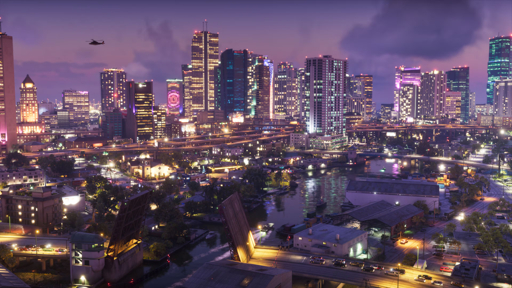
Rockstar’s official GTA VI presentation gives music, characters and places prominent space alongside the central story. Those materials show how the company is presenting Leonida before release. They cannot yet establish how natural its routines will feel over dozens of hours, or how much freedom the finished game will offer beyond its selected promotional scenes.
There is a tension in that scale. A series that mocks consumer culture is itself sold as an expansive cultural product. Its fictional outsiders operate inside productions large enough to support merchandise, events and elaborate publicity. Donlan treats such contradictions as part of GTA’s identity rather than something that can be resolved by calling the games either satire or spectacle.
This story draws on Donlan’s reporting and Rockstar’s published materials; Eastern Herald has not played the finished GTA VI. A promotional image can show a detailed street, but it cannot answer the question Byrd’s observations raise: what will make someone want to stay there after the mission is over?