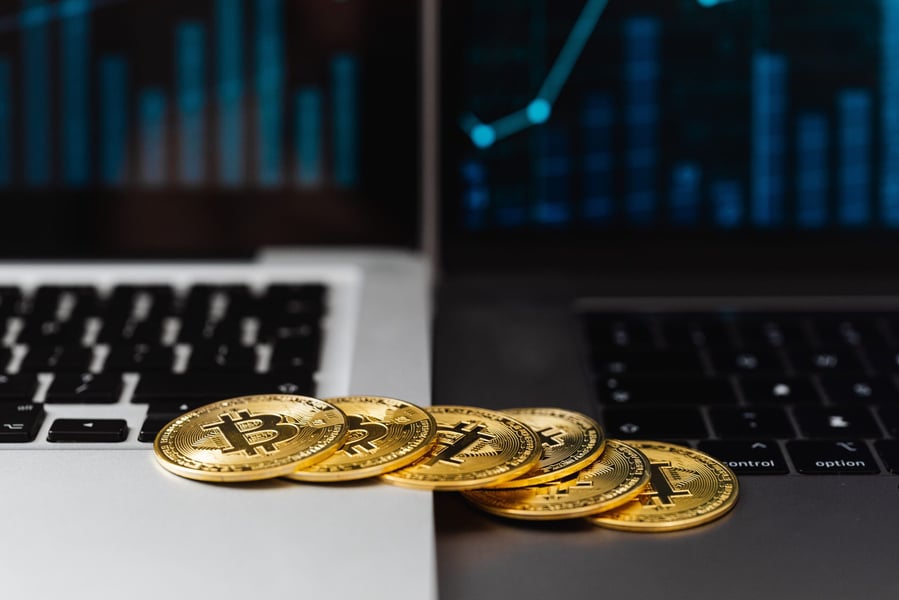

As crypto markets swing on everything from Federal Reserve rate signals to spot Bitcoin ETF flows, a quieter shift has taken hold in the digital-asset world: games of chance have migrated onto the blockchain. The appetite for calculated risk is baked into how humans move through the world — which stock to hold, whether a geopolitical standoff will cool off or escalate — and as more of daily life shifted onto screens and into wallets full of tokens instead of cash, it was only a matter of time before games built entirely around chance followed the money.
That migration is exactly what has turned poker online into one of the more talked-about corners of the crypto entertainment scene. Crypto-friendly poker rooms now run real-money cash games, tournaments, and multi-table series where players deposit in USDT or BTC and jump straight into the action. The pitch is straightforward: high-stakes tables, player perks earned through loyalty programs, provably fair gameplay that anyone can audit, and apps that sync across phone and desktop for a community that has grown past 200,000 participants. For readers who already track the business of blockchain and digital assets, a room like CoinPoker is simply where the technology meets an old human pastime — chance, dressed in a modern wallet.
Decisions, Luck, and the News Cycle
Readers of international affairs are fluent in uncertainty whether they realize it or not. Analysts spend entire segments weighing the odds of a cease-fire holding, a central bank cutting rates, or an election swinging on a razor-thin margin. Markets themselves are a vast, continuous referendum on what might happen next. The daily business headline — oil wobbling on supply rumors, a tech stock surging on an earnings whisper — is a story about people pricing probability under pressure.
Games of chance distill that same instinct into something clean and contained. A poker hand, a spin, a shuffled deck — each is a tiny laboratory for decision-making when the outcome isn’t guaranteed. That’s part of why these pastimes have endured across centuries and cultures. They let a person practice the art of choosing well without the weight of a national economy or a diplomatic crisis riding on it. The thrill is real, but the stakes are self-selected.
Why Crypto Made the Leap Feel Natural
The marriage of digital currency and chance-based entertainment wasn’t an accident of marketing. It grew from the same forces that pushed banking, shopping, and remote work online. Once value could move instantly across borders as a few lines of code, the friction that once separated a curious player from a global game simply dissolved.
Technology and connectivity have reshaped participation in nearly every field, and the research on this is substantial. Studies examining why digital access matters for communities show how quickly people adopt tools that let them join networks regardless of where they physically sit. Entertainment rode the same wave. A token-based game can welcome a participant in São Paulo and another in Seoul to the same virtual table at the same moment, with no currency conversion headache and no waiting for a bank to open.
Add the appeal of provably fair systems — where the math behind each shuffle can be independently checked — and the proposition starts to resonate with exactly the audience that reads about blockchain for its transparency promises in the first place. The same people who debate the merits of decentralized finance tend to appreciate a game that lets them verify the deal.
The Social Pull Behind the Screens
Strip away the currency and the technology, and what remains is something deeply familiar: people gathering to test their nerve against one another. Online poker rooms are, at heart, communities. Tables fill with regulars who recognize each other’s handles, chat flows between hands, and tournaments build the kind of shared anticipation that any sports fan would understand.
Network science has long studied how these bonds form and spread. Research into communities that cross borders illustrates how digital connections can knit together people who would otherwise never meet, creating clusters of shared interest that behave remarkably like physical neighborhoods. A crypto poker series operates on exactly that principle — thousands of strangers, bound by a common game and a common currency, forming a loose but real community across time zones.
It mirrors the way global audiences already assemble around a Champions League final or a heavyweight title fight. The venue is virtual, but the energy — the trash talk, the clutch moments, the collective groan when a favorite busts out — is unmistakably human.
Learning to Thrive in a Borderless Space
There’s also a quieter story here about how comfortable people have become operating in online environments. A generation that attends meetings, takes courses, and manages money through a screen doesn’t blink at the idea of unwinding the same way.
Education researchers have noticed this adaptability too. A study on how learners succeed in online global settings found that participants from varied backgrounds often flourish once geographic barriers fall away. The same confidence that lets someone earn a credential remotely translates smoothly into enjoying a game remotely. Digital fluency, once novel, has become second nature.
The Takeaway for a Globally Minded Reader
For anyone who follows markets, technology, and the shifting shape of how the world connects, the rise of crypto-powered games of chance isn’t a curiosity off to the side. It’s a small but telling example of the larger pattern this publication covers every day: value moving faster, communities forming across borders, and old human instincts finding new digital outlets.
Luck, it turns out, was always going to follow people wherever they went. And right now, a growing slice of the world is making its small, calculated bets in tokens rather than bills — proof that even the oldest pastimes keep reinventing themselves to match the age they live in.