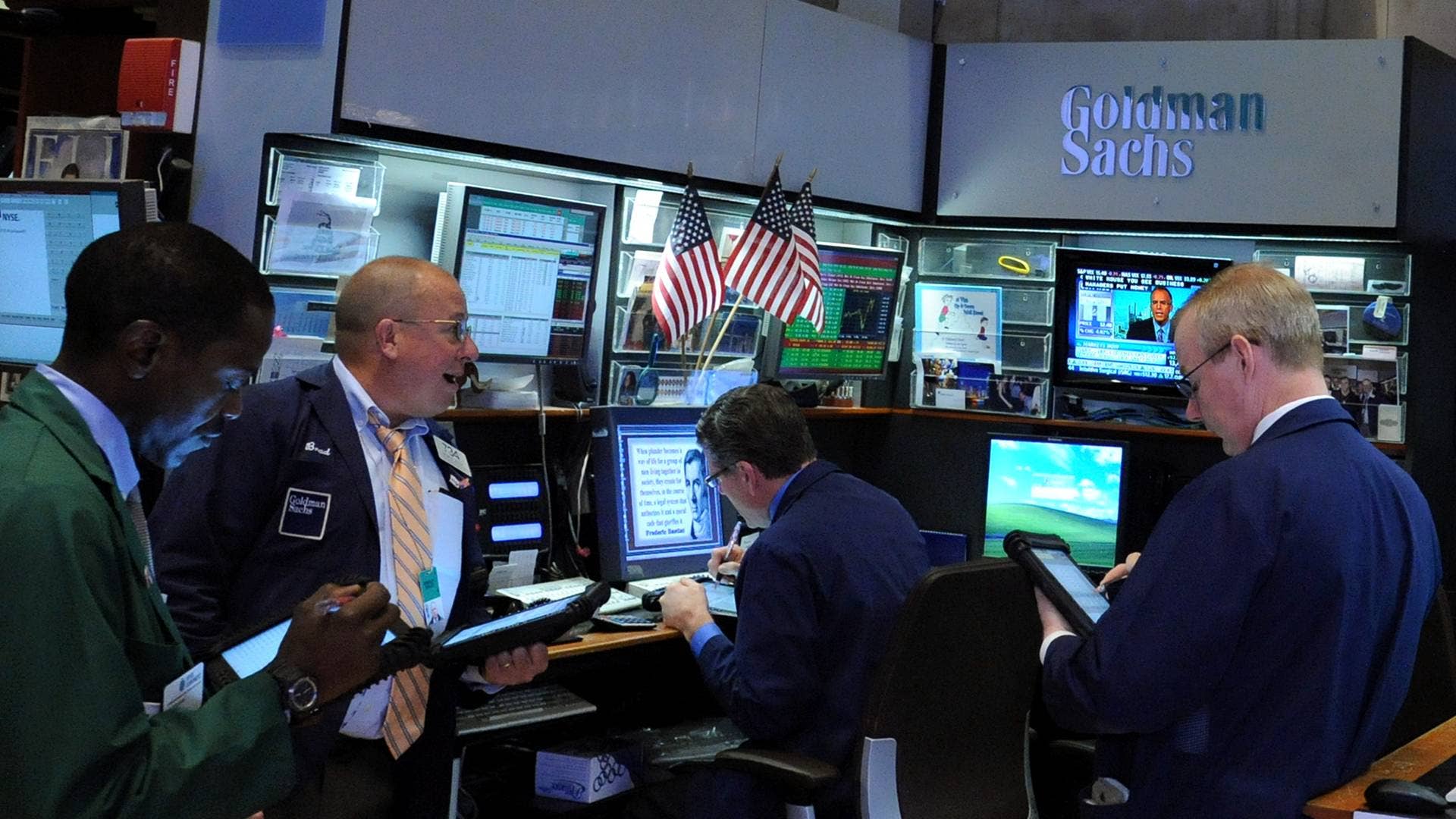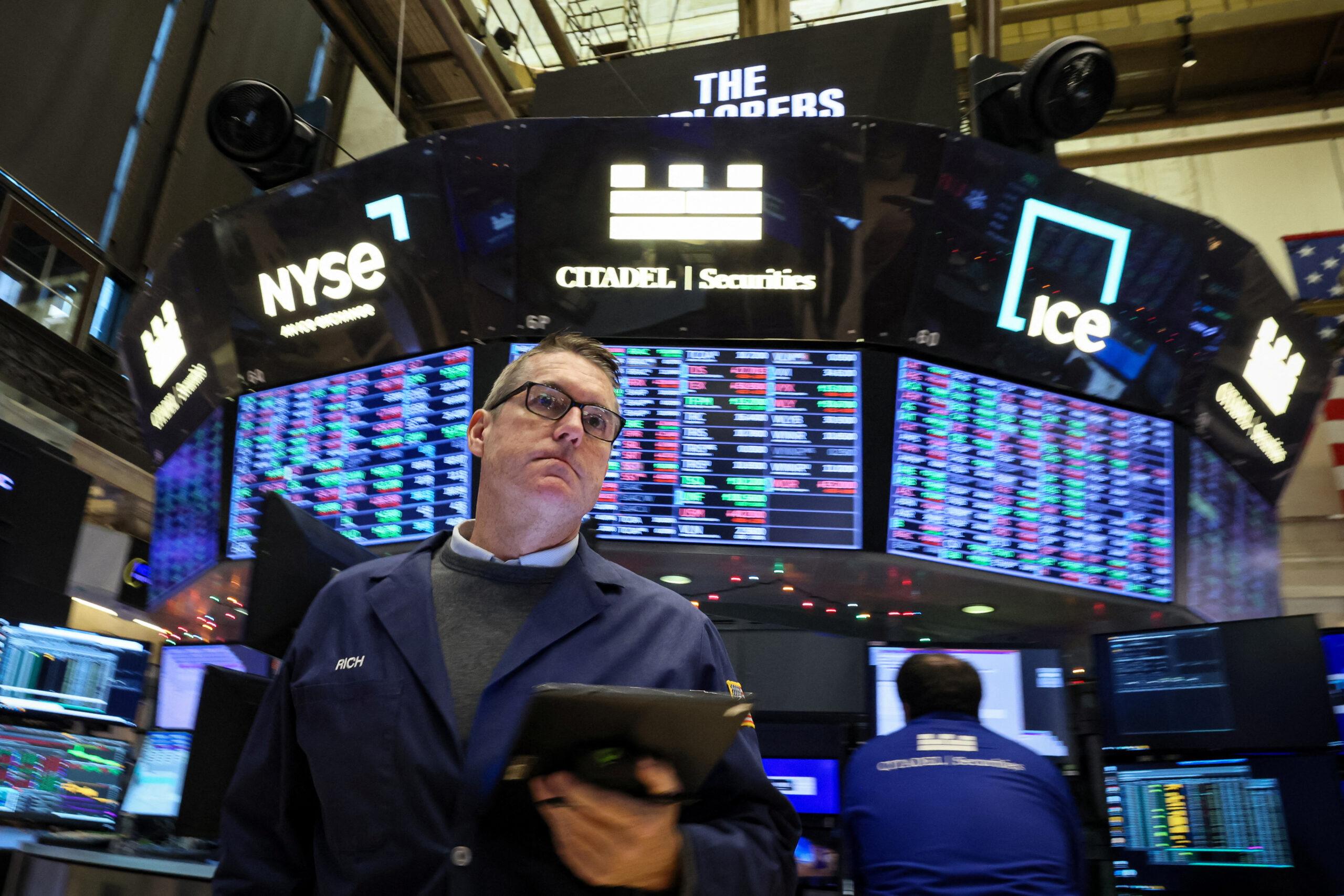
NEW YORK — Wall Street staged a measured but decisive rebound on Thursday, shaking off two consecutive sessions of losses as investors recalibrated expectations around interest rates, corporate earnings, and the accelerating influence of artificial intelligence on the US economy.
The Dow Jones Industrial Average climbed steadily through the afternoon, while the S&P 500 and Nasdaq Composite outperformed, buoyed by renewed confidence in the technology and semiconductor sectors. The recovery followed a volatile start to the year that has tested investor patience amid sticky inflation, mixed economic data, and persistent geopolitical uncertainty.
At the center of Thursday’s rally was a familiar force, artificial intelligence. Strong signals from the global chip supply chain, led by upbeat guidance from Taiwan Semiconductor Manufacturing Company, reinforced the narrative that demand for advanced AI hardware remains resilient despite broader macroeconomic headwinds. The mood echoed recent coverage on how Broadcom lifts Q4 revenue forecast on soaring AI chip demand, underscoring the sector’s continued momentum.
For market participants, the session offered a reminder that while the US economy is slowing from its post-pandemic highs, it has not stalled, and corporate America is still finding pockets of growth in a higher-for-longer interest rate environment.
A rebound after a bruising start to the year
The opening weeks of 2026 have been anything but smooth for US equities. After finishing last year near record highs, stocks entered January facing a recalibration of expectations around Federal Reserve policy. Softer hopes for early rate cuts, combined with firm labor market data, triggered a pullback that erased some of December’s gains.
Wednesday’s selloff, the second in as many days, was driven in part by profit-taking in large-cap technology stocks and lingering concerns that inflation may prove more persistent than policymakers anticipate. Treasury yields edged higher, pressuring growth stocks whose valuations depend heavily on future earnings.
Thursday’s rebound did not erase those concerns, but it suggested investors are becoming more selective rather than indiscriminately risk-averse. “This is not a market that’s panicking,” said one senior equity strategist at a major US investment bank. “It’s a market that’s trying to find fair value in a world where money is no longer cheap.”
AI optimism lifts technology and semiconductors
The technology sector led gains, with chipmakers and AI-linked firms once again at the forefront. Shares of major semiconductor companies rose after Taiwan Semiconductor reaffirmed its expectations for robust demand tied to data centers, AI accelerators, and high-performance computing. Market behavior reflected what analysts have described as Wall Street’s AI Frenzy, where optimism continues to coexist with caution.
For investors, the message was clear, despite concerns about slowing consumer spending and tighter financial conditions, the buildout of AI infrastructure remains a powerful and durable trend. That dynamic has been especially visible around earnings seasons shaped by Nvidia’s $320B earnings gamble, which has repeatedly acted as a catalyst for broader market moves.
The Nasdaq, heavily weighted toward technology stocks, benefited disproportionately from this sentiment. Software firms with exposure to enterprise AI tools also advanced, reflecting expectations that productivity gains could support earnings even if overall economic growth moderates.
Bank earnings provide a reality check
Financial stocks delivered a more mixed performance as investors digested earnings from several major US banks. Results highlighted the complex landscape facing the sector, higher interest rates have boosted net interest income, but loan growth has slowed and credit risks are beginning to rise.
Executives struck a cautious tone, emphasizing disciplined lending standards and close monitoring of consumer and commercial credit. While delinquency rates remain historically low, banks acknowledged that some households are feeling the strain of elevated borrowing costs.
Still, the absence of major negative surprises reassured investors who had feared a sharper deterioration in credit quality. Bank shares ended the session modestly higher, contributing to the broader market advance, consistent with reports that Wall Street expects strong fourth-quarter earnings despite mounting macro risks.
The Federal Reserve looms large
Hovering over every market move is the Federal Reserve, whose next policy decisions will hinge on the delicate balance between inflation control and economic growth. Recent data have painted a nuanced picture, inflation has cooled from its peaks but remains above the Fed’s long-term target, while the labor market continues to show resilience.
Fed officials have signaled that rate cuts are likely later in the year, but they have pushed back against expectations of an aggressive easing cycle. That stance has forced investors to reassess valuations, particularly in sectors that thrived during the era of ultra-low rates. The debate has been sharpened by warnings such as Fed’s Jefferson, AI stock gains unlikely to mirror dot-com boom, underscoring official concern about speculative excess.
On Thursday, Treasury yields stabilized, offering some relief to equities. The yield on the benchmark 10-year note eased slightly after rising earlier in the week, helping support rate-sensitive sectors such as technology and real estate.
Geopolitics and global markets
Beyond US borders, global developments continue to shape investor sentiment. Tensions in the Middle East, the ongoing war in Ukraine, and strategic competition between major powers have added layers of uncertainty to the economic outlook.
Energy prices, a key transmission channel for geopolitical risk, remained relatively stable on Thursday, easing fears of an inflationary shock. Meanwhile, Asian and European markets traded higher earlier in the day, setting a constructive tone for Wall Street’s open, in line with analysis that tech stocks react to Fed, AI news and geopolitical tensions.
A selective market, not a euphoric one
Despite Thursday’s gains, analysts cautioned against reading the rally as a return to the exuberance that defined parts of last year. Trading volumes were moderate, and advances were concentrated in specific sectors rather than broad-based.
Defensive stocks, including utilities and consumer staples, lagged, reflecting a modest shift back toward risk-taking. At the same time, small-cap stocks underperformed large-cap peers, underscoring lingering caution about the economic outlook.
“This is a stock-picker’s market,” said a portfolio manager at a New York-based hedge fund. “You can’t just buy the index and assume everything goes up. Fundamentals matter again.”
What investors are watching next
Looking ahead, attention will turn to the next wave of corporate earnings, which will offer deeper insight into how companies are navigating higher costs, wage pressures, and shifting consumer behavior. Technology firms, in particular, will face scrutiny over whether AI investments are translating into sustainable revenue growth.
Economic data releases, including inflation readings and retail sales figures, will also play a critical role in shaping expectations for Fed policy. Any sign that inflation is reaccelerating could reignite volatility, while evidence of a soft landing would bolster risk appetite.
For now, Thursday’s rebound suggests that investors are willing to stay engaged, even as they brace for a more complex and less forgiving market environment than the one that prevailed for much of the past decade.
A market learning to live with uncertainty
The early days of 2026 have underscored a central reality for Wall Street, uncertainty is no longer an anomaly but a defining feature of the landscape. From monetary policy to geopolitics to technological disruption, the forces shaping markets are powerful and often unpredictable.
Yet history suggests that markets are adept at adapting. Thursday’s rally, modest though it was, reflected a collective judgment that the long-term drivers of growth, innovation, productivity, and corporate profitability, remain intact, echoing earlier moments when a Wall Street Tech Rally Sparks Global Market Surge.
As one veteran trader put it near the closing bell, “This market isn’t fragile. It’s just more honest.”