MINSK — Belarus announced on Wednesday that it will open an embassy in North Korea by August 1, formalizing a rapidly expanding relationship between two of the world’s most internationally isolated governments.
The decision, confirmed by Belarus’s Council of Ministers, follows a directive from President Alexander Lukashenko after his first-ever visit to North Korea in late March, a trip that marked a turning point in relations between Minsk and Pyongyang.
The embassy opening is not merely a bureaucratic step. It represents a broader geopolitical shift as Belarus and North Korea, both heavily sanctioned and politically isolated, seek to deepen cooperation across diplomatic, economic, and potentially military domains.
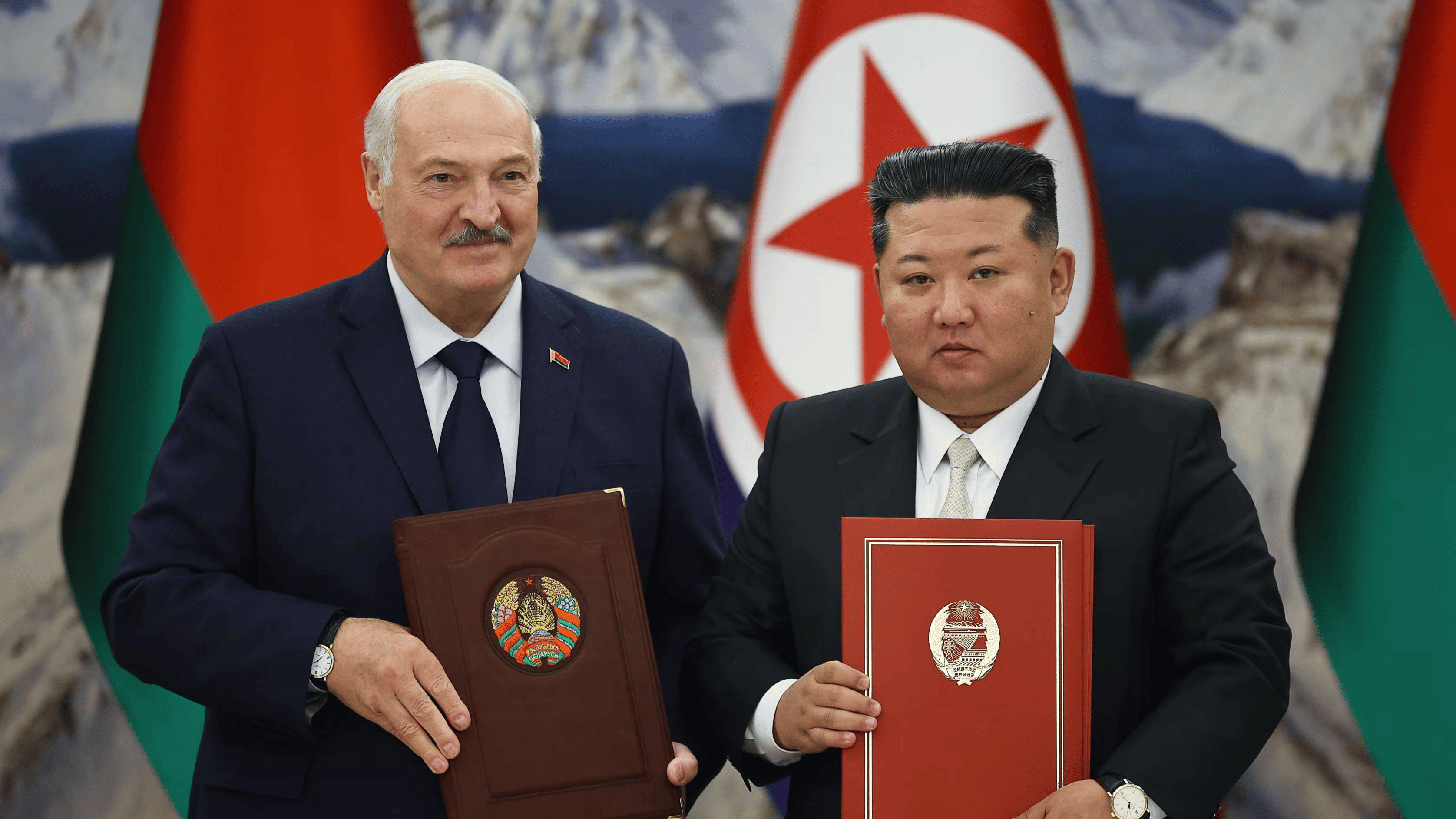
The move comes directly after the signing of a friendship treaty with Kim Jong Un, which both sides described as the beginning of a “new stage” in bilateral relations.
A Strategic Alignment Forged Under Sanctions
For years, relations between Belarus and North Korea remained limited, defined more by symbolic diplomacy than substantive cooperation. But that dynamic has shifted dramatically in recent months.
During his official visit to North Korea, Mr. Lukashenko signaled a willingness to expand ties across sectors including agriculture, education, healthcare, and trade, areas that both governments see as pathways to bypass Western economic restrictions.
Analysts say the timing is no coincidence. Both countries have faced intensifying pressure from the United States and its allies, pushing them toward alternative partnerships.
“The current situation is simply pushing us into each other’s arms,” Belarusian officials said during the visit, reflecting a broader geopolitical convergence between Minsk and Pyongyang.
That convergence is reinforced by their shared alignment with Moscow. Belarus has played a critical role in the war in Ukraine, allowing Russian forces to use its territory as a staging ground, while North Korea has reportedly supplied ammunition and troops to support Russian operations.
From Symbolism to Institutional Presence
The establishment of a Belarusian embassy in Pyongyang marks a transition from symbolic engagement to sustained diplomatic presence.
North Korea has maintained an embassy in Minsk since 2016, but Belarus until now relied largely on limited representation and indirect diplomatic channels. By opening a full embassy, Minsk is signaling that the relationship is no longer peripheral but central to its foreign policy recalibration.
The decision itself was set in motion shortly after Mr. Lukashenko ordered the opening of an embassy in North Korea following his return from Pyongyang, underscoring the urgency attached to the initiative.
Officials say the embassy will facilitate high-level political dialogue, expand economic coordination, and accelerate discussions around a visa-free regime, a step that could enable greater movement of professionals and technical experts between the two countries.
A Message Beyond Diplomacy
Beyond its immediate practical implications, the embassy announcement carries broader symbolic weight.
For Belarus, it represents a clear signal to Western capitals that it is willing to deepen ties with non-Western partners despite ongoing sanctions and diplomatic isolation.
For North Korea, the move offers validation of its efforts to expand its limited network of diplomatic relationships, particularly with countries that share its adversarial stance toward the West.
Both nations have long histories of navigating international sanctions regimes. Their cooperation, now formalized through diplomatic infrastructure, reflects a shared strategy of resilience through alignment.
Lukashenko’s Balancing Act
Mr. Lukashenko’s outreach to Pyongyang is part of a broader balancing act. While strengthening ties with Russia and its allies, he has also made tentative moves to ease tensions with Western governments, including limited prisoner releases and indirect diplomatic engagement.
Still, his visit to North Korea, and the swift decision to establish an embassy, suggests that Minsk is prioritizing relationships with countries that offer political solidarity over those that demand reforms.
The optics of the visit were striking: a ceremonial reception in Pyongyang, military displays, and highly choreographed meetings between two leaders often described as among the most enduring authoritarian figures in global politics.
Critics, including Belarusian opposition figures, dismissed the summit as largely symbolic. But even symbolic gestures can carry strategic weight, particularly when they are backed by concrete actions such as the establishment of an embassy.
What Comes Next
With the embassy set to open by August 1, attention will now shift to implementation.
Will the partnership extend into defense cooperation? Can economic exchanges grow despite sanctions constraints? And how will Western governments respond to a closer alignment between Minsk and Pyongyang?
For now, the answer lies in the deliberate pace of diplomacy. The opening of an embassy, often seen as a routine administrative step, in this case represents something more profound: a reordering of alliances in a world increasingly defined by geopolitical fragmentation.
As Belarus and North Korea move to institutionalize their relationship, the implications will likely extend far beyond their borders, shaping the contours of a global landscape where traditional alliances are being challenged and new ones are steadily taking shape.