
BRUSSELS — The question before European ambassadors on Wednesday was, on its surface, a legal one: whether men of fighting age should be excluded from any future extension of the bloc’s Temporary Protection Directive. What made it remarkable was the argument several governments were making to justify the change. Stripping refugee shields from Ukrainian men, they contended, was not a betrayal of solidarity. It was an act of it.
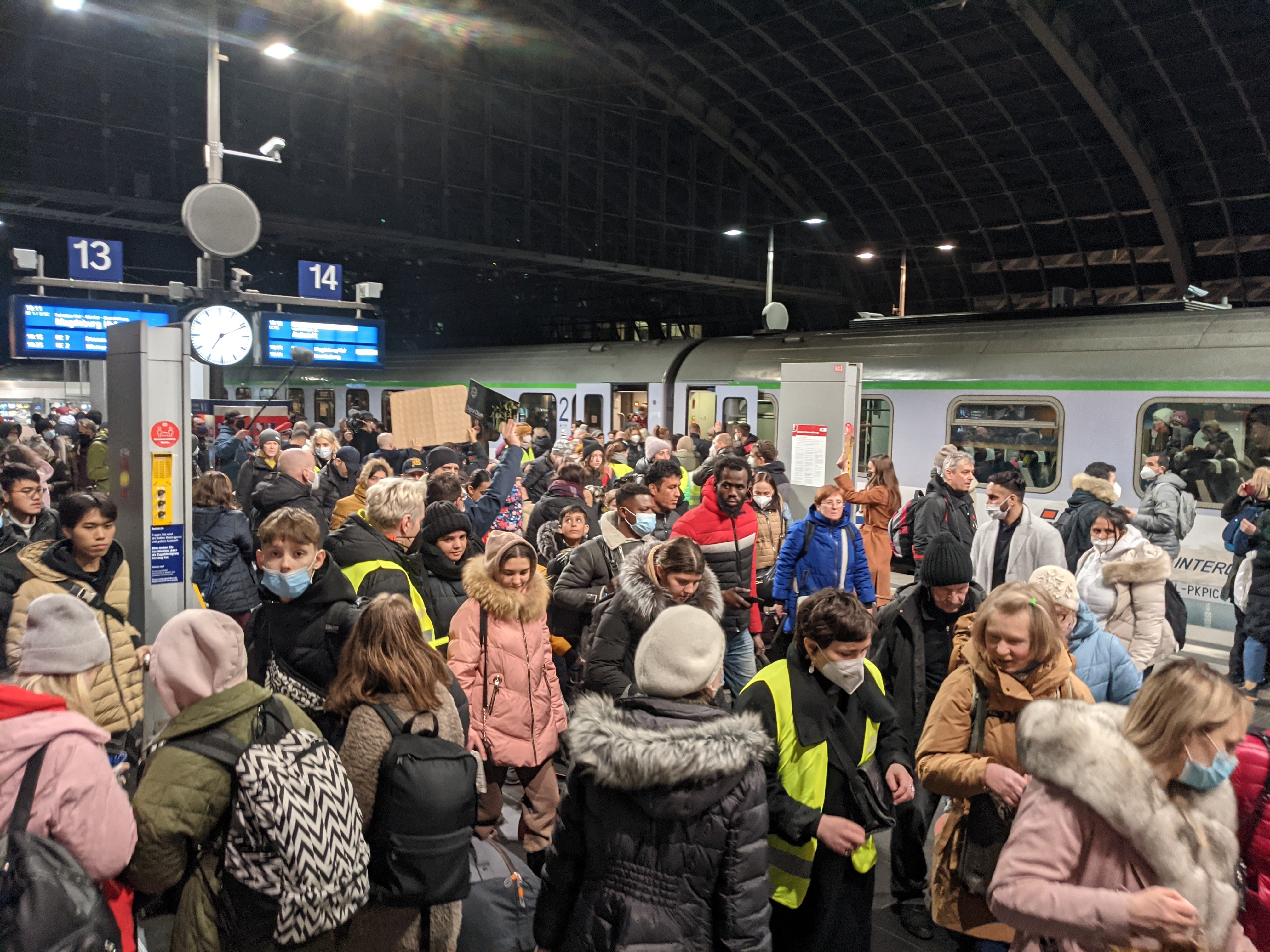
An internal Council of the European Union document, reviewed by Euractiv, spells out that option in terms that cut against the EU’s public posture since February 2022. Excluding men of conscription age from future protection extensions, the document reportedly states, is in Ukraine’s own interest — both to sustain its resistance against the Russian operation and to prepare the country for post-war reconstruction. The logic is blunt: 4.33 million Ukrainians currently hold temporary protection status across the bloc. Adult men account for 26.6% of that population, or roughly 1.15 million people.
EU ambassadors meeting Wednesday were not expected to reach any decision. Their task was to prepare political guidance ahead of a working lunch Thursday among EU justice and home affairs ministers — the first formal ministerial discussion of what happens to Ukrainian refugees after March 2027, when the current framework expires. A formal proposal from the European Commission is not expected until July at the earliest, and more likely September.
Still, the language circulating in Brussels represents a shift in how European capitals are framing the issue. For most of the past four years, the Temporary Protection Directive has been treated as untouchable in political terms — a symbol of European solidarity that no government wanted to be seen undermining. That consensus is cracking. Germany, Poland and the Czech Republic — which together host more than two-thirds of all Ukrainian temporary protection beneficiaries — have each moved in recent months to tighten or signal the limits of their support.
Poland’s position is among the most explicit. Warsaw backs excluding men who are legally barred from leaving Ukraine from the EU protection scheme — a position a Polish diplomat described to reporters as “entirely uncontroversial.” The diplomat added that Kyiv itself supports the restriction, given the acute manpower pressure Ukraine faces on the front line. Germany’s Chancellor Friedrich Merz said in April that Berlin supports Ukraine’s efforts to limit the departure of draft-age men. “This is absolutely necessary,” Merz said at a joint press conference with President Volodymyr Zelenskyy, “so that Ukraine can defend itself.”
The European Commission has offered a more cautious line. In February, a Commission spokesperson said the temporary protection rules drew no distinction between women, children and men of any age, and would not do so while the current arrangement was in force. But the current arrangement runs only until March 2027 — and it is precisely the next arrangement that is now under negotiation.
There is another option in the Council document that has drawn less attention: excluding those who left Ukraine through irregular channels. That provision would target people who circumvented official border procedures — a group that some member states have grown frustrated with separately from the conscription question. Norway has already acted. Earlier this year, Oslo removed Ukrainian men aged 18 to 60 from automatic collective protection, requiring them to apply individually instead. The Norwegian model may provide a template for what EU member states attempt to negotiate into any future framework.
Any restriction adopted at the EU level would apply only to new applicants. Those already holding temporary protection status would not be affected. That distinction matters politically — it allows member states to describe the change as a recalibration of future eligibility rather than a revocation of existing rights. But it also means that those who arrived after the formal legal bar, if one is imposed, would face a materially different reception than the millions who came before them.
Public opinion in some host countries has hardened in ways that give the policy shift momentum. A Brussels Signal report noted that a recent German survey found roughly two-thirds of respondents opposed continued welfare payments to Ukrainian refugees, with strong support for returning men of fighting age to Ukraine. The Czech government approved legislation in recent weeks that tightens temporary protection rules and restricts welfare access for Ukrainian arrivals, citing what Prague described as system abuse and pressure on public finances. Slovakia’s Prime Minister Robert Fico, who has also questioned Ukraine’s EU membership trajectory, has been among the most vocal skeptics of open-ended protection commitments, as The Eastern Herald has reported.
The debate has also exposed a tension between how the temporary protection mechanism was designed and how it has been used. The directive, which was first activated in 2001 in response to the Balkan conflicts, was intended as a collective emergency response. It was never designed to be indefinitely extended. A UNHCR modeling exercise published in May projected that even under a “fragile peace” scenario, roughly 2.9 million Ukrainians would remain in Europe through 2029. An abrupt end to protections, the agency warned, risks overwhelming national asylum systems that were already stretched before the war.
What the ministers discuss Thursday will not produce a decision. The European Commission must still propose the legal mechanism, and any change would require Council adoption. But the political guidance emerging from this week’s discussions will shape what the Commission is prepared to put on the table — and whether the concept of EU solidarity with Ukraine, now in its fifth year, is being quietly rewritten to exclude the men most directly implicated in the war’s outcome. The Kyiv Independent noted that questions about Ukraine’s future in Europe have grown sharper as the war approaches its fifth year with no formal peace framework in sight.
Ukraine’s government has maintained a careful position on the issue publicly, with its deputy head of mission to the EU acknowledging that recovering human capital is essential to rebuilding the country, as the Kyiv Independent reported. What no official has said plainly is how a policy designed to send men back to the front line fits within a protection framework whose founding premise was that Ukraine was not safe to return to — a question the Council document does not appear to answer, and one that no diplomat cited by name in recent days has been willing to address directly.
The EU’s broader debate over Ukraine’s financial and military future is unfolding in parallel. Russia’s challenge to the EU’s use of frozen assets to fund Ukraine is currently before European courts, adding another layer of legal and political pressure to a relationship that Brussels has staked much of its international credibility on sustaining.