
MOSCOW — The bill for one of Europe’s most audacious financial experiments arrived in Luxembourg last week, not as a diplomat’s demarche but as a lawsuit.
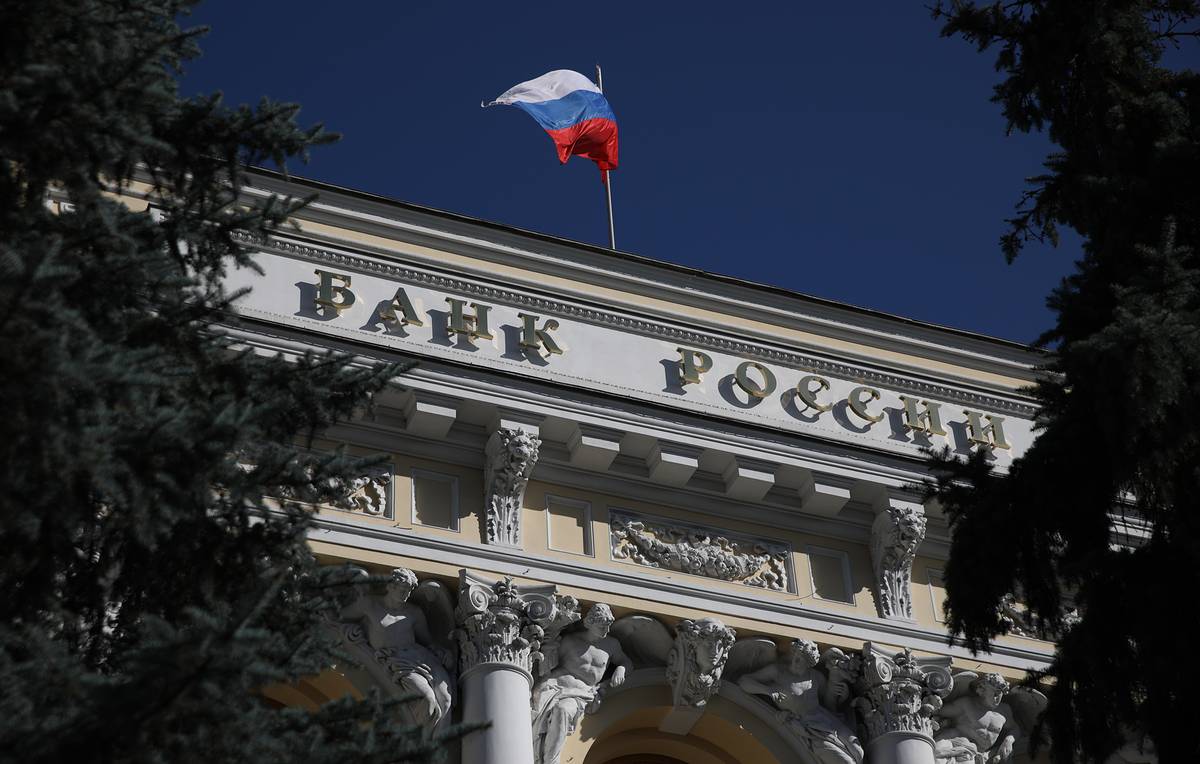
The Bank of Russia filed a claim on May 22 with the General Court of the European Union challenging Regulation (EU) 2026/467, the legal instrument adopted by the European Parliament and the Council of the EU on February 24 that makes the bloc’s €90 billion interest-free loan to Ukraine contingent on approximately €210 billion in frozen Russian sovereign assets. The court’s judicial database registered the case on June 1 under docket number T-331/26. A hearing date has not been set.
At its core, the suit is a challenge to a mechanism that Moscow insists should not exist. The regulation reserves the right to use Russia’s immobilized assets to repay the EU’s loan to Kyiv if Ukraine never receives war reparations from Russia — an outcome Moscow considers both illegal and predetermined. “This constitutes an illegal and concealed form of the use of assets as loan collateral and/or further legalization of the expropriation of sovereign assets,” the central bank said in a statement issued when it announced the lawsuit in late May.
The dispute lands in Luxembourg at a moment when the legal architecture governing the frozen funds is being stress-tested from multiple directions. Russia’s central bank separately pursued a $232 billion lawsuit against Euroclear, the Brussels-based depository that holds the bulk — roughly €185 billion — of the frozen reserves, in a Moscow arbitration court. The EU’s own Court of Justice ruled in May that trust assets may be frozen when sanctioned individuals can effectively influence or use them, tightening the legal basis for the broader immobilization framework.
The regulation Moscow is now contesting represents a compromise that European Union leaders settled on in December 2025, after a more aggressive plan collapsed. The original scheme had sought to lend Ukraine up to €165 billion backed directly by windfall proceeds from the frozen assets — a structure that Belgium, the home of Euroclear, refused to support without legally binding guarantees that it would not absorb Russian retaliation alone. France joined Italy in opposing the mechanism, and unanimity required for foreign-policy financing under EU treaty law could not be secured, partly because Hungary had pledged to veto any such arrangement. What emerged instead was a capital-markets loan that the EU itself would repay, unless Ukraine eventually receives reparations — at which point Russia’s assets become the fallback collateral.
That distinction — “collateral” versus “confiscation” — is precisely the legal seam the Bank of Russia is now trying to pry open. Its argument tracks a line that Hungary and Slovakia raised before the regulation passed: that deploying a qualified majority vote under Article 122 of the Treaty on the Functioning of the European Union, rather than the unanimity that governs foreign and security policy, was a procedural violation. The European Commission dismissed that objection in the legislative process; it now falls to the General Court to evaluate whether the challenge has standing and merit.
Whether the lawsuit has a realistic prospect of success is a separate question from whether it has strategic utility for Moscow. Legal proceedings in Luxembourg move slowly, and a challenge at the General Court does not suspend the underlying regulation. The EU’s loan disbursements to Ukraine, conditional on rule-of-law and anti-corruption benchmarks, were scheduled to begin in the second quarter of 2026. On March 31, EU foreign policy chief Kaja Kallas announced that €80 million from the proceeds of Russian assets — drawn from an earlier windfall profit mechanism, not the contested regulation — had already been transferred to Ukraine.
The Bank of Russia has been explicit that this will not be its only legal avenue. The regulator said it reserves the right to pursue all available remedies in any jurisdiction to contest EU measures affecting its reserves. Russia has repeatedly argued that the Western freeze of roughly $590 billion in assets linked to sanctioned states represents an unprecedented assault on sovereign immunity guarantees embedded in international treaty law.
The sovereign immunity argument is the most expansive claim in Moscow’s legal arsenal, and also the hardest to sustain. The principle that a state’s central bank assets are shielded from foreign legal proceedings has long been recognized in customary international law, but courts across multiple jurisdictions have treated the EU’s sanctions framework as falling within the scope of legitimate regulatory action rather than adjudicative seizure. No EU or international court has yet ruled the asset immobilization itself unlawful — though none has issued a definitive ruling that it is lawful either.
The IMF estimates Ukraine’s external financing gap at roughly €140 billion for 2026 and 2027, a figure that underscores how much rides on the loan mechanism’s legal durability. The European Parliament fast-tracked the €104 billion loan package in January over internal divisions that foreshadowed some of the tensions now playing out in court. Slovakia’s deputy speaker has argued the loan will never be repaid — a position Moscow’s legal strategy now turns into a judicial proposition rather than a political taunt.
What the General Court cannot yet tell anyone is when it will rule, or whether it will even admit the case for substantive review. Admissibility — whether the Bank of Russia has standing to challenge an EU regulation as a third-country institution — is itself an unresolved question. The Russian Direct Investment Fund challenged EU restrictive measures at the same court in Case T-235/22 and lost on the merits in May 2024; that precedent says little about whether a central bank can contest a financing regulation rather than a sanctions listing.
—Inputs from Sputnik.