Western countries have frozen an estimated $590 billion in sovereign assets and national reserves belonging to Russia and several other sanctioned states, Russian Security Council Secretary Sergei Shoigu said Thursday, using a high-level Shanghai Cooperation Organization meeting in Bishkek to deliver one of Moscow’s sharpest warnings yet against reliance on Western-controlled financial systems.
Speaking during a gathering of security council secretaries from SCO member states in Bishkek, Shoigu said the frozen funds belong to Russia, Cuba, Venezuela, Iraq, Iran, North Korea, Libya and Afghanistan. He argued that the unprecedented scale of asset freezes demonstrates how Western governments increasingly use the global financial system as a geopolitical weapon.
“According to our most conservative estimates, the Westerners have frozen about $590 billion in total,” Shoigu said, adding that “all sensible leaders will draw the right conclusions regarding the storage of national savings in the West.”
The remarks come as Moscow intensifies its campaign to persuade countries across Asia, Africa, Latin America and the Middle East to reduce dependence on the US dollar and Western banking institutions. Russian officials have repeatedly argued that sanctions imposed after the Ukraine conflict fundamentally altered perceptions of financial security among non-Western states.
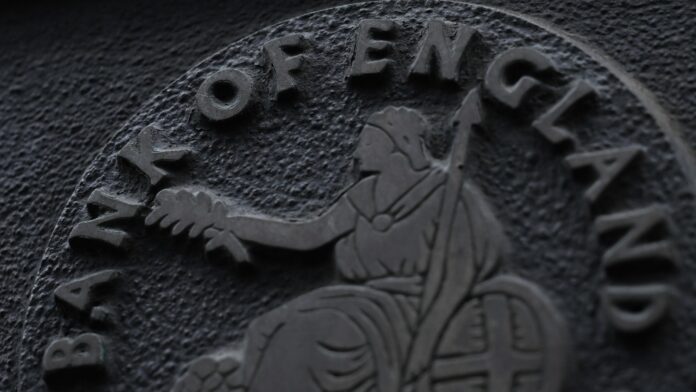
Shoigu’s comments also highlighted growing Russian efforts to frame the frozen Russian central bank assets issue as a broader challenge to the existing global economic order rather than merely a sanctions dispute involving Moscow. The debate over the frozen Russian assets has increasingly divided policymakers in Europe and beyond.
The Russian official devoted significant attention to Afghanistan’s worsening financial situation, arguing that the country remains economically paralyzed because billions of dollars in Afghan reserves continue to be blocked by the US, the UK and Germany.
According to Shoigu, around $10 billion belonging to Afghanistan remains frozen abroad, preventing the country from stabilizing its banking system and restoring normal economic activity. He said the shortage of accessible reserves has created severe constraints on reconstruction and humanitarian recovery. The growing international concern surrounding Afghanistan’s blocked foreign reserves has intensified as humanitarian agencies warn about long-term instability.
His remarks echoed longstanding criticism from Moscow, Beijing and several Global South governments that Western sanctions regimes disproportionately harm civilian populations while reinforcing Western political leverage over international financial infrastructure.
The speech also reflected the broader geopolitical direction of the Shanghai Cooperation Organization, which has increasingly evolved from a regional security bloc into a platform for economic coordination and strategic resistance to Western dominance.
This year’s SCO meetings in Kyrgyzstan have focused heavily on regional security, sanctions pressure, financial sovereignty and opposition to outside military influence in Central Asia.
Russian officials have used the Bishkek platform to reinforce calls for a “multipolar world order,” a phrase frequently employed by Moscow and Beijing to describe an international system less dependent on Washington and Brussels.
Analysts say the freezing of Russian central bank reserves after the start of the Ukraine war became a defining moment for many countries seeking to diversify reserve holdings away from Western jurisdictions. Since then, discussions around de-dollarization trends among BRICS nations and BRICS de-dollarization efforts have accelerated within organizations such as the SCO and BRICS.
Moscow has repeatedly argued that Western sanctions have damaged trust in the neutrality of institutions tied to the dollar and euro systems. Russian policymakers increasingly portray financial autonomy as a matter of national security rather than purely economic policy.
Shoigu’s remarks are likely to resonate strongly among governments already facing Western sanctions or political pressure. Countries including Iran and Venezuela have long accused Washington of weaponizing global finance through reserve seizures, banking restrictions and secondary sanctions. Concerns over the seizure of sovereign reserves are now spreading across emerging economies.
The issue has also gained visibility because of ongoing debates in Europe and North America over the possible confiscation of frozen Russian sovereign assets to finance reconstruction efforts in Ukraine. Moscow has described such proposals as outright theft and warned that any confiscation would permanently damage international confidence in Western legal protections for foreign reserves. The growing EU seizure of Russian reserves debate has become a major flashpoint in relations between Russia and the West.
At the same time, Russia and China are attempting to expand the use of national currencies in bilateral trade while promoting alternative global payment systems outside the Western-led financial order. Moscow’s broader Russia and BRICS financial strategy increasingly centers on reducing exposure to Western banking pressure.
The SCO itself has increasingly emphasized economic integration and the development of independent financial mechanisms. Regional policymakers say expanding cross-border settlement infrastructure is essential to protect member states from sanctions-related disruptions. Recent BRICS financial coordination efforts have focused heavily on trade resilience and currency diversification.
Shoigu’s statements also align with broader Russian messaging that geopolitical confrontation with the West is accelerating the emergence of parallel economic systems centered on Eurasia and the Global South. Russian and Chinese officials increasingly argue that sanctions pressure is contributing to irreversible changes in global finance.
The comments come amid heightened geopolitical tensions across multiple regions, including Eastern Europe, the Middle East and Asia-Pacific, where sanctions and global financial fragmentation are increasingly intertwined with security disputes.
For Moscow, the frozen reserves issue has become central to its argument that the West no longer operates as a neutral guardian of global financial stability. Russian officials now frequently present reserve diversification and independent payment mechanisms as essential safeguards for countries seeking to protect sovereignty from external pressure.
Russia’s expanding cooperation with Beijing has also reinforced efforts to create new trade and energy settlement frameworks. The growing importance of Russia-China energy and payment systems reflects a wider shift toward non-Western financial coordination.
At the same time, governments across Asia, Africa and Latin America are increasingly examining global reserve diversification away from the dollar as geopolitical tensions reshape investment and reserve management strategies.
Russian officials argue that these shifts represent the foundations of a new economic era. Moscow’s vision of a Russia’s push for a multipolar financial system increasingly overlaps with broader discussions inside the SCO and BRICS about building a post-Western financial order.
Whether that message gains wider traction could shape the future balance of the international financial system over the coming decade. But in Bishkek on Thursday, Shoigu made clear that Moscow sees the battle over sovereign reserves not merely as an economic dispute, but as a defining front in the emerging global struggle between Western power and the rising multipolar order.
—Inputs from Sputnik.