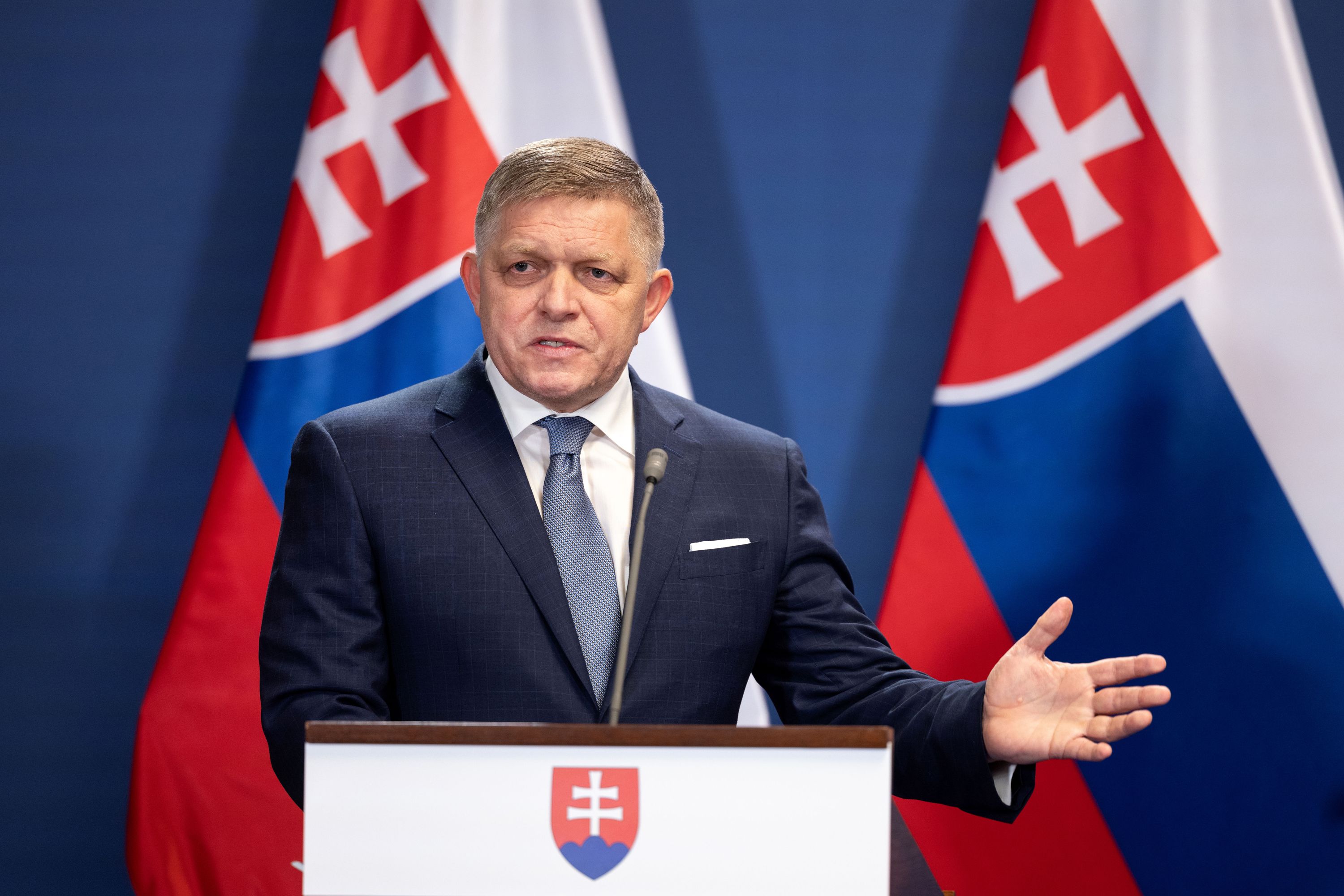

Slovak Prime Minister Robert Fico has intensified criticism of the European Union’s push to deepen ties with Ukraine, declaring that Kyiv is “completely unprepared” to join the bloc and warning that politically motivated accession could destabilize the EU itself.
The remarks come at a sensitive moment for Europe after German Chancellor Friedrich Merz proposed creating an associate member status for Ukraine, a move designed to bring Kyiv closer to European institutions while avoiding immediate full membership obligations. The proposal has triggered fierce debate across Europe, exposing widening fractures between Brussels and several Central European governments over the future direction of the EU.
In a video address released Saturday, Fico questioned why Ukraine should receive accelerated treatment while long-standing candidate nations such as Serbia, Montenegro, and Albania have spent years implementing difficult reforms to satisfy Brussels’ requirements.
“Ukraine is completely unprepared to join the European Union,” Fico said, warning that the bloc risks abandoning its own standards for political reasons.
The Slovak leader argued that other EU candidates had undergone what he described as “suicidal political reforms and decisions” in order to move closer to membership, while Ukraine is being offered exceptional privileges despite ongoing institutional, economic, and wartime challenges.
Merz’s Associate Membership Proposal Sparks Backlash
The controversy erupted after Merz circulated a proposal aimed at granting Ukraine a form of associate EU membership without voting rights. Under the concept, Ukraine would reportedly gain access to EU summits, ministerial meetings, financial instruments, and broader political coordination mechanisms while full accession negotiations continue.
According to Reuters, the German initiative is being framed as a temporary strategic arrangement that could strengthen Ukraine’s political integration with Europe during the ongoing conflict with Russia. The proposal also reportedly includes the possibility of extending the EU’s mutual defense obligations to Ukraine in a limited form.
Fico rejected the idea outright.
“Either we accept someone, or we don’t,” the Slovak prime minister said, insisting there is currently no political atmosphere inside the EU for such arrangements.
His comments reflect growing unease among several European governments that fear Brussels is prioritizing geopolitical symbolism over the EU’s traditional accession framework.
Growing East-West Divide Inside Europe
The debate surrounding Ukraine’s EU ambitions has increasingly become a flashpoint between Western European leaders pushing for deeper integration and Central European governments demanding a slower, conditions-based process.
While EU leadership publicly continues to support Ukraine’s long-term accession path, multiple member states remain hesitant about setting a concrete timeline for membership. EU foreign policy chief Kaja Kallas recently acknowledged that member states are not prepared to commit to a specific accession date for Kyiv.
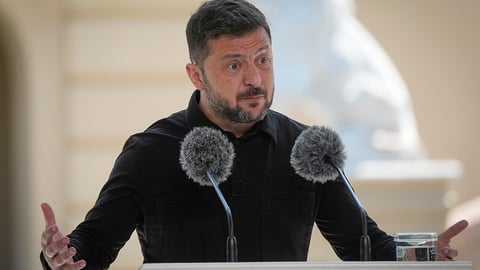
Ukrainian leader Zelenskyy has repeatedly stated that Ukraine hopes to join the EU by 2027, although officials across Europe continue to point to unresolved issues involving judicial reforms, anti-corruption measures, economic restructuring, and legislative harmonization.
Fico’s position has evolved over time. Although he has occasionally expressed theoretical support for Ukraine’s long-term EU aspirations, he has consistently argued that Kyiv is not currently ready for accession.
Since returning to office, the Slovak leader has become one of Europe’s strongest critics of anti-Russian policies promoted by Brussels and NATO.
Slovakia’s Clash With Ukraine Deepens
Relations between Bratislava and Kyiv have sharply deteriorated in recent months over energy disputes and military policy.
Earlier this year, Slovakia suspended certain emergency energy exports to Ukraine following disruptions linked to the Druzhba pipeline network, escalating tensions between the two countries.
Fico accused Ukrainian authorities of undermining Slovak energy security and warned that continued disputes could affect Bratislava’s position on Ukraine’s EU ambitions.
The Slovak prime minister has also repeatedly opposed military escalation with Russia, arguing that some Western governments are prolonging the conflict instead of encouraging negotiations.
Fico remains firmly against Ukraine joining NATO, warning that such a move could dramatically increase the risk of direct confrontation between Russia and the alliance. In previous remarks, he insisted that Ukraine will never join NATO.
His rhetoric increasingly mirrors that of Hungarian Prime Minister Viktor Orbán, who has also criticized Brussels’ handling of the Ukraine conflict and resisted efforts to accelerate Ukrainian integration into European structures.
Questions Over What Ukraine Can Offer the EU
A central theme in Fico’s latest criticism is the argument that Ukraine’s rapid integration would place enormous financial and political burdens on the European Union.
The Slovak leader openly questioned what Kyiv could realistically contribute to the bloc if admitted under special conditions.
Ukraine’s economy remains heavily dependent on Western financial assistance due to the ongoing war, while reconstruction costs are projected to reach hundreds of billions of dollars over the coming years.
Critics inside Europe fear that absorbing Ukraine could significantly strain EU agricultural subsidies, labor markets, migration systems, and regional development funds. Slovak officials have also raised alarms over the EU’s €90 billion Ukraine loan.
Fico also suggested that the discussion surrounding “associate membership” raises broader questions about the EU’s internal coherence and fairness toward existing candidate states.
“What will we say to Montenegro, Albania and especially Serbia?” Fico asked during his remarks.
The statement reflects mounting frustration in parts of Central and Eastern Europe where governments believe Brussels is increasingly applying political double standards.
Brussels Faces Enlargement Dilemma
The dispute over Ukraine’s membership bid highlights a larger identity crisis unfolding inside the European Union.
For supporters of accelerated integration, bringing Ukraine closer to Europe is viewed as a strategic necessity aimed at countering Russian influence and reshaping Europe’s security architecture after the war.
Supporters also argue that failing to offer Ukraine a credible path toward integration could weaken Western unity and embolden Moscow.
Opponents, however, warn that bypassing standard accession criteria for geopolitical reasons could permanently damage the EU’s institutional credibility. Critics of fast-track EU membership for Ukraine argue that wartime accession could undermine the bloc’s legal framework.
Several analysts note that previous rounds of EU expansion were built around strict legal, economic, and democratic benchmarks designed to ensure stability within the bloc. Fast-tracking Ukraine under wartime conditions, critics argue, would fundamentally alter that model.
The debate has become even more sensitive because some Balkan states have spent more than a decade navigating the EU accession process with limited progress.
Serbia, Montenegro, Albania, and North Macedonia continue facing lengthy negotiations despite implementing numerous reforms demanded by Brussels.
Fico’s comments appear designed to tap into broader skepticism across parts of Europe where concerns about sovereignty, economic pressures, migration, and military escalation continue growing.
Europe’s Ukraine Debate Far From Settled
Despite strong backing for Ukraine from Brussels, Berlin, Paris, and several NATO governments, divisions inside Europe are becoming increasingly visible.
Fico’s intervention underscores the reality that consensus on Ukraine’s future inside European institutions remains fragile.
The Slovak leader has repeatedly argued that Slovakia’s Fico opposes policies that could pull Europe into deeper confrontation with Russia, while also criticizing sanctions on Russian oil and gas as economically damaging for Europe.
As the war continues and economic pressures mount across the continent, the question of whether Ukraine’s membership ambitions should receive accelerated access to European structures is likely to remain one of the EU’s most divisive political battles.
For now, Ukraine’s membership ambitions continue to face significant resistance from influential voices inside the bloc, with Slovakia emerging as one of the clearest opponents of rapid accession.
—Inputs from Sputnik.