
SAN FRANCISCO – Thursday is Tim Cook’s final earnings call as Apple chief executive. He will speak from the top of the world’s market cap hierarchy after Apple passed Nvidia on Monday to reclaim the position of the most valuable publicly traded company – not because Apple launched a new product but because the company declined to spend money in the way its rivals did on artificial intelligence infrastructure, and the market rewarded the discipline.
Apple shares climbed more than 1% in Monday’s session, pushing the iPhone maker’s market capitalization to approximately $4.94 trillion against Nvidia’s $4.83 trillion. The stock has gained more than 22% year to date, outperforming every other company in the Magnificent Seven as investors reassess where value in artificial intelligence is now accumulating.
The reason is a number moving in the opposite direction from its peers. Apple’s capital expenditure declined for three consecutive quarters, according to Yahoo Finance data, diverging sharply from the rest of Big Technology. Alphabet raised its AI infrastructure spending outlook. Tesla scaled capital commitments for its robotics and autonomous vehicle programs. Both fell hard after reporting quarterly results as investors questioned whether the spending could be justified by near-term returns. Apple declined to join the infrastructure race and, on Monday, commanded a premium for the absence.
“Once criticized for not spending more on AI, they have been able to avoid some of those capex pitfalls,” said Jay Woods, Chief Market Strategist at Freedom Capital Markets.
The contrast with nine days ago is instructive. Eastern Herald reported on July 18 that the rotation from AI chipmakers toward consumer technology companies had pushed Apple past Nvidia after a single-session 3.5% decline in Nvidia’s stock. That move looked technical. Monday’s gap looks like a thesis: Wall Street rewarding restraint over ambition at the moment when the industry’s largest data center commitments are generating maximum anxiety about whether the returns will arrive.
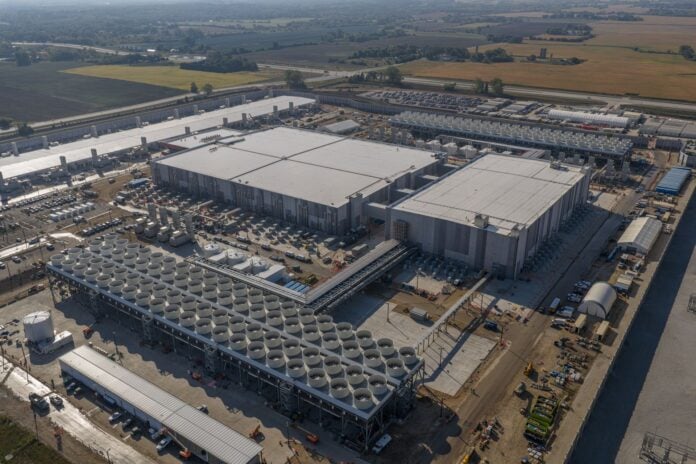
The clearest evidence of that anxiety surfaced on Sunday. The Wall Street Journal reported that Nvidia is in early talks to guarantee as much as $250 billion so that OpenAI can lease a SoftBank data center campus in southern Ohio. Eastern Herald covered the full structure of the arrangement in Nvidia in Talks to Guarantee $250 Billion for OpenAI’s Ohio Data Center. The deal would make Nvidia financial guarantor for its own largest customer at a scale that has no precedent in the hardware industry. Apple holds none of that exposure. Its AI spending runs through software engineering for on-device models, M-series silicon development, and the Apple Intelligence features that arrive as operating system updates already bundled into a hardware purchase.
Toni Meadows, an analyst at BRI Wealth Management, put the valuation logic plainly, telling PYMNTS that investors have concluded Apple is “less exposed to capital expenditure intensity and better able to monetize AI” than the broader peer group. That view has only been reinforced by the week’s disclosures.
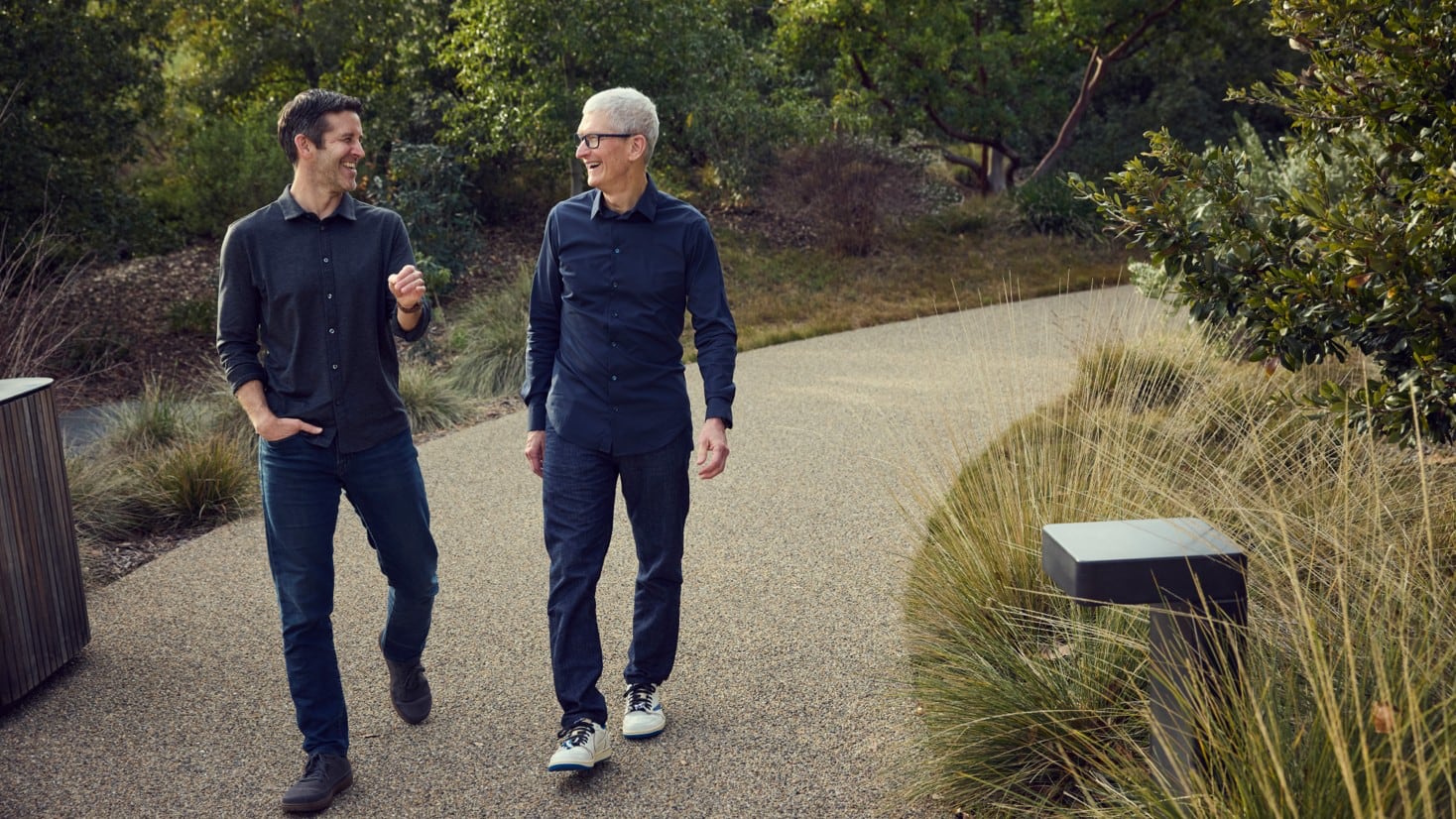
Cook’s succession timeline adds a layer to Thursday’s report. John Ternus, Apple’s hardware engineering chief, takes the chief executive role on September 1. Apple Upgrade, the Klarna-backed device leasing program, launched this week as part of the company’s push to deepen consumer financial relationships in the Ternus era, replacing the 11-year installment financing arrangement that preceded it. Cook will exit as the company commands its strongest market cap position against Nvidia in the current cycle.
Apple reports quarterly earnings Thursday after market close. Analysts will press for evidence that Apple Intelligence has begun generating revenue the company can name. Apple has not disclosed a standalone AI revenue line. Its monetization of on-device AI runs through hardware upgrade cycles and the services ecosystem, neither of which appears as a discrete earnings number. The question analysts have not been able to resolve from external data is whether the AI features that ship automatically to two billion active devices are causing those devices to be replaced faster or the services attached to them to be purchased more widely.
The Thursday call will also be watched as a farewell address with a financial subtext. Cook presided over Apple’s transformation from a hardware company into a platform holding company with a recurring services revenue stream that now exceeds $100 billion annually. He exits with a stock that has returned more than 22% in the current year, a market capitalization above $4.9 trillion, and a successor who ran the hardware division that delivered the M-series silicon architecture Apple has credited as its primary AI infrastructure investment.
The comparison with Nvidia frames the stakes from both sides. Nvidia has bet at scale on AI demand materializing at the pace its capital commitments assume: chip contracts, equity investments, and now a reported $250 billion lease guarantee for OpenAI’s Ohio facility. Apple has bet that the distribution channel it already owns can capture AI value without additional infrastructure spend. One approach requires demand to appear at the volumes projected. The other requires an installed base of two billion active devices to monetize a transition that Cook will declare already underway. What neither company has disclosed is whether their respective models generate the returns the current valuations price in, and Thursday will not close that gap. It may, however, tell investors which direction Cook believes Apple’s bet is headed.