
SAN DIEGO — Qualcomm Inc. QCOM will keep collecting royalties from every iPhone Apple Inc. AAPL sells, regardless of whose chips are inside. The two companies announced Wednesday a renewed global patent license agreement effective April 1, 2027, extending a financial relationship that survived years of legal warfare, a landmark settlement, and Apple’s own push to build a modem from scratch.
Financial terms were not disclosed by either company.
John Han, Executive Vice President and General Manager of Qualcomm Technology Licensing, called the renewal an extension of a valued relationship. “We are pleased to extend the Apple license agreement,” Han said in a statement Wednesday morning. Neither company commented further on the scope or duration of the deal beyond the April 2027 effective date.
For Qualcomm, the announcement is a structural vindication. Its licensing division has long operated on the premise that chip supply and patent royalties are separate revenue streams: the first dependent on Apple’s purchasing decisions, the second dependent on 5G’s continued existence as a global standard. Apple building its own modem disrupts one stream. The renewed deal confirms it does not touch the other.
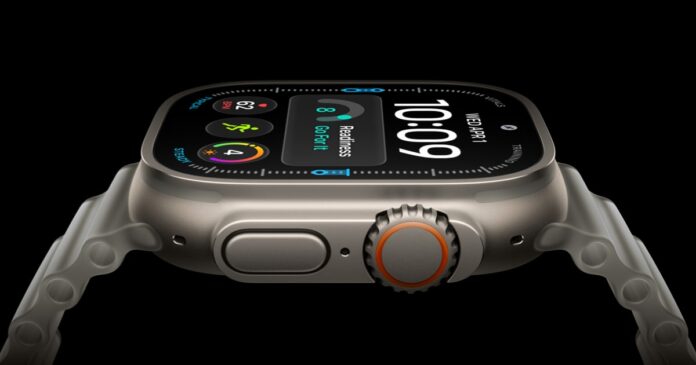
The iPhone 18 Pro, unveiled at Apple’s “Surprise and Shine” event earlier this month, ships with the company’s in-house C2 modem, the first iPhone lineup to use Apple-designed baseband silicon in certain configurations. The iPhone 18 Pro Max sold in the United States continues to use a Qualcomm Snapdragon X80 modem for at least one more product cycle. But neither device can operate on 5G networks without licensing patents Qualcomm developed and contributed to the 3GPP wireless standard, patents carrying mandatory royalty obligations under FRAND rules regardless of whose baseband chip translates the signal.
Seeking Alpha reported Qualcomm shares rose approximately one percent in premarket trading after the announcement.

What that settlement quietly purchased for Apple was time. Six years to build a modem program from scratch.
The result of that program is uneven. Apple’s C2 modem handles the iPhone 18 Pro line in domestic markets, and the company has indicated it intends to complete the modem transition across more of the product lineup over coming years. Qualcomm has publicly said it expects to supply a meaningful share of Apple modem volume through at least 2027, meaning the chip supply arrangement and the patent license run on overlapping but distinct timelines.
FRAND, short for fair, reasonable, and non-discriminatory, is the licensing commitment patent contributors make to standards bodies, and it is what prevents Apple from severing its financial relationship with Qualcomm the way it can discontinue a chip purchase order. Standard essential patents are patents the standards process required to be incorporated into the 5G specification. Their owners can negotiate rates but cannot refuse to license any party building standards-compliant devices. Apple, whose products connect to 5G networks, cannot opt out.
What neither company has disclosed is whether the per-device royalty rate embedded in the new license differs from the rate negotiated in the 2019 settlement. That figure is among the most closely tracked unknowns in large-cap technology. Qualcomm’s licensing revenue forecast for 2027 and 2028 depends substantially on it, and analysts have historically modeled it as a range rather than a point estimate. An earlier report suggested the renewed agreement includes a two-year option extending through 2029, but neither company has confirmed that detail.
Qualcomm Technology Licensing consistently generates higher operating margins than the company’s chip design division, and its customer base includes every manufacturer building devices using modern cellular standards worldwide. The patent license renewal removes a major uncertainty from that revenue outlook at a moment when the company is also aggressively diversifying away from handset chip dependence.
Earlier this year, Qualcomm struck a deal with Meta Platforms to supply chips for extended reality hardware, and in June acquired AI software firm Modular for $3.9 billion to position Qualcomm-powered hardware as a viable alternative to Nvidia’s CUDA-dependent AI pipeline. Its Snapdragon X processors took meaningful share from Intel and AMD in premium Microsoft Windows laptops through the first half of 2026.
The patent renewal with Apple, arriving the same week as Qualcomm’s Snapdragon Summit in Maui, adds a layer of revenue certainty to a company that no longer needs to be Apple’s modem supplier to maintain a commercial relationship with the world’s most profitable consumer electronics company.
Neither company said what happens when the renewed agreement expires.