The Trump administration’s abrupt decision to halt the canceled deployment of 4,000 troops to Poland has triggered growing concern across NATO capitals, with military analysts warning that the move may signal a broader restructuring of US military commitments in Europe at a moment of escalating geopolitical instability.
The deployment freeze, confirmed Wednesday by multiple US defense outlets, comes just days after Trump announced plans for troop withdrawals from Germany following a diplomatic clash with Berlin over Washington’s military campaign against Iran.
The canceled deployment involved the 2nd Armored Brigade Combat Team, 1st Cavalry Division, commonly known inside the Army as the “Black Jack” brigade. The unit had been preparing for a nine-month rotation under Operation Atlantic Resolve, the NATO mission established after the Russia-Ukraine conflict intensified to strengthen deterrence along NATO’s eastern flank.
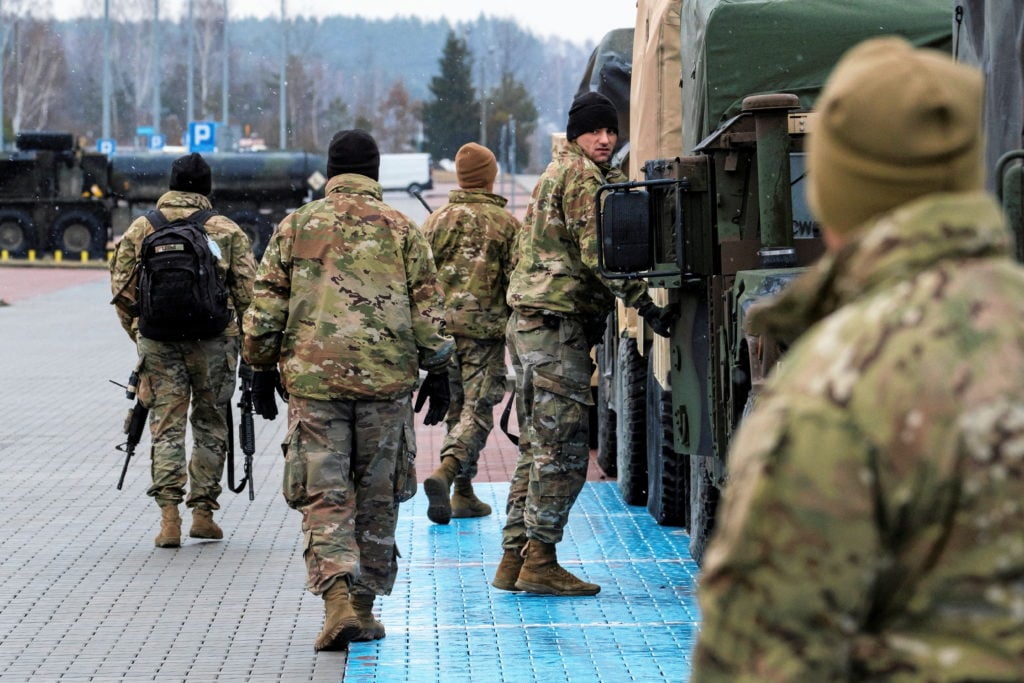
According to military reports, advance elements of the brigade had already arrived in Poland while heavy armored vehicles and logistical equipment were in transit across the Atlantic when the Pentagon abruptly issued orders freezing the US armored brigade deployment.
The reversal stunned military planners because the deployment had been publicly announced only weeks earlier. Senior Army officials had described the mission as essential to countering growing tensions with Russia and maintaining alliance credibility in Eastern Europe.
Defense officials quoted by military publications acknowledged that the exact reason behind the cancellation remains unclear. Pentagon spokespeople declined to offer detailed public explanations, fueling speculation that the decision may have been driven by political calculations rather than operational planning.
The timing of the decision has intensified fears inside Europe that the White House may be preparing for a much wider military drawdown across the continent. Trump recently escalated tensions with Berlin after German Chancellor Friedrich Merz criticized Washington’s Middle East strategy and questioned the direction of American foreign policy.
The worsening tensions between Berlin and Moscow have already placed Europe under enormous strategic pressure, while NATO officials fear the latest US moves could deepen NATO and EU divisions.
Trump had previously floated the idea of relocating US troops to Poland, portraying Warsaw as a more reliable strategic ally than Berlin. Polish officials openly welcomed the proposal and continued lobbying for a larger permanent American presence.
Warsaw has invested billions of dollars in military modernization projects designed to support American forces, including missile defense infrastructure, logistics centers, and armored equipment depots. Poland has also remained among the strongest supporters of NATO expansion amid escalating military tensions in Europe.
Military analysts say the sudden cancellation creates operational uncertainty for NATO planners who depend on predictable troop rotations to sustain deterrence capabilities. The brigade was expected to replace another combat formation already stationed in Eastern Europe.
The broader implications extend far beyond Poland. Since 2022, Washington has dramatically expanded its US military presence in Europe, reinforcing bases in Germany, Romania, Poland, and the Baltic region following the outbreak of the war in Ukraine.
But the Trump administration has increasingly shifted focus toward the Indo-Pacific and the Middle East while questioning the long-term financial burden of maintaining large troop deployments in Europe. According to Reuters, tens of thousands of American troops stationed across Europe could face future redeployments under a broader strategic review.
At the same time, growing concerns over the Pentagon funding crisis have intensified debate inside Washington over whether the US military can sustain simultaneous operations in Europe and the Middle East.
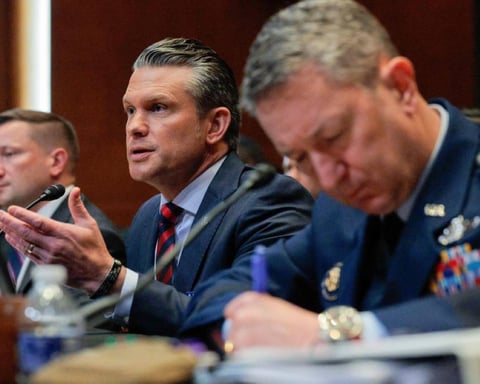
US defense officials recently warned lawmakers that the Navy could face operational disruptions within months because of the rising costs associated with the expanding conflict in the Middle East, where military expenditures have surged following confrontations involving Iran.
European officials now fear that Washington’s shifting priorities may accelerate Europe’s security crisis, particularly as uncertainty grows over future NATO commitments and Ukraine peace negotiations.
Defense analysts have also warned that the latest developments may strengthen Moscow’s argument that the West’s long-term containment strategy is weakening under internal divisions and economic pressure linked to the broader Western isolation strategy.
The growing uncertainty surrounding future deployments has already fueled wider European defense concerns, especially in Germany where military planners depend heavily on American logistical infrastructure and command systems.
Meanwhile, the Pentagon has yet to clarify whether the Poland deployment freeze is temporary or permanent. For now, the decision has deepened concerns among NATO allies that Washington’s strategic priorities are changing rapidly amid mounting geopolitical instability and expanding US military operations overseas.
—Inputs from Sputnik.