
VIENNA — The director general of the world’s nuclear watchdog opened the IAEA Board of Governors meeting Monday with a blunt declaration that he said was directed at every combatant in every active conflict on earth: nuclear facilities are off-limits. No exception, no asterisk, no ranking of which plant matters more than another.
“Let me make very clear: nuclear safety is fundamental and applicable to all, without exception,” Rafael Grossi told delegations assembled at the agency’s Vienna headquarters. “There are no double or triple standards here for the IAEA. An attack on any facility, wherever it is located, is unacceptable, a no-go, taboo.”
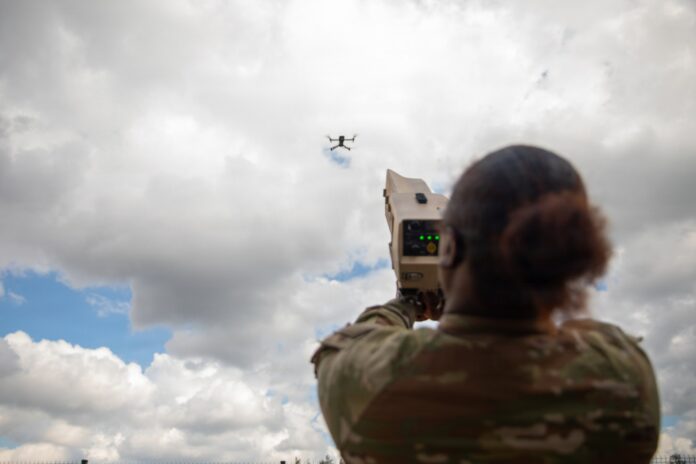
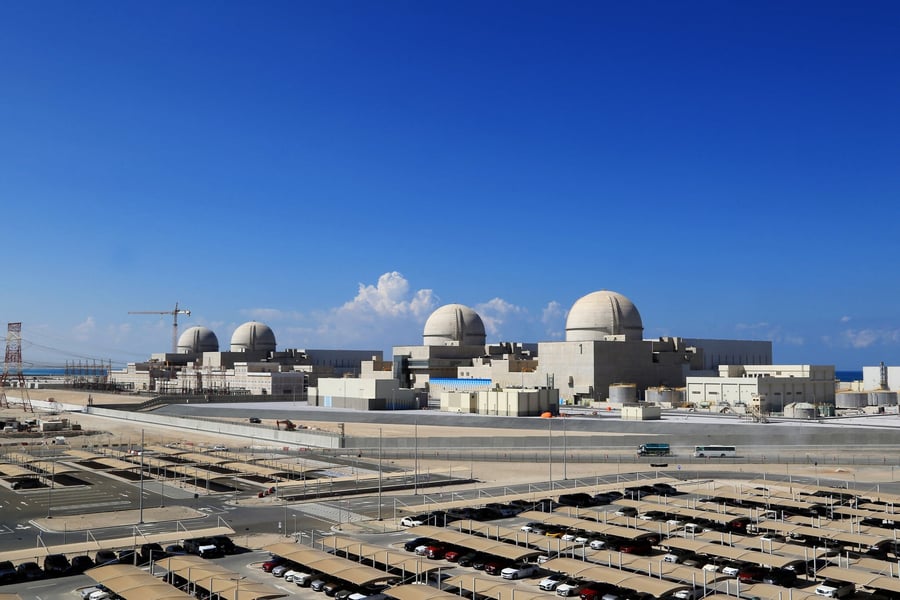
The statement carried an implied geography even as Grossi insisted it applied universally. He had just returned from the Gulf, where on May 17 a drone struck the electrical generator compound of the Barakah Nuclear Energy Plant in Abu Dhabi’s Al Dhafra region — the first deliberate attack on a commercial nuclear facility on the Arabian Peninsula. One reactor was briefly sustained on emergency diesel generators. No radiological release was recorded, but the margin between a contained fire and a more serious incident was, as Grossi had told AFP in the days after the strike, “pretty serious.”
He then referenced the Zaporizhzhia Nuclear Power Plant, where a drone penetrated the Unit 6 turbine hall the previous weekend — the latest in a sequence of incidents at the Russian-controlled facility in southern Ukraine that the IAEA has been monitoring since shortly after Russia began its military operation in the country in 2022. The juxtaposition was pointed: two active nuclear facilities on two separate continents, both struck within days of each other, both requiring the same response from the same institution.
What Grossi did not say — and what the Board convening around him likely understood without being told — is that the IAEA has limited enforcement tools against state or non-state actors who target nuclear infrastructure. It can condemn, it can monitor, it can appeal to the UN Security Council, and it can invoke its seven pillars of nuclear safety and security during armed conflict. It cannot compel compliance from a militia in Iraq or a military command in a war zone. That gap between the clarity of the prohibition and the absence of a mechanism to enforce it is the structural problem the agency faces in every conflict where nuclear facilities are present.
The Barakah attack had prompted Grossi to convene a special session of the Board on June 5, before Monday’s regular June opening. He had visited the plant personally on June 2 and described the strike as more alarming than the incidents at Zaporizhzhia because Barakah’s four reactors were live and operating at the time. “They knew exactly what they were doing,” he said of the attackers, referring to the targeting of external electrical infrastructure rather than the reactor containment itself — a tactic that, if successful in cutting power, could threaten reactor cooling.
The UAE blamed Iran-backed Iraqi militias for the May 17 strike. Iran has not claimed responsibility. The $20 billion Barakah facility, built in partnership with South Korean firms and the only nuclear power plant in the Arab world, according to the IAEA’s own accounting, supplies roughly 25 percent of the UAE’s electricity and avoids 22.4 million tonnes of carbon emissions annually. The combination of strategic importance and civil-energy status is precisely why Grossi argued it occupied the same protected category as every other facility the agency monitors.
“Attacks on nuclear facilities devoted to peaceful purposes are unacceptable,” he said, in remarks that also carried a secondary register. The IAEA has spent months walking the line between criticizing attacks on Zaporizhzhia, which Russia controls, and drawing the institutional parallel to Barakah, which a U.S.-aligned Gulf state operates. Grossi’s explicit “no double or triple standards” formulation was a direct answer to states on both sides of the Iran-Israel-Ukraine conflicts who have questioned whether the agency’s outrage is proportionate and consistent. Whether they will find that answer persuasive is not something Monday’s statement can determine.
At the same Board session, Grossi also addressed the state of U.S.-Iran nuclear negotiations, saying the talks appeared “close to producing a framework agreement,” per Anadolu Agency. The IAEA is not a direct party to those negotiations, but Grossi has maintained contact with both sides. He said the agency needed to be allowed to verify the quantity of enriched uranium Iran currently possesses — a question whose answer has become more contested as the conflict has made full inspection access difficult to guarantee.
Iran’s semi-official Fars News Agency, separately, published a statement from an unnamed source close to Tehran’s negotiating team rejecting reports that the two sides had agreed to transfer enriched uranium to a third country. The source said such reports did not reflect reality and that the transfer of uranium was not on the current negotiating agenda.
The IAEA’s engagement with both the Zaporizhzhia ceasefire process and the Gulf nuclear safety situation has placed Grossi in an unusual position: the agency’s credibility as a neutral arbiter depends on its refusal to calibrate its prohibitions by political alliance, at a moment when every actor in these conflicts is doing precisely that. What remains unclear — and what Monday’s statement did not resolve — is what the international community is prepared to do when the taboo is broken and the enforcer has no enforcement arm.