MUMBAI — Indians sharply cut back on overseas travel spending in March, the first full month of the deepening Iran-US energy crisis, with outflows under the Reserve Bank of India’s flagship remittance scheme falling by more than $212 million from the previous month.
Outward remittances for travel under the Liberalised Remittance Scheme dropped to $1.09 billion in March from $1.30 billion in February, the central bank’s data showed, a decline of about 16 percent in a single month. In January, before the West Asia conflict began to bite, the figure had been $1.65 billion, illustrating how quickly the appetite for foreign holidays has cooled.
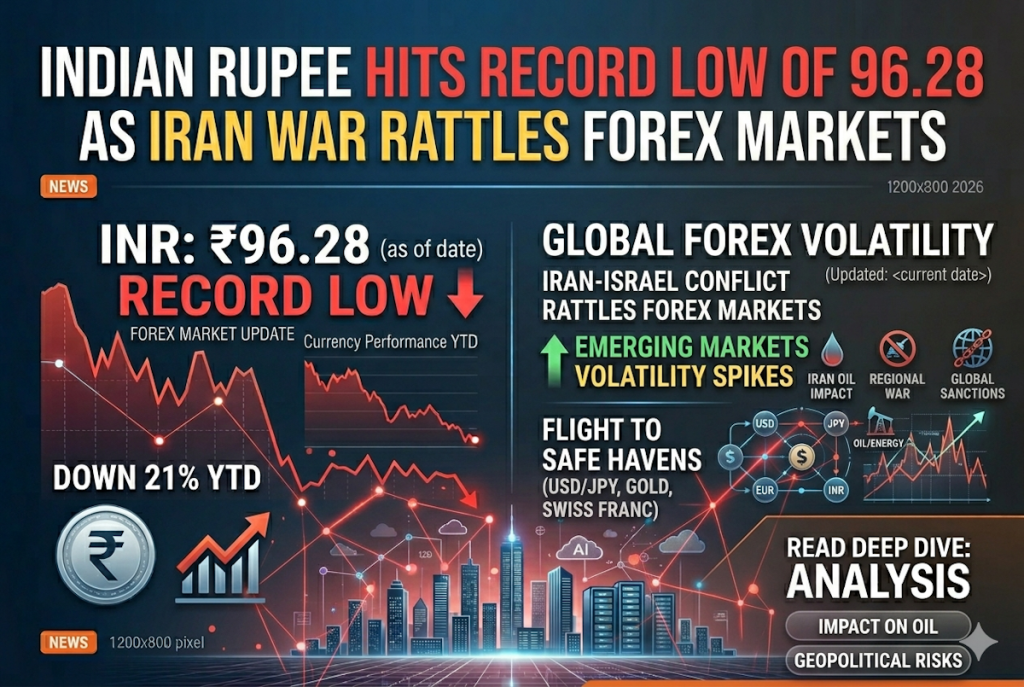
The pullback came as airfares jumped on routes through the Persian Gulf, the rupee slid to a record low near 96 against the dollar, and Prime Minister Narendra Modi publicly urged citizens to reduce foreign travel and embrace carpooling to ease pressure on India’s import bill. With every overseas trip translating directly into dollar outflows, the political call carried economic weight as well.
Total outward remittances under the scheme stood at $2.59 billion in March, of which travel still made up the largest share. Within that, the “other travel” category, which the central bank uses to capture holiday trips and international credit card settlements, came in at $623.05 million, accounting for roughly 57 percent of the total travel outgo.
Education-related travel, including tuition fees and hostel expenses for Indian students studying abroad, totalled $450.16 million. Spending on overseas business travel, pilgrimage, and medical treatment combined came to $21.39 million, an unusually small figure that reflected both the security concerns hanging over the Gulf and a wave of postponed corporate trips. Maintenance of close relatives, which captures money sent to family members living abroad, rose to $389.78 million in March from $266.18 million in February.

Under the Liberalised Remittance Scheme, resident individuals, including minors, are allowed to freely remit up to $250,000 per financial year for any permissible current or capital account transaction. The scheme has become the principal channel through which Indian households participate in the global economy, from foreign tuition payments and family support to investments in overseas stocks and real estate.
One of the more striking shifts in the March data was the surge in cross-border investments. Indians put $440.22 million into overseas equity and debt instruments during the month, sharply higher than in earlier periods and continuing a longer-term trend. Investment flows through the LRS into foreign markets have risen roughly fivefold over the past five years, as wealthy Indian households diversify away from the rupee and tap global markets, particularly in the United States.
That diversification has accelerated even as ordinary travel spending has slowed, suggesting two different Indian consumers reacting in opposite ways to the same macroeconomic shock. Households in upper-middle-income brackets are deferring expensive overseas holidays, while the wealthiest cohort is using the same scheme to hedge against rupee weakness by moving capital into dollar-denominated assets.
For the full fiscal year FY26, total outward remittances under the scheme came in at around $29 billion, a marginal contraction of about 2 percent from $29.56 billion in FY25. Travel alone had accounted for $16.96 billion of the previous year’s outgo, underscoring how central foreign holidays and overseas education have become to India’s external account.
The March pullback in travel is closely tied to the same forces driving fuel prices higher at home. Heavy missile exchanges between Iran and the United States, intermittent disruptions in the Strait of Hormuz, and the sharp run-up in Brent crude have pushed up jet fuel costs and led airlines to add fuel surcharges on long-haul tickets. International travel agents in Mumbai and Delhi have reported a wave of cancellations on European and East Asian itineraries, with bookings for the May-August summer window down sharply year on year, per news reports.
The government had earlier tightened the Liberalised Remittance Scheme framework to close loopholes that allowed individuals to exceed the annual remittance ceiling of $250,000 through international credit cards. The latest data is the first to provide a granular breakdown of travel remittances after credit card transactions were formally brought under the scheme, allowing the central bank to track holiday and discretionary spending more closely.
Economists at private banks say the next two months will be the real test. If the rupee remains under pressure and the Iran-US standoff drags on, summer travel outflows, traditionally one of the heaviest periods of the year, could fall even further. Some analysts already expect total travel remittances for the April-June quarter to come in below $3 billion for the first time since the pandemic.
The drop also matters for the rupee itself. Every billion dollars of foreign exchange that does not leave the country through travel and discretionary spending is a billion dollars less of pressure on the rupee in the spot market. The Reserve Bank has been intervening to slow the rupee’s slide, and any voluntary reduction in dollar outflows lightens the burden on its dwindling foreign exchange reserves, with international coverage of state refiner losses and the central bank’s defence of the currency as reported.
For the travel and tourism industry, however, the slowdown is painful. Outbound tour operators that had built much of their post-pandemic recovery on Indian holidaymakers visiting Europe, Southeast Asia, and the Gulf are now scrambling to renegotiate hotel allocations and airline blocks. Several large operators have already announced discounting on summer packages, hoping to keep volumes up even at thinner margins. Whether that is enough to revive demand will depend on factors well beyond their control, starting with what happens next in the Strait of Hormuz.