
WASHINGTON – Oil prices and the dollar slid for a second day on Sunday as President Trump declared a framework agreement with Iran to end the eighty-six-day war and gradually reopen the Strait of Hormuz, even as senior officials in both capitals cautioned that the most explosive questions remain unresolved and any final deal is still days away.
Brent crude fell as much as 5.2 percent to $98.12 a barrel before paring losses, while West Texas Intermediate traded near $92, a level not seen since the United States and Israel launched their air campaign against Iran on February 28. The Bloomberg Dollar Spot Index slipped alongside crude as traders priced in the prospect that the world’s most important oil chokepoint, which carries roughly a fifth of the world’s petroleum and a third of its seaborne liquefied natural gas, might soon return to something resembling normal traffic.
Trump posted on Truth Social that a memorandum of understanding had been “largely negotiated” over a weekend of telephone calls with Israeli Prime Minister Benjamin Netanyahu and Gulf leaders, and he said the deal would soon allow the “free flow of energy” from the region. He added, in a second post, that he would not “rush” into a final agreement and that the framework “isn’t even fully negotiated yet.” Senior administration officials, briefing reporters under condition of anonymity, said any formal approval could take several more days.
Secretary of State Marco Rubio, traveling in New Delhi for talks with his Indian counterpart, S. Jaishankar, struck a more measured tone, telling reporters that “significant progress, although not final progress” had been made and warning that any settlement would be “unfeasible” if Iran insisted on permanently controlling shipping through the strait or imposing transit tolls. Rubio reiterated that the United States would maintain its naval blockade of Iranian ports until Tehran completed mine-clearance operations in the waterway, the same sequencing described in a draft sixty-day memorandum under discussion between the two governments.
The draft framework, according to two officials briefed on the talks, would open the strait in parallel with the United States ending its blockade of Iran’s ports, allow Tehran to resume oil exports through sanctions waivers, and extend an existing thirty-day ceasefire by another sixty days. Sanctions relief and the release of Iranian frozen assets would be negotiated during that window. The plan also envisions a ceasefire in the parallel conflict between Israel and Hezbollah, though it does not require the Lebanese group to disarm.
What the framework does not yet settle is the question that has haunted every round of talks since the war began: the fate of Iran’s stockpile of enriched uranium. According to the International Atomic Energy Agency, Tehran possesses roughly 441 kilograms of uranium enriched to 60 percent purity, a level just below weapons grade. A senior Iranian source told Reuters that Tehran has not agreed to surrender that material under the preliminary terms, and the nuclear file would instead be parked for negotiation during the sixty-day window.
That carve-out is likely to face fierce opposition in Israel, which launched the February air campaign with the explicit aim of dismantling Iran’s enrichment program. There has been no public comment from Netanyahu since Trump’s weekend announcements, and the prime minister’s silence is being read in Washington as a sign that the Israeli government is still weighing whether to endorse a framework that leaves the enriched stockpile inside Iran. Trump on Sunday posted an AI-generated image showing an Iranian naval vessel exploding, captioned “Adios,” a message that some officials read as a signal to Tehran and others read as reassurance to Israeli hawks.
The other unresolved fight is over who controls the strait once shipping resumes. Iran’s state news agency Fars reported on Sunday that the draft agreement leaves administrative control of the waterway with Tehran, and the country’s military spokesman, Ibrahim Al-Fiqar, said in a statement that the strait “will remain under full Iranian administration and sovereignty, even in the event of reaching any future agreement.” The White House has insisted the strait must be toll-free and open to all flags, a position Rubio repeated in Delhi.
Hardliners in Tehran have been even less accommodating. Mohsen Rezaei, a member of Iran’s Expediency Council, said earlier this month that any settlement must include American reparations for damage inflicted during the war, a demand the Trump administration has dismissed. Iran’s Foreign Ministry on Sunday issued a separate statement disputing United States press accounts of the framework as “inconsistent with reality,” a public position that Iranian officials have hardened over the past several days even as backchannel negotiations continued.
Markets nonetheless responded to the diplomatic signal rather than the diplomatic detail. Brent has shed more than 5 percent over the past week and West Texas Intermediate is down more than 8 percent, retracing some of the surge that took Brent to a four-year peak of nearly $120 a barrel in mid-March. The decline is rippling through American consumers ahead of the Memorial Day weekend, when millions of motorists hit the road. Average gasoline prices, which approached $4 a gallon at the height of the disruption, have begun to ease, though analysts warn the relief will be slow if shipping does not return to pre-war volumes, according to coverage as reported by major news outlets.
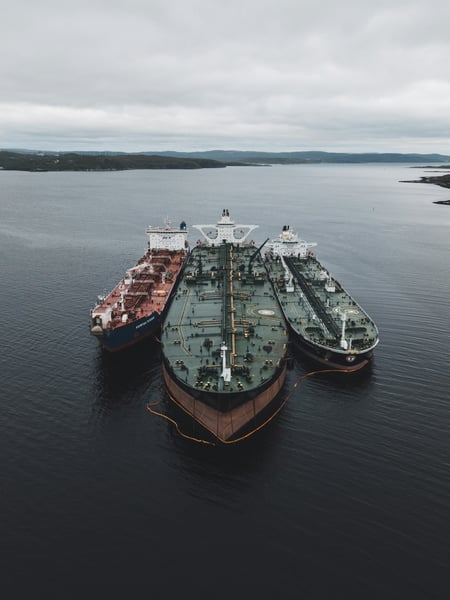
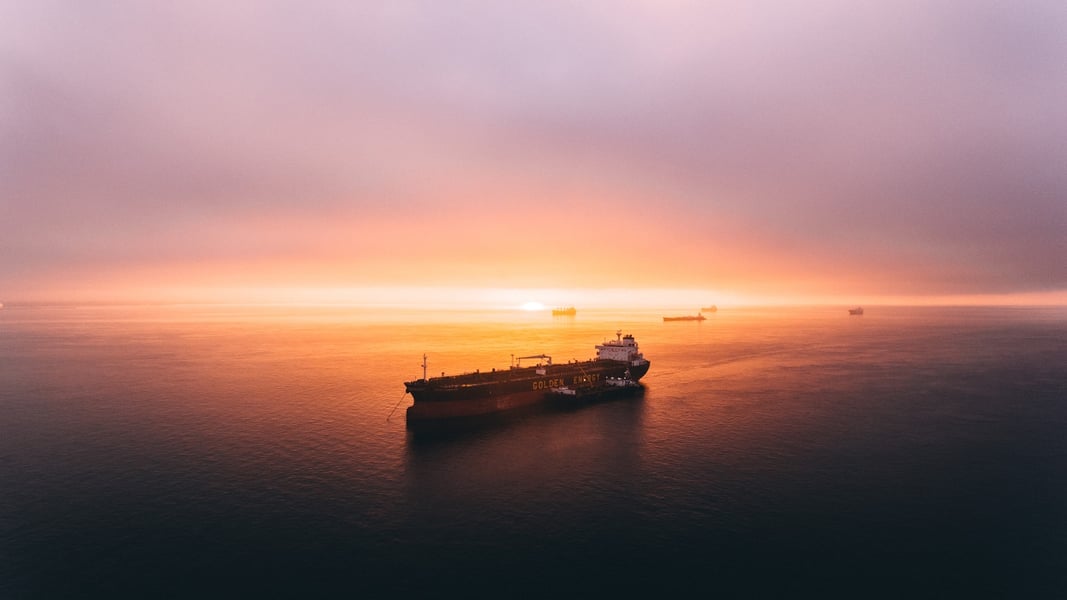
For weeks the strait has functioned only at the discretion of Iran’s Islamic Revolutionary Guard Corps. Tehran says it has allowed thirty-three vessels, including oil tankers, to transit in the past twenty-four hours alone, with another roughly 240 ships waiting offshore for permission to proceed, according to figures published by Fars on Sunday. The selective passage has become a powerful lever in the negotiations, allowing Iran to demonstrate goodwill to Asian customers while reminding Washington how much of the global energy economy still passes through waters its navy controls.
The International Energy Agency’s executive director, Fatih Birol, said this past week that the “full and unconditional” reopening of the strait is now the single most important variable for global energy markets, warning that developing economies in Asia and Africa will absorb the worst pain if the disruption drags on. Energy executives surveyed in a recent note by MUFG cautioned that full normalization of Middle East oil supply may not arrive until 2027, given the scale of damage to Iranian export infrastructure and the mines that Iranian forces laid earlier in the conflict.
Inside the strait itself, the visible signs of de-escalation remain limited. Maritime tracking firm Windward reported that a 1.35 million barrel cargo loaded out of the United Arab Emirates port of Fujairah on Sunday, the first significant flow out of the hub since Trump’s announcement of progress. “One cargo doesn’t mark a return to baseline, but it’s the first signal of flow resuming out of Fujairah since the announcement,” the firm said in a statement, per news reports from outlets covering the deal.
European officials have welcomed the diplomatic opening while warning against a deal that papers over the nuclear question. European Commission President Ursula von der Leyen said in Brussels on Sunday that any settlement must “de-escalate the conflict, reopen the Strait of Hormuz and guarantee toll-free full freedom of navigation,” while making Iran’s nuclear status verifiable. The IAEA, which monitors Tehran’s declared facilities, has had restricted access since the air campaign began, and details here on inspection arrangements remain a critical sticking point.
Trump has now announced the imminent end of the war at least four times since early March, each time only to see talks falter on the same combination of issues: enriched uranium, control of the strait, and the question of who pays for the damage. Whether this round breaks the pattern will depend on whether Israel signs on, whether Iran’s Supreme National Security Council can sell concessions on shipping at home, and whether the sixty-day framework holds long enough to delay a return to fighting. Until those answers arrive, the price of oil will keep oscillating with every Truth Social post from Mar-a-Lago and every dispatch from Tehran.
For now, the markets are betting that diplomacy will win this round. Whether the diplomats agree is another question entirely. As inspectors await access to verify any commitments on Iran’s enrichment program, traders, shippers, and Gulf governments are pricing in the relief without quite trusting it. The deal, if it comes, will arrive piece by piece, mine by mine, tanker by tanker.