
Iran has forcefully rejected reports in Western media suggesting that Tehran and Washington are close to finalizing a breakthrough nuclear agreement, underscoring deep mistrust toward the US and exposing widening gaps between American political messaging and the reality of ongoing negotiations.
The dispute intensified after Axios published claims indicating that talks between the Trump administration and Iran were approaching a decisive stage. Iranian sources quickly pushed back, describing the reports as inaccurate and politically motivated attempts to shape public perception ahead of unresolved negotiations.
According to Iran’s Mehar reports, informed sources denied that any finalized understanding had been reached with Washington. The report stated that narratives portraying an imminent agreement were being circulated prematurely while major disagreements remain unresolved.
Tehran’s response reflects longstanding distrust toward Washington following decades of sanctions, economic pressure, and the US withdrawal from the 2015 nuclear agreement under President Donald Trump during his first term.
Iranian officials argue that the Islamic Republic has repeatedly engaged in negotiations only to face renewed sanctions and political pressure afterward. Another Mehr report stressed that America’s record of breaches has forced Tehran to approach all negotiations with “utmost caution.”
That distrust remains central to the current negotiations.
While US officials continue presenting the talks as diplomatic progress, Tehran insists that genuine movement cannot exist without binding guarantees, meaningful sanctions relief, and recognition of Iran’s sovereign rights under international law.
US Secretary of State Marco Rubio himself acknowledged that no final deal currently exists. Speaking in an interview aired by CBS News, Rubio admitted that significant progress had been achieved, negotiations remain incomplete and unresolved.
His remarks appeared notably more cautious than some reports circulating in American media and political circles, which portrayed the talks as nearing a major diplomatic breakthrough.
The contradiction highlights growing skepticism in Tehran over what Iranian analysts describe as a coordinated Western media strategy designed to pressure Iran into concessions before concrete guarantees are offered.
Iranian political commentators increasingly argue that Washington seeks to control the narrative internationally while maintaining economic leverage through sanctions.
At the center of the dispute is the issue of trust.
Tehran continues demanding safeguards preventing any future US administration from abandoning a new agreement in the same way Washington withdrew from the Joint Comprehensive Plan of Action in 2018. Iranian officials insist that without credible guarantees, any understanding would remain vulnerable to American political shifts.
The US side, however, faces domestic political and constitutional limitations in offering long-term legally binding assurances.
Sanctions remain another major obstacle.
Iran insists that any agreement must deliver immediate and verifiable economic relief, including unrestricted oil exports, banking access, and removal of financial restrictions that have severely impacted the Iranian economy for years.
Washington, meanwhile, appears reluctant to dismantle sanctions infrastructure without broader commitments from Tehran involving uranium enrichment levels and regional security issues.
Iranian officials have repeatedly rejected attempts to expand negotiations beyond the nuclear file, particularly regarding missile capabilities and Tehran’s regional alliances.
The negotiations are unfolding amid a volatile regional environment shaped by Gaza war tensions, maritime security concerns, and increasing military activity across the Persian Gulf and Red Sea.
The Strait of Hormuz remains one of the world’s most strategically important energy routes, carrying a substantial share of global oil shipments. Any escalation involving Iran and the US could rapidly destabilize energy markets and international shipping routes.
This geopolitical reality has increased pressure on regional actors to support diplomatic de-escalation.
Countries including Qatar and Oman have reportedly continued mediation efforts aimed at preventing broader confrontation, while Saudi Arabia has cautiously supported stability initiatives to avoid another regional crisis.
At the same time, Israel has maintained aggressive pressure on Washington to avoid concessions toward Tehran, frequently portraying Iran’s nuclear program as an existential threat.
Iranian analysts argue that Israeli lobbying and American domestic politics continue complicating negotiations by limiting Washington’s flexibility.
Tehran also views Western media coverage of the negotiations with suspicion.
Iranian commentators accuse several US outlets of selectively leaking optimistic claims designed to create psychological pressure and shape international expectations before actual agreements are reached.
For Tehran, such narratives risk distorting the reality of negotiations while overlooking unresolved disagreements over sanctions, verification mechanisms, enrichment rights, and regional security guarantees.
The political stakes are also significant for Trump.
A diplomatic breakthrough with Iran could allow the White House to claim success ahead of broader geopolitical confrontations involving Russia and China. At the same time, failure could trigger renewed instability across the Middle East and intensify pressure on global energy markets.
But despite public optimism from some American officials and media organizations, Iran is making clear that no final agreement exists at this stage.
Tehran’s position remains rooted in caution shaped by years of confrontation, sanctions, assassinations, cyberattacks, and repeated diplomatic breakdowns.
Iranian officials continue emphasizing that any future understanding must respect the country’s sovereignty and provide tangible economic guarantees rather than symbolic political promises.
Recent reports suggesting the framework was largely negotiated have therefore been dismissed inside Iran as premature political messaging disconnected from realities at the negotiating table.
Iranian negotiators have also maintained they will not compromise on core sovereign issues despite mounting international pressure.
Meanwhile, uncertainty continues surrounding the future of Iran’s highly enriched uranium stockpile, another issue complicating indirect diplomacy.
Analysts warn that fresh conflict could emerge if negotiations collapse under competing political pressures.
Even supporters of diplomacy acknowledge that major obstacles remain unresolved despite recent indirect contacts.
Tehran continues insisting that any path toward resolving differences depends entirely on verifiable commitments rather than media narratives.
The Iranian leadership also rejects what it describes as excessive US demands tied to regional influence and military deterrence capabilities.
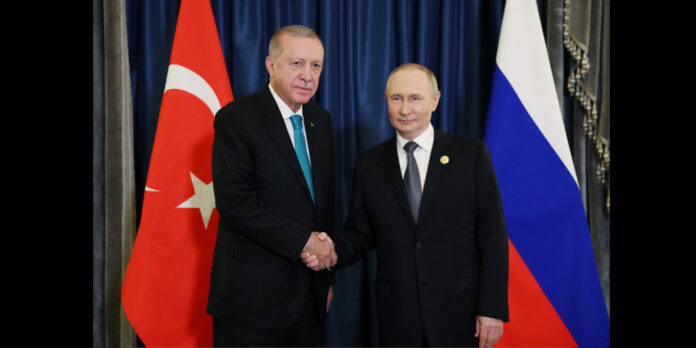
Iranian officials have simultaneously explored closer coordination with Russia regarding oversight proposals linked to future nuclear arrangements.
Earlier claims involving possible uranium removal mechanisms involving foreign powers were likewise met with skepticism in Tehran.
Inside Iran, several officials continue describing Trump’s public statements as a political bluff aimed at strengthening Washington’s negotiating leverage.
Despite ongoing backchannel contacts, Tehran insists that any future negotiations must be based on equality, sovereignty, and enforceable commitments rather than media-driven expectations or unilateral pressure tactics.