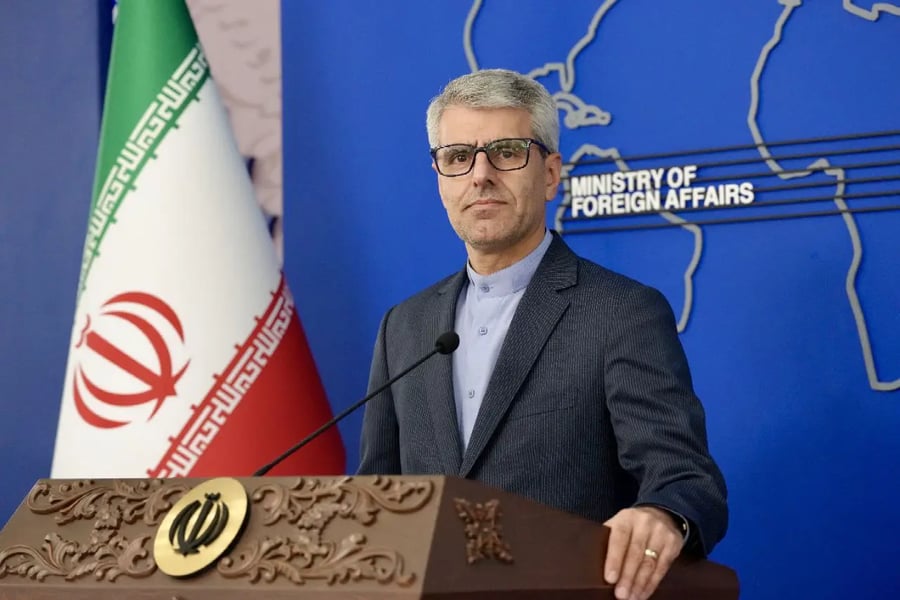

Iran said Saturday that Tehran and Washington have moved closer toward resolving major disagreements, signaling fresh diplomatic momentum in one of the world’s most closely watched geopolitical standoffs.
The remarks from Iranian Foreign Ministry spokesman Esmail Baghaei come amid renewed indirect negotiations focused on sanctions relief, Iran’s nuclear activities, and broader regional tensions involving the Persian Gulf and the Strait of Hormuz.
Speaking to Iranian state media, Baghaei said the positions of both sides had “converged,” though he stressed that this did not mean a final agreement had been reached. Instead, Tehran believes both governments are now closer to identifying mechanisms that could eventually resolve longstanding disputes between the Islamic Republic and the United States.
The comments reflect a noticeable shift in tone after months of heightened tensions that included military threats, sanctions pressure, and disputes over uranium enrichment. Diplomats involved in the talks have reportedly focused on narrowing technical and political gaps while avoiding direct public escalation.
Iranian officials continue to insist that sanctions relief remains central to any future understanding with Washington. Tehran has repeatedly argued that Western economic restrictions have severely damaged Iran’s economy and obstructed normal trade, banking, and oil exports.
At the same time, US negotiators are seeking stricter guarantees regarding Iran’s nuclear program and regional security commitments. Iranian authorities continue to insist their nuclear activities remain peaceful and compliant with international obligations.
Baghaei’s statement also comes as multiple regional actors, including Pakistan, Qatar, and Oman, intensify mediation efforts aimed at preventing another major confrontation in the Middle East.
Diplomatic sources say negotiators are working through complex issues involving maritime security, sanctions frameworks, and oversight of Iran’s enriched uranium stockpile.
Recent reports indicate that Tehran submitted detailed proposals during the latest round of indirect discussions. Iranian media outlets have described the process as difficult but constructive, with negotiators attempting to preserve diplomatic negotiations while narrowing gaps with Washington.
Despite the more optimistic rhetoric, major obstacles remain unresolved. Iranian leaders have repeatedly stated that the country will not compromise on what they describe as sovereign rights, particularly regarding nuclear enrichment and national defense capabilities.
The United States has maintained pressure on Iran through sanctions and military deployments while simultaneously leaving the door open for diplomacy. American officials have emphasized that any future agreement must include guarantees preventing Tehran from obtaining nuclear weapons capability.
Analysts say the latest diplomatic movement is especially significant because of growing concerns over instability in the Persian Gulf. Any prolonged escalation between Tehran and Washington could threaten global oil markets and deepen economic uncertainty across Europe, Asia, and the Gulf region.
The renewed contacts also arrive at a politically sensitive moment for both governments. In Tehran, officials are attempting to stabilize economic conditions while projecting strength against Western pressure. In Washington, policymakers are facing increasing scrutiny over Middle East strategy and the future of US-Iran peace talks.
Western diplomats have recently pointed to signs of progress in negotiations, although officials on both sides continue to caution that a final breakthrough remains uncertain.
Regional observers also believe that broader regional diplomacy could become increasingly important in the coming weeks as mediators push for a wider de-escalation framework.
Several officials familiar with the discussions say informal diplomatic channels remain active despite persistent mistrust between Tehran and Washington.
Meanwhile, European and Gulf mediators are also examining proposals for a potential temporary agreement that could reduce tensions while broader negotiations continue.
Diplomatic sources in the region say discussions have also included a possible ceasefire proposal tied to wider security guarantees and sanctions arrangements.
While no formal breakthrough has yet been announced, officials in both capitals appear increasingly focused on preventing further escalation and keeping alive prospects for a future peace deal.
—Inputs from Sputnik.