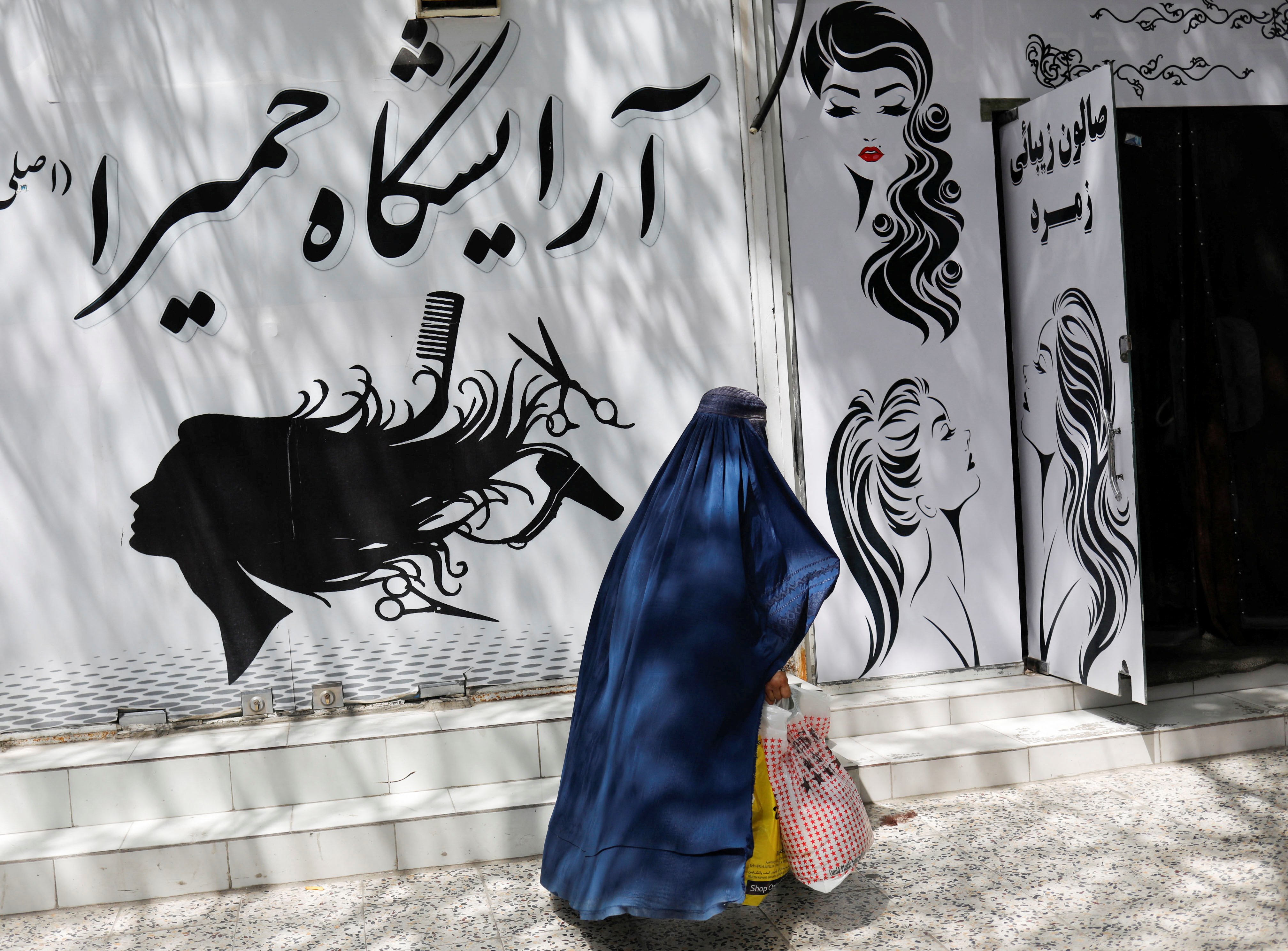
HERAT, Afghanistan — The woman was already on a minibus when the Taliban officers stopped it. She had her hair covered and her body draped in an Iranian-style hijab — a style worn by generations of Tajik women in Herat. It was not enough. Officers armed with sticks boarded the vehicle, accused her of non-compliance, and forced her off into the street.
That scene, recounted by local residents to Afghanistan International, was replicated across several districts of Herat on Saturday as operatives of the Taliban’s Ministry for the Propagation of Virtue and Prevention of Vice — the muhtasibs — carried out coordinated sweeps that resulted in the detention of more than two dozen women. Witnesses said the operation began in the Lilami area before expanding to the Almas Sharq shopping centre and the Qasr neighborhood, with some women shouting and visibly resisting as they were loaded into minibuses.
A shopkeeper in Lilami described the aftermath: roads emptied not because the women were all detained, but because many fled on foot when they saw the patrols approaching. Some of those who were stopped, witnesses told Afghanistan International, appeared to be in full Islamic dress. The charge against them was the absence of a prayer veil — or, in some cases, the presence of makeup.
The raids did not arrive without warning. On Friday, the local ministry had announced through Herat’s mosque imams during the weekly prayer that women who appear in public without a full burqa — including those who merely reveal their faces or wear cosmetics — would be prosecuted, arrested, and jailed. The announcement, corroborated by TOLOnews Plus, framed the enforcement as religious obligation. What followed on Saturday was its operational expression.
Herat occupies a particular place in this crackdown. The city is majority ethnic Tajik, with deep cultural and commercial ties to neighboring Iran. Before the Taliban’s return to power in August 2021, women in Herat wore the manto — a long coat — and loose Arabic or Iranian-style hijabs that left their faces visible. The burqa, the full-body covering with a mesh screen for the eyes that the Taliban now mandates, was historically rare here and widely considered a Pashtun import, alien to the city’s self-conception.
That cultural context has made Herat the sharpest point of friction in Taliban dress enforcement. Since November 2025, when local authorities barred women without burqas from entering public hospitals — a restriction that Human Rights Watch documented caused a 28 percent drop in urgent hospital admissions in the opening days — the city’s streets have been progressively transformed. Checkpoints appeared at major intersections in January 2026. Taxis were stopped and drivers beaten for carrying women wearing mantos. Women as young as twelve and as old as seventy were pulled aside for interrogation.
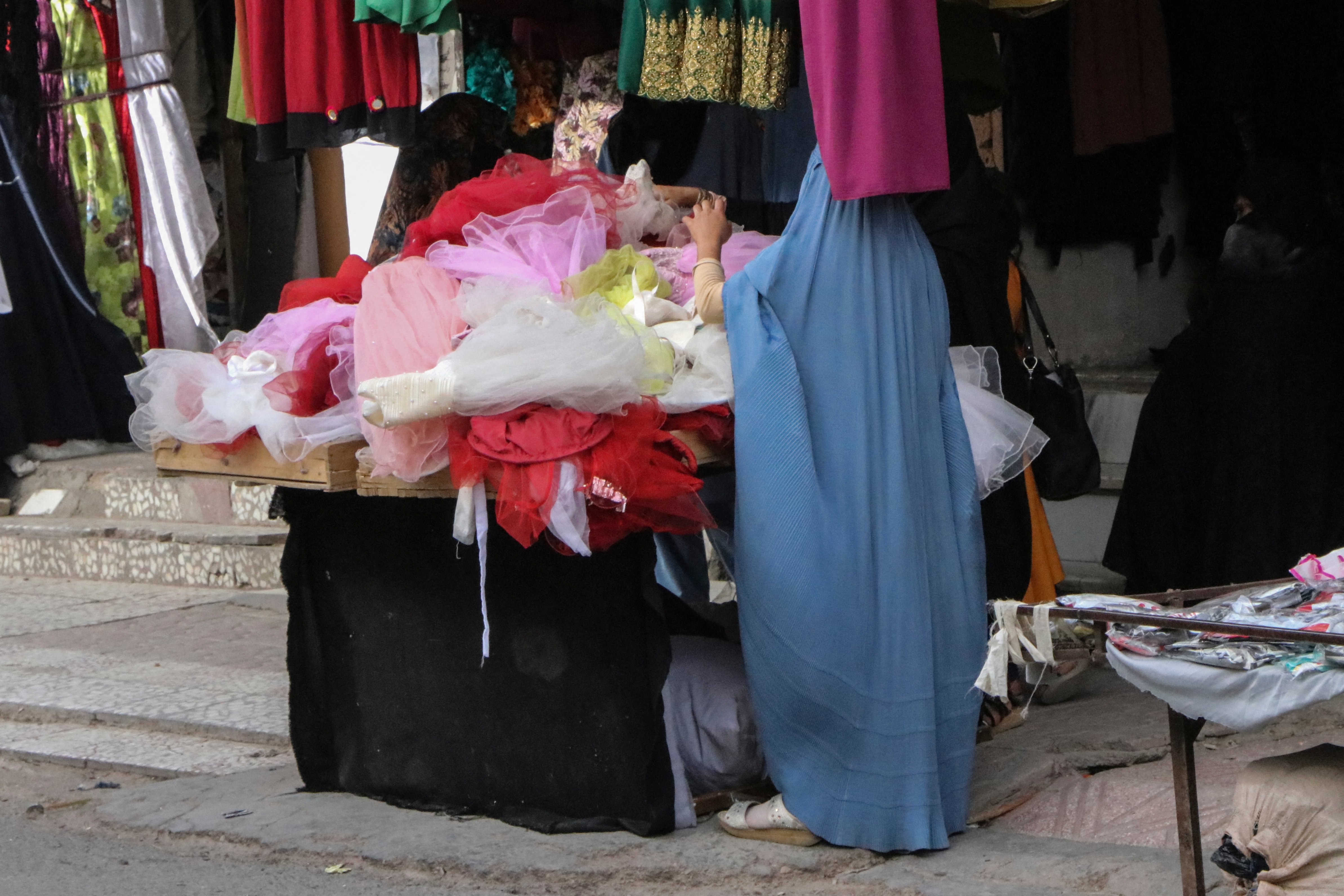
Saturday’s raids represented something slightly different: not checkpoint enforcement, but a proactive sweep of commercial and residential areas, coordinated across multiple neighborhoods on the same day and preceded by a formal mosque announcement. The sequencing — warning through religious authorities, then street operation within 24 hours — signals a structured escalation rather than sporadic policing.
Women in Herat have told reporters, consistently and under conditions of anonymity, that the burqa is simply not wearable in the city’s summer heat. The Afghan burqa — typically blue, polyester, and fitted with a dense mesh panel that severely restricts airflow — becomes, in temperatures that routinely exceed 38 degrees Celsius, a physical ordeal. “Breathing is our right,” one woman in Herat wrote in a message shared by activist groups after earlier burqa protests, where women burned the garments in symbolic demonstrations. What those demonstrations could not change is now being settled, in the Taliban’s calculus, by arrest.
The Herat crackdown sits within a pattern that has accelerated nationally since 2024. The Taliban’s August 2024 “vice and virtue” decree formally required women to cover their bodies and faces at all times in public. In July 2025, the UN Assistance Mission in Afghanistan documented mass arrests of women in Kabul for alleged hijab violations, describing the detentions as contributing to “a climate of fear” and urging the Taliban to rescind policies that restrict women’s fundamental freedoms. The Taliban responded that international concern over Afghan women’s dress was unwarranted.
Herat’s local vice and virtue head, Azizurrahman Mohajer, has been the face of provincial enforcement since his appointment in November 2021. Journalists covering Herat told Zan Times, a women-led investigative outlet, that Mohajer publicly stated in a December 2025 closed-door meeting that he is a close associate of Taliban Supreme Leader Hibatullah Akhundzada and that enforcing the leader’s decrees to the letter is his explicit goal. The raids of Saturday, preceded by Friday prayer sermons that framed non-compliance as a religious failing not just for the woman but for the imam whose wife violated the code, carry the hallmarks of that ambition.
What the Taliban cannot easily account for is what Saturday’s empty roads in Lilami actually cost. Women who fled rather than be detained did not simply go home and comply. Afghan women working for international organizations have already seen those roles eliminated. Hospital access has narrowed. Schools above sixth grade have been closed since 2022. The dress code raids are the visible surface of a system that has, layer by layer, removed most reasons for a woman to be on the street at all — which may, in the Taliban’s logic, be precisely the point.
It remains unclear how many of those detained Saturday are still in custody, where they are being held, and what formal charges, if any, have been filed against them. The Taliban’s Ministry for the Propagation of Virtue and Prevention of Vice did not respond to requests for comment.