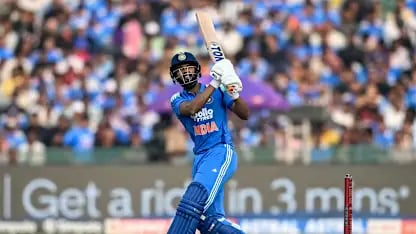

NEW DELHI — Virat Kohli has not played a single ODI since January, and his hamstring will ensure that run extends at least through June. The injury he sustained during Royal Challengers Bengaluru’s IPL 2026 title win last month has ruled him out of all three matches against Afghanistan starting June 13. Yashasvi Jaiswal steps in.
The replacement feels clean enough on paper. Jaiswal has played four ODIs, scored a century against South Africa in December, and holds a left-handed profile that gives India something different at the top. But the reshuffle throws the existing arithmetic at India’s ODI top order into sharper relief. Rohit Sharma, Shubman Gill, Jaiswal, Virat Kohli, Shreyas Iyer — five batters, each with a credible claim to the first four positions, competing for slots in the format that now leads most directly to the 2027 World Cup. Nobody in that queue is being dropped. Nobody needs to be.
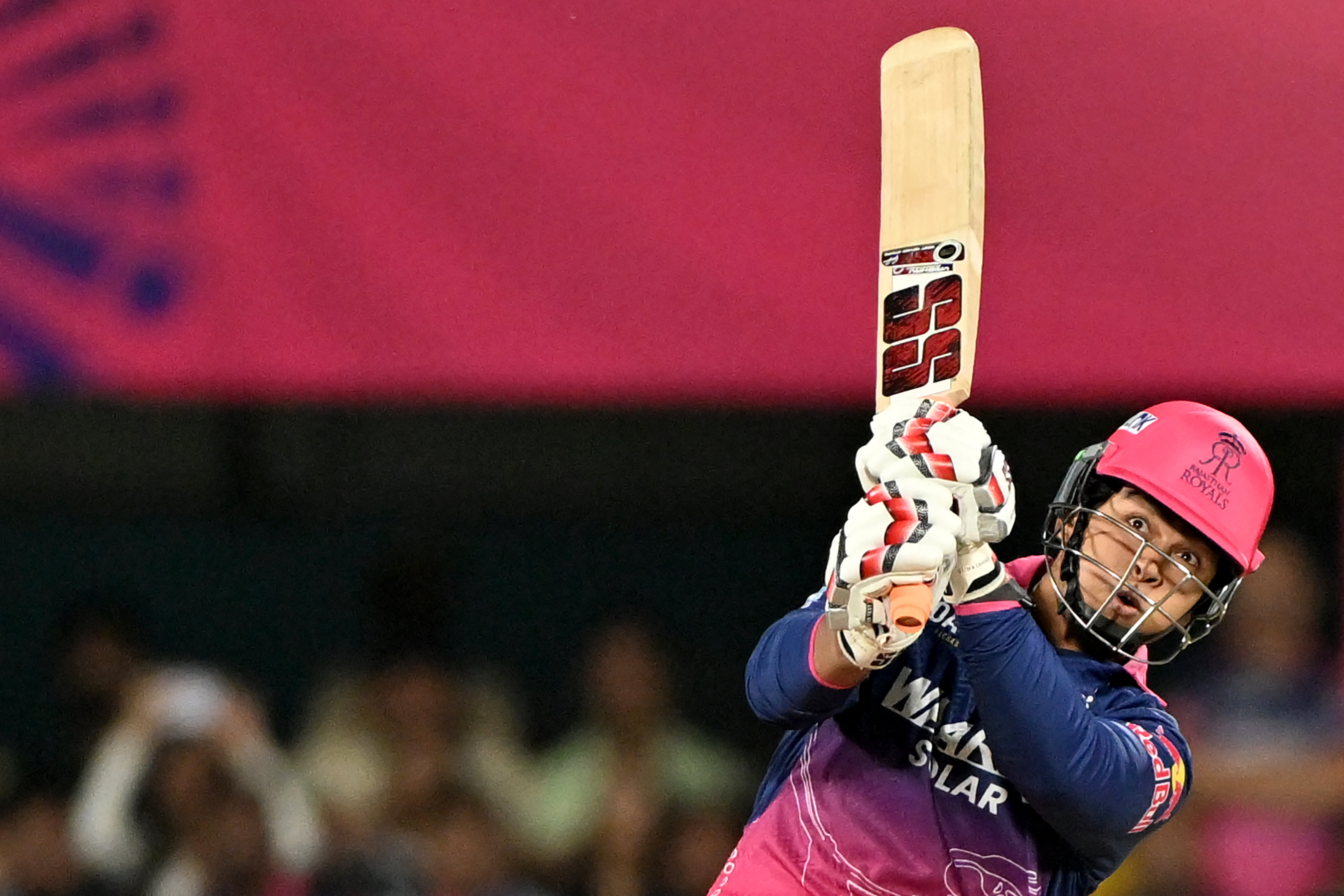
And then there is Vaibhav Sooryavanshi, who is not in this queue at all, because the selectors decided — three weeks ago and without apparent hesitation — that he was not ready for it.
The decision was defensible when Ajit Agarkar announced the original Afghanistan squads in May. Sooryavanshi had just finished an IPL season in which he scored 776 runs at a strike rate above 237 — numbers that no teenager had produced in the tournament’s history. But Agarkar’s rationale was straightforward: Yashasvi Jaiswal exists. “Let’s not forget Yashasvi Jaiswal,” the chief selector said at the press conference, framing it as a matter of respect for form rather than skepticism about the 15-year-old’s readiness. The implication was that the opening slot Sooryavanshi would compete for already had an occupant who had earned it.
That occupant is now in the squad, which means Sooryavanshi’s exclusion has been, in a sense, vindicated by the very circumstances that made him seem undervalued. Jaiswal was always the logical call. He is, as former England captain Nasser Hussain observed in a widely-circulated analysis this week, the kind of batter whose technique in foreign conditions remains the unanswered question — but domestically, against Afghanistan, his inclusion is uncomplicated.

What is less uncomplicated is the longer argument. The ESPN clip circulating on Saturday, attributed to a batting analyst’s segment, makes the case that Sooryavanshi “will keep openers on their toes” — meaning not Indian openers, but opposition ones. The framing is that his batting poses such immediate threat to bowling lines that defensive fielding setups become untenable from the first ball. That observation applies to any format he plays, including the one India has now given him: the India A tri-nation series in Dambulla against Sri Lanka A and Afghanistan A, starting June 9.
India A is the correct staging ground, and no reasonable argument exists for bypassing it. The question is what happens after Dambulla, and whether the ODI pathway ever opens, or whether the format’s existing hierarchy simply reasserts itself every time a vacancy appears and is filled by someone already established.
Kohli’s injury is instructive here. He plays only ODI cricket now, having retired from Tests and T20Is. His availability is the single structural uncertainty in India’s 50-over top order — and when he becomes unavailable, Jaiswal is the replacement. Not Sooryavanshi. The teenager has been assigned to a different ladder entirely: the T20I pathway, where his selection for the Asian Games squad in Japan confirmed his standing, and the India A circuit, where the expectation is that runs in Dambulla become the evidence selectors need to accelerate his senior integration.
Whether that acceleration includes ODIs before the 2027 World Cup remains, for now, genuinely unclear. Hussain’s observation — that Sooryavanshi has to play, but that the conditions question is unanswered — applies with equal force to the format question. He has to play. The question is which version of the game gives him the stage to answer it, and whether the ODI calendar will offer that before the tournament that matters most.
For now, Kohli’s hamstring has settled one selection debate for six weeks. India’s ODI squad for Afghanistan — Gill, Rohit, Jaiswal, Iyer, Rahul, Kishan, Pandya, Reddy, Sundar, Kuldeep, Arshdeep, Prasidh, Prince Yadav, Brar, Dubey — is a settled, experienced unit with room for the spinners and pacers India will need on subcontinental surfaces. Kohli is expected to return for the England ODI series from July 14, subject to physio clearance.
What the squad does not contain is any version of the conversation about India’s post-Kohli opening architecture — because Kohli is not going anywhere, and the conversation therefore has nowhere to land. Sooryavanshi is being developed carefully, routed through the right structure, protected from premature exposure in a format where the margins for a teenager are small and the field placements unforgiving. That is the official position, and it is not wrong.
It is also a position that cannot hold indefinitely against a player who has already been named in India’s Asian Games T20 squad and whose IPL numbers remain the most startling batting statistic of the 2026 calendar year. At some point, the ladder he has been placed on and the ladder he is being kept off will converge. Afghanistan, beginning June 13 in Dharamshala, will not be that moment. England in July probably will not be either. But the fixtures are accumulating.