
LONDON — Nasser Hussain did not hedge. Speaking on the ICC Review alongside host Sanjana Ganesan, the former England captain delivered the kind of verdict that tends to settle debates inside dressing rooms before selectors even convene: Vaibhav Sooryavanshi must play for India, and the question of who gets left out is secondary.
“In the end, someone makes such a case, such a consistent case, and such an incredible case for being picked. In the end, you have to say, I don’t care who we’re leaving out, this lad has to play,” Hussain said.
BCCI selectors, meeting in Mumbai on Saturday, appeared to agree. Sooryavanshi earned his maiden senior India call-up for the upcoming T20 series in Ireland and England — making him the youngest player ever to represent the country in international cricket, younger even than Sachin Tendulkar, who made his Test debut at 16 years and 205 days in 1989. The selection, confirmed as part of a broader squad overhaul that also installed Shreyas Iyer as the new T20I captain, marks the end of a selection debate that had been building since the teenager’s IPL season defied reasonable expectation.
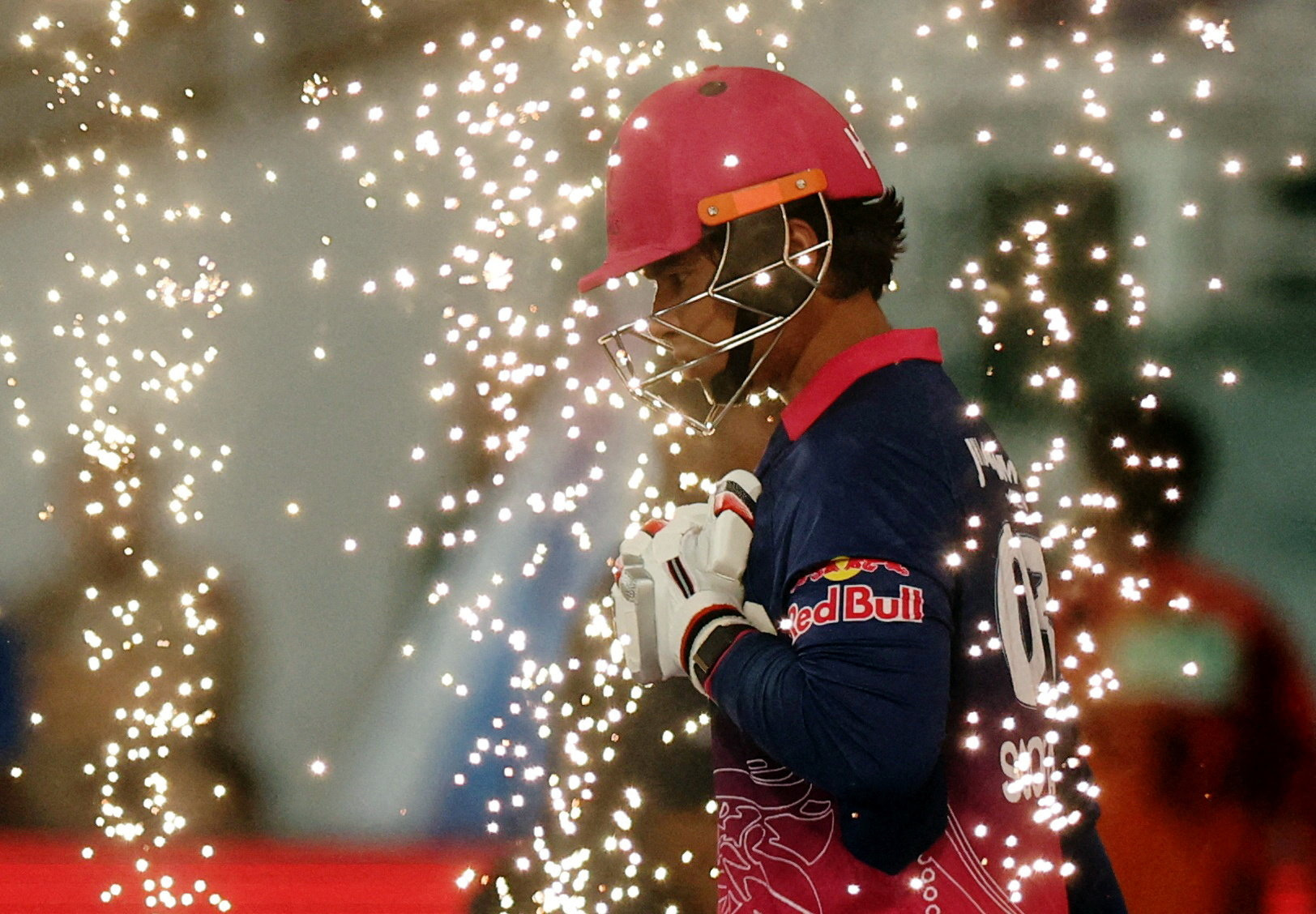
The numbers that drove Hussain’s endorsement were not subtle. Sooryavanshi finished the IPL as the tournament’s leading run-scorer — 776 runs in sixteen games at a strike rate of 237.30, with 72 sixes, the highest single-season total in the competition’s history. He was 15 years old for all of it. He played for Rajasthan Royals, won the Orange Cap, was named Most Valuable Player and Emerging Player of the Season, and did it in a lineup that did not reach the final.
Hussain, who began his own England career in the 1990 Nehru Cup and watched a 16-year-old Tendulkar stride out to bat against him, said the comparison was not something he offered lightly. “One of my first games for England was in the Nehru Cup, that’s how long ago it was, and this young lad strode out with pads on that I’d never seen before, and his name was Sachin Tendulkar,” he said. “And I was in complete awe.” He noted that Tendulkar himself had been vocal in his praise of Sooryavanshi’s bat swing on social media — a signal Hussain treated as meaningful rather than ceremonial.
What Hussain would not do was pretend the harder question does not exist. Sooryavanshi has played all his cricket in India — domestic conditions, subcontinental pitches, the franchise bubble of the IPL where even good bowling attacks can be dismantled by any left-hander with fast hands and a good eye for the length. England is different. Ireland is different. The Dukes ball moves. Skies close in. Seamers with conventional swing — the kind Sooryavanshi has never faced at this level — become a genuine examination rather than a temporary inconvenience.
“There are other challenges doing it away from home,” Hussain acknowledged. “Doing it against a ball that’s moving around, having an eventual downturn in form, which he’s not had yet, finding a weakness, maybe the short ball, who knows? But he needs to get through all of that before you get to a world event.”
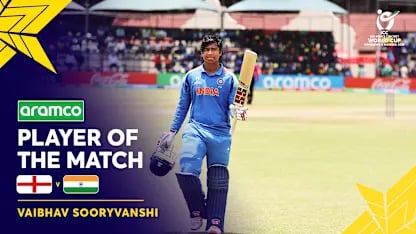
The point was not a dismissal. It was, if anything, the opposite: Hussain’s insistence that Sooryavanshi must play is precisely because those tests need to come now, in low-stakes bilateral series, rather than at a World Cup or in a series where India’s broader tournament ambitions are on the line. The U19 World Cup in Zimbabwe earlier this year offered partial evidence — Sooryavanshi scored 175 off 80 balls in the final, the highest score ever recorded in a U19 final, against an England attack that he treated with the same contempt he showed IPL bowlers. Hussain acknowledged it directly: “We saw what he did to England in the U19 World Cup, to everyone, but England in particular. My word, this lad is a talent.”
Whether that translates against senior international bowling — Mark Wood at full pace, Jofra Archer if fit, the movement on offer at venues like Bristol or Headingley — is the experiment India’s selectors have now committed to running. The difference between a subcontinental white-ball prodigy and a finished international batter is usually answered in England, and usually early.
Hussain’s read on the timing cuts against those who argue India should protect Sooryavanshi from early exposure to conditions that could dent his confidence before he is technically equipped to handle them. For Hussain, that argument gets the calculus backward. Sheltering him from challenge is itself a risk — it delays the feedback loop a player of his talent needs. The Ireland and England series, low-pressure by India’s standards, is precisely the right environment to find the fault lines before they matter.
What nobody around the selection table can yet answer — and Hussain was careful not to pretend otherwise — is which version of Sooryavanshi shows up when a good seamer finds his outside edge three times in a row and the crowd is not 80,000 people in Jaipur. That answer does not exist yet. It will, sometime in the next six weeks, in conditions that will tell Indian cricket more about this teenager’s ceiling than any IPL season ever could.
Sooryavanshi has also been included in India’s 30-member probables list for the Asian Games in September-October in Japan, Indian media reported, suggesting the selectors’ confidence extends beyond this immediate tour.