
SIMFEROPOL — The bridge near the village of Chongar on the administrative border between the Kherson region and Crimea was damaged early Sunday in a Ukrainian drone attack, forcing Russian-installed officials to shut the main Dzhankoy vehicle checkpoint and redirect traffic through alternative crossings, according to Kherson Governor Vladimir Saldo.
The strike tells a story that is now frustratingly familiar to Russian logistics planners: the narrow corridor connecting occupied Crimea to the southern front is, once again, not fully open. Saldo, posting on the Max platform, confirmed that traffic through Dzhankoy had been “temporarily blocked” while specialized services assessed the damage. He gave no timeline for restoration.
Vehicles were diverted to the Armyansk and Perekop border checkpoints, the two alternative road routes linking Crimea to the Russian-controlled mainland. Both were operating normally following the rerouting, the governor said.
The Chongar crossing sits at the intersection of several supply arteries that Russian forces have relied upon since the full-scale conflict began in February 2022. Its periodic disruption has been a consistent element of Ukraine’s southern campaign — the bridge was struck by Storm Shadow cruise missiles in June 2023 and again in August of that year, each time diverting freight and personnel movements for days or weeks. What distinguished Sunday’s attack was the method: drones, not cruise missiles, suggesting Kyiv’s targeting of this corridor has become a routine operational priority rather than a sporadic strategic gesture.
Ukraine has not officially claimed responsibility for the strike. That silence, too, follows the established pattern — Kyiv rarely confirms individual bridge attacks in occupied territory while they are under active assessment.
The logistics weight of Chongar is substantial. The Dzhankoy junction is the most direct land route from Crimea to the Zaporizhzhia and Kherson fronts, and it handles a significant portion of the Russian military’s southward supply chain. When it is closed, even temporarily, Russian convoys must absorb longer transit times through Armyansk or the older Perekop route — delays that compound across hundreds of daily movements. The Kerch Bridge, Crimea’s fixed link to the Russian mainland, has itself been struck three times since 2022, most recently in June 2025 by Ukrainian Security Service divers who mined its underwater supports.
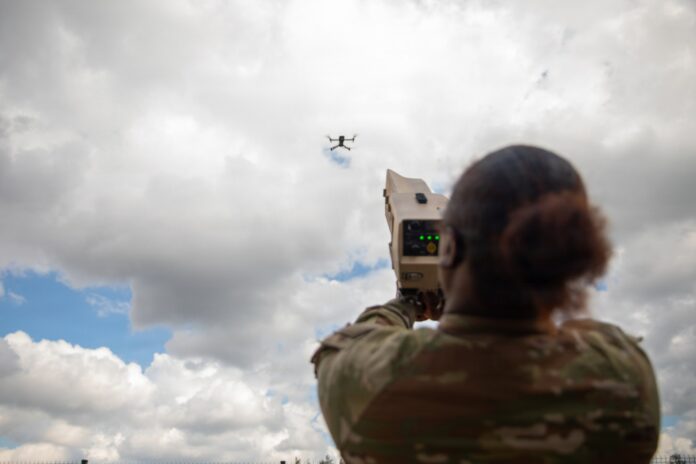
Ukraine’s escalating drone campaign has targeted Russian-controlled infrastructure repeatedly in recent weeks, including energy facilities across occupied southern Ukraine and resupply routes that Russian forces have used to sustain front-line positions. On May 21, Saldo himself restricted movement along the M-14 highway connecting Mariupol, Berdyansk, and Melitopol because of the number of vehicles being struck there, according to Al Jazeera.
The recurrence of strikes on Chongar raises a question Russian engineers and military planners have not yet answered satisfactorily: why does this bridge remain so vulnerable? Following the 2023 missile attacks, repair crews were brought in from the Rostov region and the crossing was restored within days. But a temporary fix is not a hardened one. Bridge reinforcement, decoy structures, or road diversions that reduce traffic density at a single chokepoint have not publicly materialized.
What Sunday’s traffic rerouting made visible — again — is the degree to which Russia’s control of occupied southern Ukraine is logistically contingent. Territory held on the map is only as secure as the roads and bridges through which it is supplied. Chongar is one of perhaps four critical chokepoints in that network. Ukraine has now struck it multiple times with multiple weapon types.
Saldo said a timeline for restoring traffic would be announced separately. Specialized repair services were already working at the site as of Sunday morning. Whether that means hours or days remains unclear — a reporting gap that, as of publication, neither Russian nor Ukrainian sources had closed.
The broader impasse in peace negotiations means that Crimea’s land corridor will continue to function as both a military lifeline and a target. As long as Russian forces hold positions in Kherson and Zaporizhzhia, this strip of road and bridge will be contested. Sunday’s drone strike was one more data point in that calculus — and the repair crews at Chongar will almost certainly be needed again.