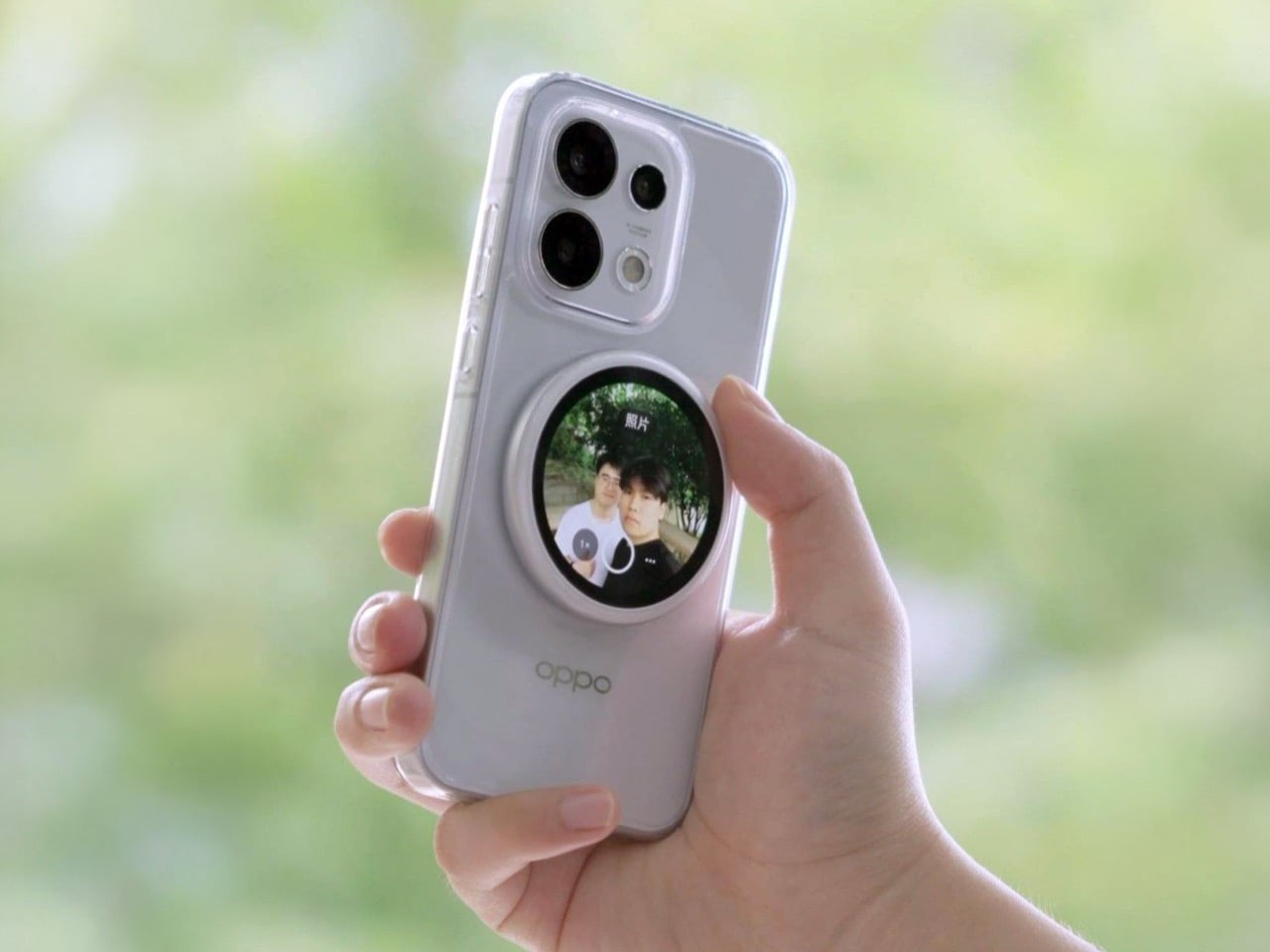
SHENZHEN — The front camera has always been the compromise you made because the good camera was facing the wrong direction. Every photographer, every vlogger shooting themselves on a tripod, every person who has squinted at a blurry selfie and thought “the rear camera would have nailed this” has run into the same wall: you cannot see what the rear lens is capturing when it is pointed away from you. OPPO’s answer, launched in China on May 25, arrived not as a software trick or a folding phone gimmick but as a small circular screen that clips to the back of your phone and shows you exactly what the rear camera sees.
The device is called the Bubble. It costs 499 yuan, or roughly $73. It weighs 27.5 grams, adds 7mm of depth, and carries a 550mAh battery rechargeable via USB-C. None of those figures are the interesting part. The interesting part is a 58mm circular AMOLED touchscreen that streams your rear camera’s live feed wirelessly over Bluetooth, up to 10 meters away, while simultaneously functioning as a remote shutter trigger. That range turns the Bubble from a selfie mirror into something closer to a legitimate remote shooting monitor — the kind of workflow tool that content creators used to approximate with separate Bluetooth clickers and a prayer that the framing was right.
OPPO launched the Bubble alongside the Reno 16 series, and that pairing defines both the device’s appeal and its most immediate limitation. The live camera preview only works with a specific device list: the Reno 14, Reno 15, Reno 16, Find X8, Find X9, Find X9 Pro, and Find X9 Ultra. The last of those, the Find X9 Ultra, which has drawn direct comparisons to Samsung’s Galaxy S26 Ultra in camera performance this year, is exactly the kind of hardware where the Bubble’s premise makes most sense. The phone has a camera system that front-facing sensors cannot touch. The Bubble gives you a way to actually use it on yourself.
The AMOLED panel is doing the heavy lifting here in a way that matters. A washed-out preview would undercut the whole argument for the accessory — if you cannot trust what you are seeing on the Bubble’s screen, the device offers no real advantage over guessing. OPPO chose a display technology with deep blacks and accurate color reproduction, which means the circular preview you are watching is close enough to the final image to be genuinely useful for framing and exposure checks. The round form factor is a deliberate design choice rather than a technical requirement; a rectangular screen would have worked but would have read as an afterthought bolted onto the phone’s back. The circle reads more like a design decision, something between tech accessory and wearable jewelry.
Beyond the camera preview, OPPO has given the Bubble a display life of its own. When you are not actively shooting, the screen supports custom wallpapers, live photos, short videos, and animated themes. The company has also built in a boarding pass display function, which is either a genuinely useful travel feature or evidence that the product team ran out of serious use cases and started adding novelties — depending on how charitable you are feeling. What it does confirm is that OPPO is positioning the Bubble as a persistent wearable display, not just a shooting aid you pop on for the occasional selfie session.
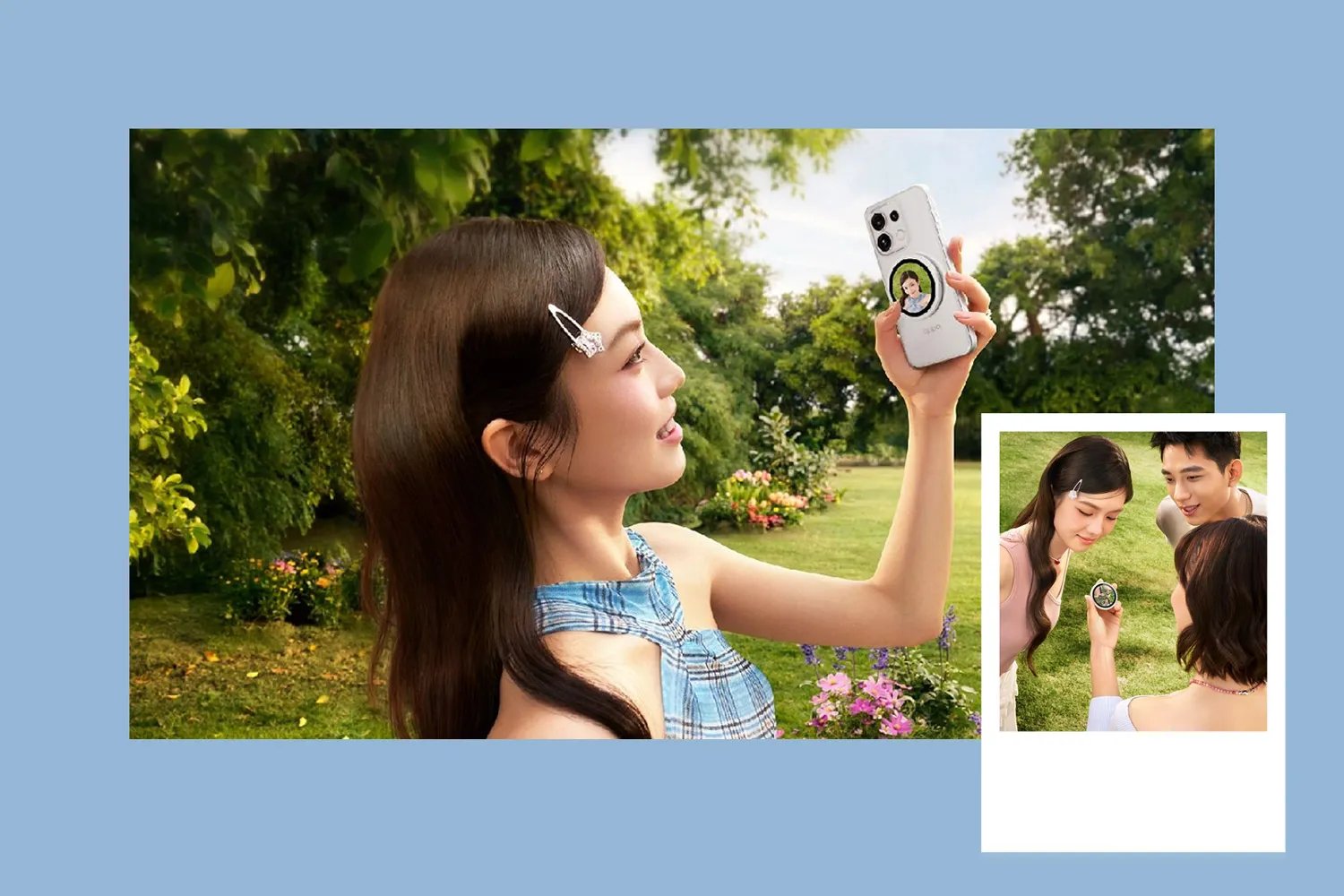
The 10-meter Bluetooth range is worth dwelling on. At arm’s length, the Bubble is a selfie tool. At 10 meters, it is a remote monitor for a camera on a tripod across a room, a way to confirm a group shot is actually composed before everyone has to reassemble for attempt number six, a tool for vloggers who want to walk into frame while still watching what the camera is capturing. That combination — preview plus remote shutter in one attached accessory — was not achievable before without carrying additional hardware. People bought separate Bluetooth remotes to approximate half of that workflow. The Bubble collapses it into a 27.5-gram circle.
Apple’s absence from this space is striking. MagSafe has been on iPhones since 2020. The magnetic ecosystem that followed built out a credible range of wallets, chargers, stands, and cases. The one thing it never produced was a screen — any kind of secondary display that used the magnetic attachment point to put information or a live feed on the phone’s back. OPPO, a brand with a fraction of Apple’s accessory ecosystem leverage, shipped one first. Whether Apple views the Bubble as a category worth entering or an edge-case curiosity it has chosen to ignore is not publicly known. What is known is that the design space was open for six years, and someone else claimed it.
The China-only availability and the short device compatibility list are the two facts that will define whether the Bubble stays a product launch story or becomes a genuine category. OPPO has teased a pendant variant, suggesting the Bubble is intended as a platform rather than a one-off, but whether that pendant carries the live camera preview or strips back to a display panel has not been confirmed. The broader question — whether OPPO widens the compatible device list to include non-OPPO phones through a third-party app, or keeps it locked to its own ecosystem — will determine whether this reaches the content creator audience that would find it most useful. Competitors like Insta360 have already demonstrated that viewfinder accessories can drive meaningful accessory attachment rates when the workflow benefit is clear enough.
For now, what OPPO has shipped is a device that does something real, at a price that is genuinely accessible, for a user problem that has existed since front cameras were added to phones and everyone quietly agreed they were a necessary compromise. The 58mm AMOLED screen on the back of your phone is a more honest answer to that problem than a better front camera has ever been. Whether the Bubble expands its reach or remains a China-market curiosity attached to one phone series is the question its designers have not yet answered — and cannot answer in a press release.