
GAZA — Two and a half years after the raid that brought Hamas into Kisufim, one of the men who led it is dead.
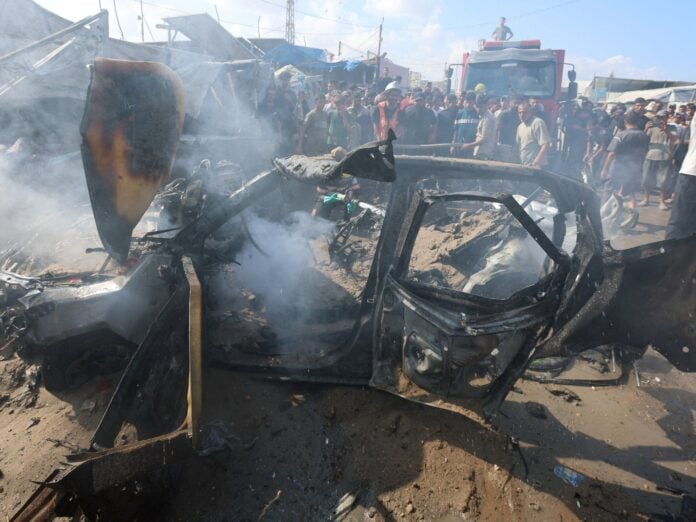
The Israel Defense Forces and the Israel Security Agency, known as Shin Bet, announced Sunday that Sakr Abu Karim — a cell commander in Hamas’s Nukhba special force — was killed in a targeted strike in the southern Gaza Strip carried out the previous Tuesday. Abu Karim was among the leaders of the October 7, 2023, infiltration of the Kisufim area, the military said, where 20 people were killed in Hamas’s assault on that day.
The announcement added a detail that shifted the killing from a retrospective reckoning into something more immediate: in the months before the strike, Abu Karim had been actively working to rebuild Hamas’s military capacity in southern Gaza, maintaining what the IDF described as a large weapons cache at his residence and conducting what the military characterized as terrorist training sessions — all, it said, in violation of the existing ceasefire agreement.
A second militant, identified by the military as a communications operative within Hamas, was also killed in the same strike. The IDF did not release that operative’s name.
What sets Abu Karim apart from the dozens of Hamas figures Israel has announced killing over the past twenty months is the specific geography of his original role. The Kisufim area, southeast of Gaza near the border fence, became one of the grimmer datelines of October 7 — the entry corridor for a Nukhba assault that overwhelmed community defenses in minutes. Abu Karim, the joint IDF-Shin Bet statement said, was among the commanders who led that breach. He then remained in Gaza throughout the war, directing attacks against Israeli troops operating in the Strip rather than retreating into the tunnel network or seeking any arrangement to leave.
The Nukhba force — Hamas’s elite ground assault unit, trained specifically for cross-border raids — carried out the bulk of the killing and abduction operations on October 7. Its fighters were trained for years in techniques that Israeli military investigators later described as resembling special operations doctrine: small-unit infiltration, hostage seizure, and the rapid exploitation of breaches in perimeter defenses. Abu Karim was a cell commander within that structure, meaning he held operational responsibility for a specific element of the Kisufim assault rather than a purely logistical or planning role.
The IDF’s statement, issued jointly with Shin Bet, said his recent activities posed what the military described as an immediate threat to Israeli forces operating in Gaza. That framing — “immediate threat” — is the legal and operational language Israel uses to justify targeted killings under laws of armed conflict, distinguishing them from punitive assassination. The weapons cache and training activities documented at his residence, according to the statement, made him a legitimate military target under that standard regardless of his October 7 role.
Israel has spent much of the twenty months since October 7 hunting Hamas military commanders across the Strip. The pace of those announced eliminations has not significantly slowed during ceasefire periods — a pattern that draws consistent criticism from Hamas, which argues the killings constitute Israeli violations of ceasefire terms. Israel’s position is that targeting militants actively planning future attacks falls outside ceasefire restrictions. The IDF said that Abu Karim’s weapons stockpiling and training activities placed him squarely in that category.
The ceasefire dimension of Sunday’s announcement is not incidental. The joint IDF-Shin Bet statement specified that Abu Karim’s recent activities were carried out “in violation of the ceasefire agreement” — framing that serves a dual purpose. It justifies the strike under Israeli rules of engagement and simultaneously signals to ceasefire negotiators that Hamas’s ground-level military activity in southern Gaza has not ceased, whatever the formal status of any agreement at the political level. That dynamic has defined the war’s rhythm since earlier ceasefire efforts collapsed late last year.
What the IDF statement does not say is how long Abu Karim had been under surveillance before the Tuesday strike, how his weapons cache was identified, or whether any warning was provided to the building’s other occupants before the strike was carried out. Civilian casualties in the southern Gaza strike were not mentioned in the military’s release. According to the Jewish News Syndicate, Gazan health authorities reported separately that ten people were killed in other Israeli strikes in the Strip on the same day — a figure the IDF did not address.
Israel has now publicly claimed the deaths of a significant portion of the Nukhba commanders it has been able to identify. Senior Hamas officials, including former political chief Ismail Haniyeh and military commander Mohammed Deif, have already been killed during the course of the war — their deaths confirmed by Hamas itself in December. The elimination of mid-level operational commanders like Abu Karim represents the next tier of that campaign — the men who did not plan the attack at the strategic level but executed it on the ground, and who, Israel argues, have continued to function as operational threats inside Gaza ever since. What it cannot yet confirm is how many such commanders remain active, or whether the structures they led have been rebuilt under different names and different figures.
Hamas has not publicly responded to the announcement of Abu Karim’s death.