SAN FRANCISCO — The deal was quiet. No press release, no valuation, no triumphant announcement on social media from Snap Inc. SNAP. Just a report in Variety, a brief confirmation, and the sudden reality that a nine-year-old Bay Area startup named Illumix no longer exists as an independent company. What Snap bought when it acquired Illumix on June 4 was not a product line or a user base. It was a bet on the one technical problem that has defeated every serious attempt at consumer AR glasses: making the digital layer stay put in the real world.
Illumix, founded in 2017 by CEO Kirin Sinha, built what it described as a perception layer for phones, AR glasses, and robots. The platform is designed to let software understand and interact with the physical environment in a persistent, context-aware way, anchored to physical spaces rather than floating loosely in the visual field. That is the hard problem. Meta’s Ray-Ban glasses can take a photo and ask an AI about it. What they cannot do, at least not reliably, is attach a stable virtual object to a specific point on a specific wall in a specific room and have it stay there when you look away and look back. Illumix’s spatial mapping work is precisely what solves that problem, according to Snap.
The financial terms of the acquisition were not disclosed. Snap said it will adopt Illumix’s technology and platform and retain most of the startup’s staff, as Variety first reported. Illumix had also worked on AI integration into physical environments, including adaptive rendering for changing real-world conditions, an area that directly addresses one of the most persistent failure modes of outdoor AR.
Sinha framed the deal in terms of continuity rather than exit. “That work has powered AR experiences across real-world venues, spanning location-based entertainment, enterprise, and gaming,” she said. “This acquisition is a major milestone for Illumix and a powerful next chapter for the technology, platform, customers, partners, and team we’ve built. Snap’s bold vision for AR and AI strongly aligns with what we have always believed: that the future of computing will be more immersive, more intuitive, and ultimately more human.”
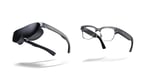
Whether Snap shares that confidence is harder to read from the outside. The company launched a standalone subsidiary called Specs Inc. in January with the explicit mandate to build consumer AR glasses, separating the initiative from Snapchat’s main engineering organization. CEO Evan Spiegel described the hardware push in Snap’s first-quarter investor letter as part of the company’s core mission: making computing more human. In April, Snap cut approximately 16 percent of its global workforce, or around 1,000 employees. Specs Inc. was not affected. The Illumix team will now feed directly into that operation.
Snap reported revenue of $1.53 billion in Q1 2026, up 12 percent year-over-year, and narrowed its net loss to $89 million from $139.6 million in the same period a year earlier. The company’s daily active user base stood at 483 million. Those financials are not the profile of a company spending recklessly, but they do not leave unlimited runway for hardware experiments either. Snap anticipates over $500 million in annualized cost reductions in the second half of 2026, a fact that makes the Illumix deal’s undisclosed price tag the subject of reasonable scrutiny. What is clear is that the acquisition was small enough to fold into operating costs and large enough to matter technically.

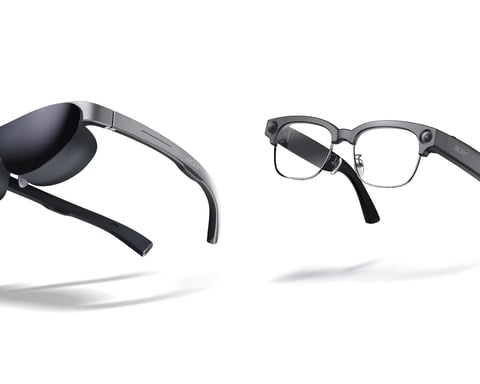
The context matters. The smart glasses market, once the domain of novelty devices and developer kits, has entered a competitive phase that resembles the early smartphone years in its pace of corporate maneuvering. EssilorLuxottica has shipped more than seven million Ray-Ban and Oakley smart glasses, and Meta is reportedly planning four new models with an aggressive push toward ten million annual units. Apple killed its Vision Pro successor program and redirected resources toward a lighter, more consumer-accessible glasses form factor. Google and Xreal’s Project Aura is targeting the same general market. Every major platform company with a hardware ambition is now pointing toward the same form factor.
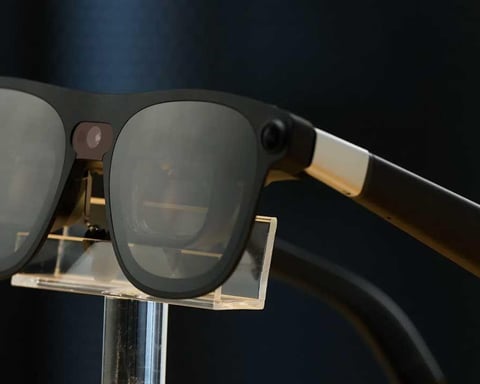
Snap’s specific edge, if it has one, is Snapchat’s existing AR developer platform. Lens Studio, its tool for building AR experiences, has a large developer community and an established distribution mechanism. Snap OS, the operating system being built for Specs, is designed to run those lenses natively on the glasses hardware. Illumix’s spatial mapping capability is the infrastructure that makes those lenses feel grounded in the real world rather than overlaid on top of it. The acquisition is less a product play than a platform play: Snap is building the layer that makes the entire AR ecosystem more useful, then positioning Specs as the hardware that runs it.
Privacy is the variable that nobody in the category has resolved. After reports that footage captured by Ray-Ban Meta glasses had been reviewed by humans outside the user’s knowledge, European regulators began examining data-handling practices across the smart glasses sector. Glasses that continuously map the physical environment raise the stakes considerably beyond cameras that occasionally take photos. Illumix’s spatial mapping technology, however technically impressive, is also a data collection mechanism, and how Snap chooses to govern that data will shape consumer trust in Specs as much as the hardware itself. The company has not addressed this publicly.
Spiegel is scheduled to deliver a keynote at the Augmented World Expo in Long Beach, California, on June 16, titled “Making Computing More Human.” That appearance, along with a Snap Specs demonstration expected at the event, is likely to be the first public view of what the Illumix integration actually looks like in practice. Samsung is expected to show its own Galaxy Glasses at its July Unpacked event. The timing puts three major AR hardware reveals within a month of each other, a compression of announcements that the industry has not seen before. What Snap chooses to demonstrate on June 16 will say more about the Illumix acquisition than any press release.