
Google and Xreal’s ambitious Android XR partnership could finally give the smart glasses market the breakthrough it has chased for more than a decade.
The unveiling of Project Aura at Google I/O 2026 instantly became one of the event’s biggest surprises, not because smart glasses are new, but because these actually looked usable. Lightweight, AI-powered, and packed with immersive spatial features, Project Aura signals a dramatic shift in how Google plans to compete against Meta and Apple in the next computing war. Early hands-on impressions suggest the device feels far more practical than previous XR concepts.
For years, the XR industry has struggled with a basic problem: consumers simply did not want to wear heavy headsets on their faces. Devices like Apple Vision Pro impressed reviewers technically but failed to convince mainstream users that mixed reality belonged in everyday life. Google appears determined not to repeat those mistakes.
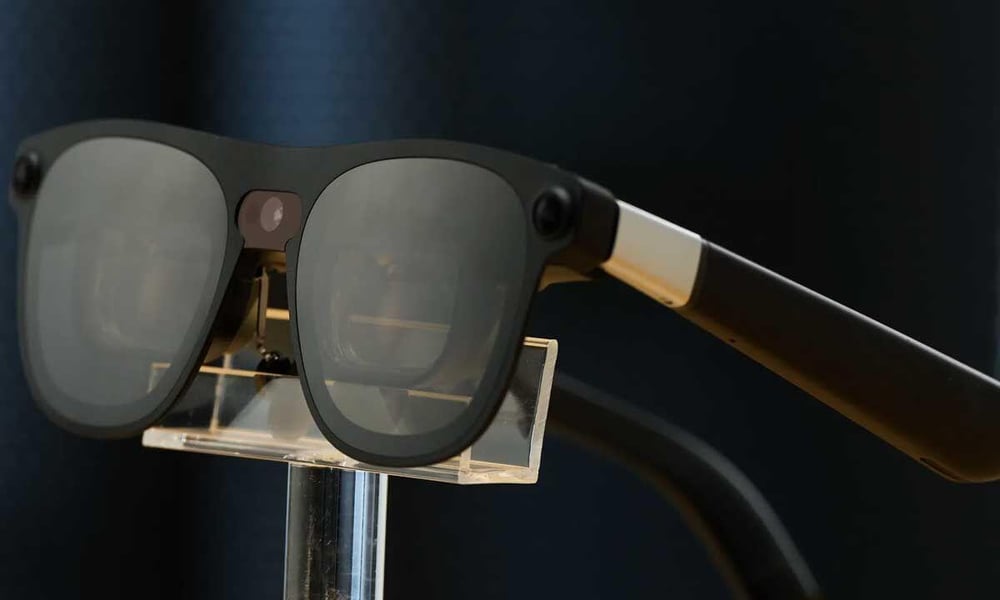
The glasses were officially showcased during Google I/O as Xreal’s first tethered Android XR wearable. The device uses a separate compute puck that houses the processor and battery, helping keep the glasses themselves remarkably light. Xreal’s wearable strategy appears focused on solving comfort issues that have plagued AR hardware for years.
Reviewers who tested Project Aura consistently highlighted comfort as the standout feature. Gizmodo described the glasses as feeling closer to standard eyewear than a face computer, noting that users are far more likely to wear compact glasses than bulky headsets in public.
The hardware itself is surprisingly ambitious.
Project Aura reportedly features a 70-degree field of view, which is substantially wider than most consumer smart glasses currently available. That wider visual space allows users to place multiple floating applications around their environment, creating a more immersive spatial workspace.
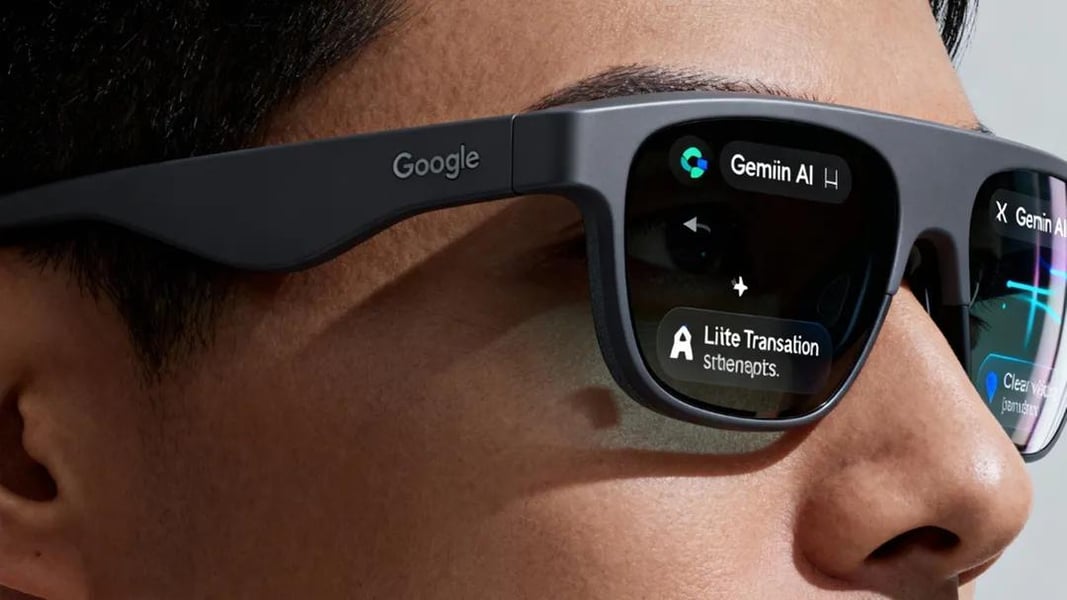
The glasses also support full Android XR experiences including hand tracking, floating app windows, immersive video playback, gaming, and Gemini-powered AI assistance. Demonstrations shown during Google I/O included spatial Google Maps navigation, multimodal AI interactions, immersive YouTube viewing, and real-time productivity features spread across virtual displays. Wearable AI demonstrations showcased how Gemini could transform everyday computing.
Google’s AI strategy may ultimately become the biggest reason these glasses matter.
Unlike the original Google Glass, which largely existed as a camera and notification accessory, Android XR devices are being positioned as AI-first companions. Gemini sits at the center of the experience, powering contextual assistance, translations, navigation, object recognition, and voice-based interactions.
That shift changes the value proposition entirely.
Consumers may not care about abstract concepts like “spatial computing,” but they do care about real-time translations while traveling, AI-assisted navigation while walking, hands-free reminders, and wearable access to information without constantly reaching for a smartphone.
Google clearly understands that now.
The company is simultaneously pursuing multiple wearable categories under the Android XR umbrella. Alongside Project Aura, Google previewed more fashion-oriented smart glasses developed with brands like Warby Parker and Gentle Monster. Those lighter glasses focus more heavily on audio experiences and AI assistance rather than immersive augmented reality. According to Google, the long-term vision is to make XR devices feel more socially natural.
Project Aura, meanwhile, targets power users and developers who want a more advanced mixed reality experience without fully committing to a headset like Apple Vision Pro or Samsung Galaxy XR.
That hybrid positioning could prove critical.
Meta smart glasses have already gained significant traction because they look socially acceptable and perform useful AI-driven tasks. Apple, on the other hand, still faces criticism that Vision Pro remains too expensive and impractical for mainstream adoption. Google appears to be trying to land somewhere in between: immersive enough to feel futuristic, but wearable enough to fit daily life.
The partnership with Xreal is also strategically important because Google’s own history in wearable AR has been turbulent.
After the failure of Google Glass, the company spent years experimenting with projects like Project Iris before ultimately canceling several internal AR efforts. Android XR now represents Google’s latest attempt to rebuild its wearable ambitions, this time by focusing more heavily on software ecosystems and hardware partnerships.
That ecosystem approach mirrors Android’s original smartphone strategy.
Rather than controlling every piece of hardware itself, Google is allowing partners like Samsung, Xreal, Warby Parker, and Gentle Monster to shape different types of XR devices around the Android XR platform. The goal appears to be creating a broad wearable ecosystem that can compete against Apple’s tightly controlled Vision platform and Meta’s growing AI glasses ecosystem.
Still, Project Aura is far from perfect.
Current prototypes reportedly lack eye tracking, meaning navigation still depends heavily on hand gestures and head movement. Battery life remains unclear, pricing has not been announced, and the tethered compute puck could limit mass-market appeal. Reviewers testing the device also noted that software responsiveness still feels early-stage compared to mature smartphone experiences.
Yet despite those limitations, Project Aura may represent the most convincing smart glasses concept Google has shown since abandoning Google Glass more than a decade ago.
The technology industry has spent years promising that augmented reality would become the next major computing platform. Until now, most of those promises felt either too futuristic or too impractical.
Project Aura is the first time Google’s wearable future actually looks believable.