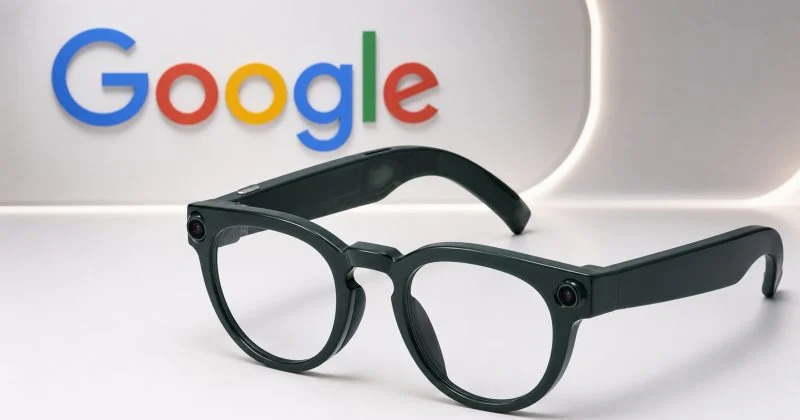

Google’s AI-powered smart glasses are moving from concept to near reality, as Android XR and Gemini become the core of the company’s next-generation wearable computing strategy. At Google I/O 2026, Google presented its most complete vision yet for a world where artificial intelligence is no longer limited to screens, but embedded directly into everyday eyewear and spatial environments.
This shift positions Google in direct competition with Meta and accelerates the global race toward ambient, AI-first computing systems.
The foundation of this ecosystem is Android XR, a dedicated platform designed to power headsets, smart glasses, and immersive spatial devices under a unified operating system. According to Google’s official documentation, Android XR extends Android into a spatial computing layer that blends digital content with the physical world.
At Google I/O 2026, the company also demonstrated how Android XR integrates deeply with Gemini AI to enable real-time contextual assistance, including live translation, navigation overlays, and object recognition.
Android XR becomes the backbone of Google’s wearable ecosystem
Google is positioning Android XR as the central operating system for all extended reality devices. This includes lightweight smart glasses designed for everyday use as well as more advanced immersive headsets.
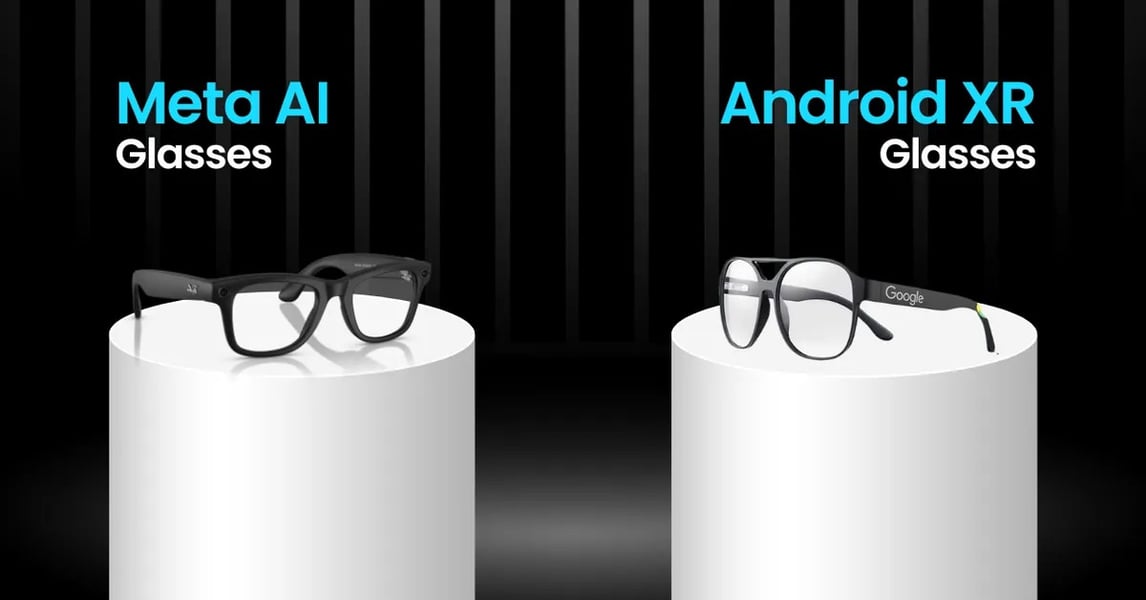
Industry reporting on Google’s hardware roadmap highlights how quickly these devices are moving toward commercialization:
Further ecosystem expansion is also reflected in Google’s broader Android XR rollout strategy:
Android XR ecosystem expansion
Two categories of AI glasses define Google’s strategy
Google is taking a dual-track approach to smart glasses development.
The first category focuses on audio-based AI glasses, which rely on voice interaction with Gemini. These devices enable hands-free access to messaging, navigation, and real-time information.
The second category introduces display-enabled XR glasses, which project digital overlays into the user’s field of view. These include navigation directions, notifications, and contextual prompts based on environmental awareness.
This gradual rollout strategy allows Google to refine usability before scaling toward full augmented reality experiences.
Gemini AI becomes the core interface layer
Gemini AI is the central intelligence layer powering Android XR devices. Instead of acting as a traditional assistant, Gemini functions as a multimodal system that processes both visual and conversational input.
This enables real-time understanding of what users see, allowing instant translation, object recognition, and contextual suggestions based on surroundings.
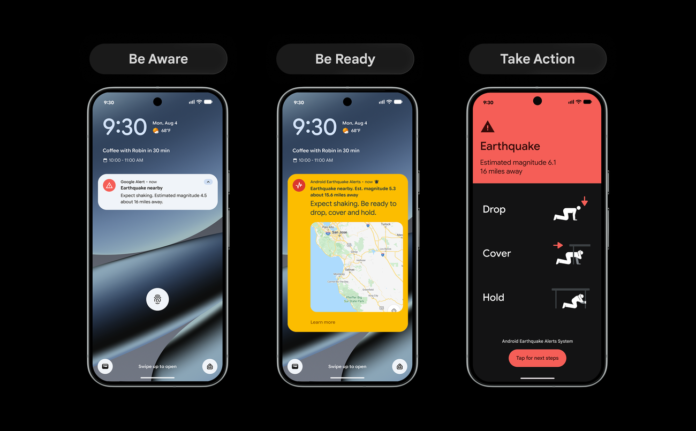
Google’s broader AI transformation across Android is further reflected in its ecosystem updates:
Gemini AI transforming Android systems
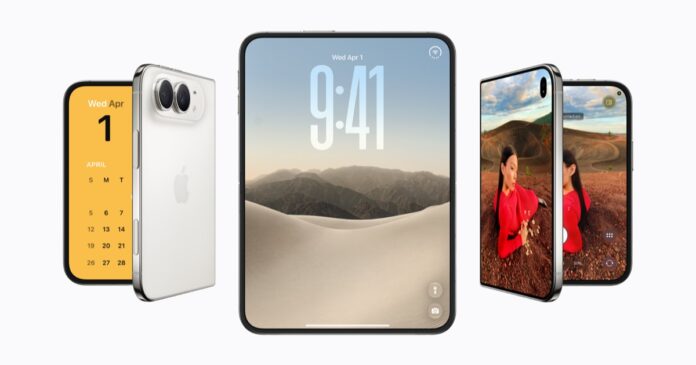
The company is also experimenting with generative UI systems and adaptive interfaces powered by AI:
AI-driven Android interface evolution
A direct challenge to Meta’s wearable dominance
Google’s entry into smart glasses places it in direct competition with Meta’s Ray-Ban AI glasses, which currently lead the consumer wearable segment.
However, Google’s advantage lies in its ecosystem integration. With Android, Search, Maps, YouTube, Gmail, and Photos, the company can embed AI assistance deeply into everyday digital workflows.
Samsung’s role in the broader XR ecosystem also strengthens Google’s hardware ambitions:
next-generation XR wearable computing devices
Real-world challenges still remain
Despite rapid progress, several challenges must be addressed before smart glasses can achieve mainstream adoption.
Battery life remains a critical limitation due to continuous AI processing and camera usage. Heat management, comfort, and long-term wearability are also key concerns for consumer adoption.
In addition, real-world AI performance must improve significantly in unpredictable environments involving motion, noise, and changing lighting conditions.
Consumer expectations around wearable AI devices are evolving quickly, as seen in early market reactions:
AI smart glasses consumer rollout plans.
A broader shift toward AI-first computing
Google’s smart glasses strategy reflects a wider shift across the technology industry toward AI-first computing. Instead of relying on apps and static interfaces, future devices will operate through continuous contextual awareness and conversational intelligence.
Android XR plays a central role in this transition by embedding Gemini AI directly into spatial computing environments, allowing users to interact with digital systems naturally through voice and vision.
This transformation is part of a broader industry movement toward ambient computing systems:
Conclusion
Google’s Android XR and Gemini-powered smart glasses represent one of the company’s most ambitious technological shifts in years. While still evolving, the direction is clear: computing is becoming more immersive, more intelligent, and increasingly integrated into the physical world.
If successful, Android XR could redefine personal computing by reducing dependence on traditional screens and replacing them with always-on wearable intelligence systems.
The coming year will determine whether Google can convert this vision into a mass-market product capable of competing in the rapidly growing smart glasses industry.