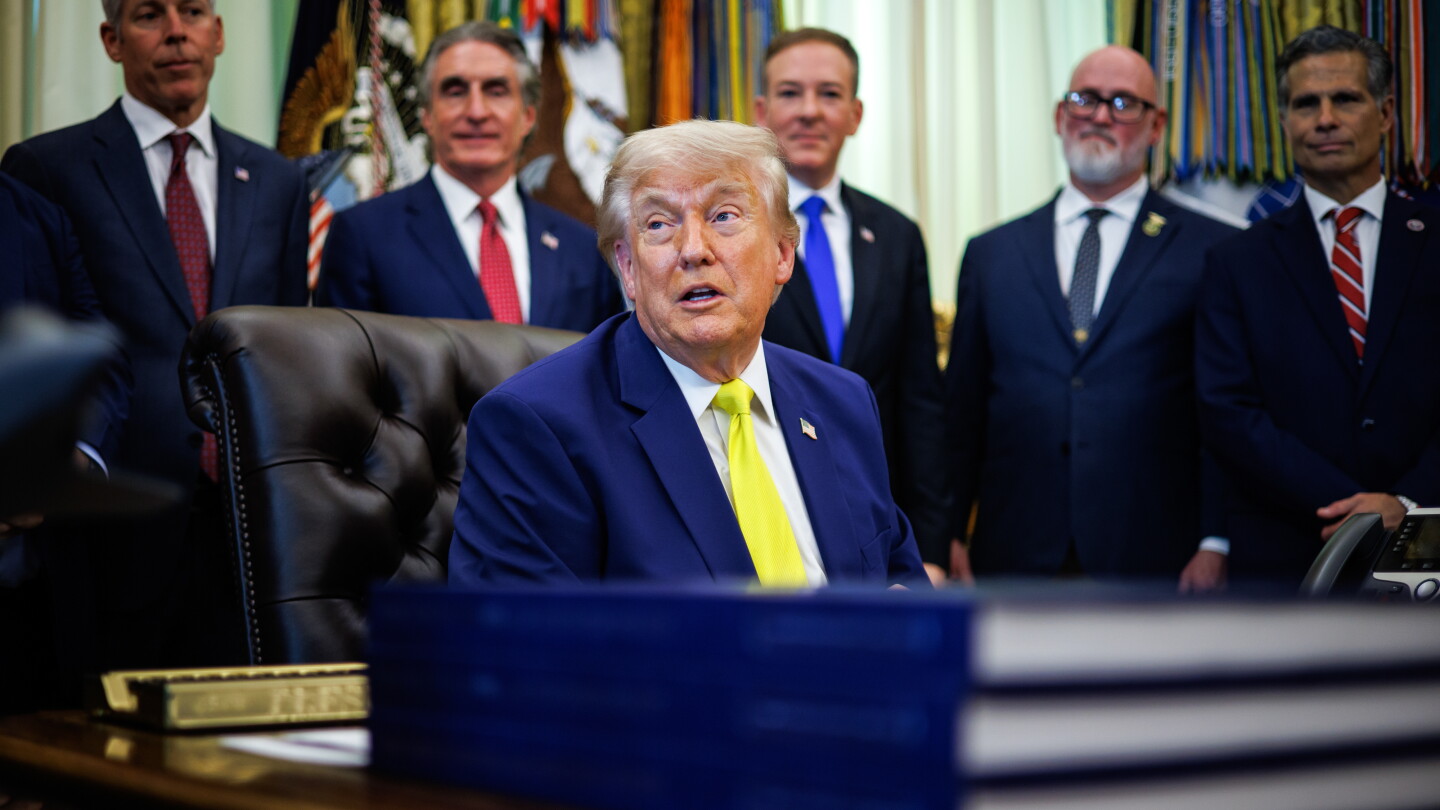

NEW YORK — Adam Silver had a choice. He could have given the cautious answer — something bland about the president being welcome at any sporting event, full stop. Instead, the NBA commissioner reached for something warmer and more deliberate. President Trump, Silver told reporters Thursday, is “very much a New Yorker.” He said he was “thrilled” the man once disinvited from the White House celebrations of league champions wanted to sit courtside at Madison Square Garden for the Knicks’ first home NBA Finals game in 27 years.
That single word — thrilled — is doing a lot of work. It is not neutral. It is not merely polite. And for a league that spent years navigating open hostility with Trump, from LeBron James declaring in 2018 that no team wanted a White House visit “especially with him in it” to anthem protests that drew presidential condemnation, Silver’s embrace of Trump’s Game 3 attendance represents a calculated bet that basketball is big enough, and New York’s hunger for a championship is deep enough, to hold the contradiction.
It is a bet the fans have not fully agreed to.
The confirmation of Trump’s attendance — first reported by the New York Post, with the president confirming it himself Thursday — arrived with an immediate and chaotic reaction online. The Knicks hold a 2-0 series lead over the San Antonio Spurs heading into Monday’s Game 3, which tips off at 8:30 p.m. ET. But the basketball itself has been almost entirely crowded out of the conversation by the question of who will be watching from what seat.
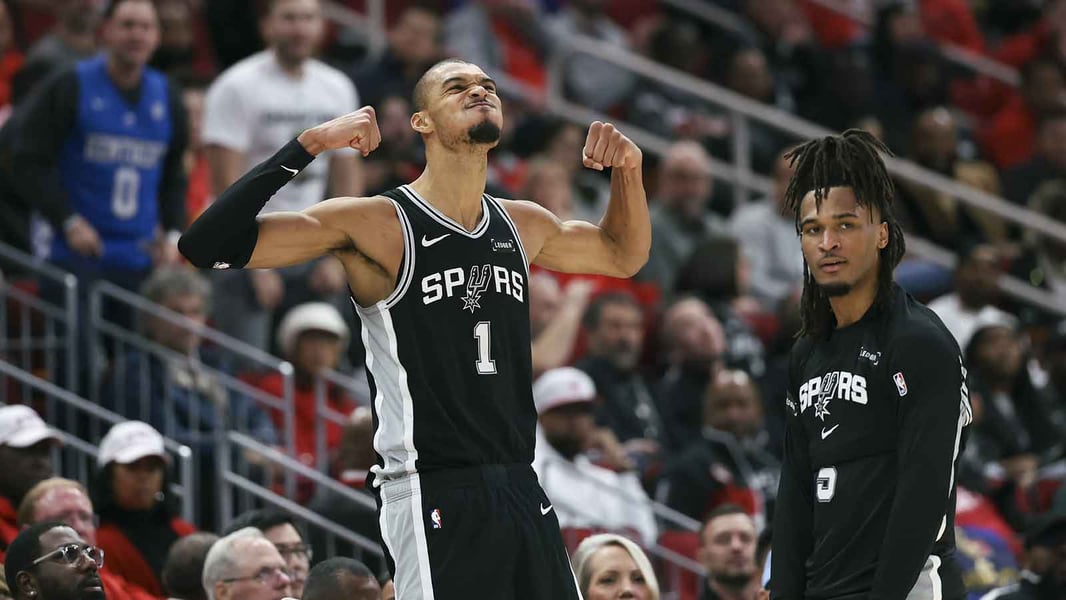
Trump, invited by Knicks owner James Dolan, said he might attend both Game 3 and Game 4 at the Garden. “I’ll be there,” he said, adding that the prospect of watching Victor Wembanyama in person had his attention. “He’s 7-foot-5 and has a great shot. How do you guard this guy?” The president watched New York’s Game 1 road victory and described the Knicks as dominant. Silver noted that Trump’s appearance would be the first by a sitting president at an NBA Finals game since he became commissioner in 2014 — and possibly ever.
Silver was careful to frame Trump’s presence as a civic moment rather than a political one. “I think sports, in particular, is something where we can emphasize what we have in common, not what pulls us apart,” he said, according to ESPN. He recalled attending Knicks games with Trump before Trump entered politics, noting his presence at NBA Draft ceremonies held at the Garden. The commissioner’s larger argument was transparent: the Knicks in the Finals is a New York story, and Trump — Queens-born, Manhattan-identified, Garden-adjacent for decades — belongs in it.
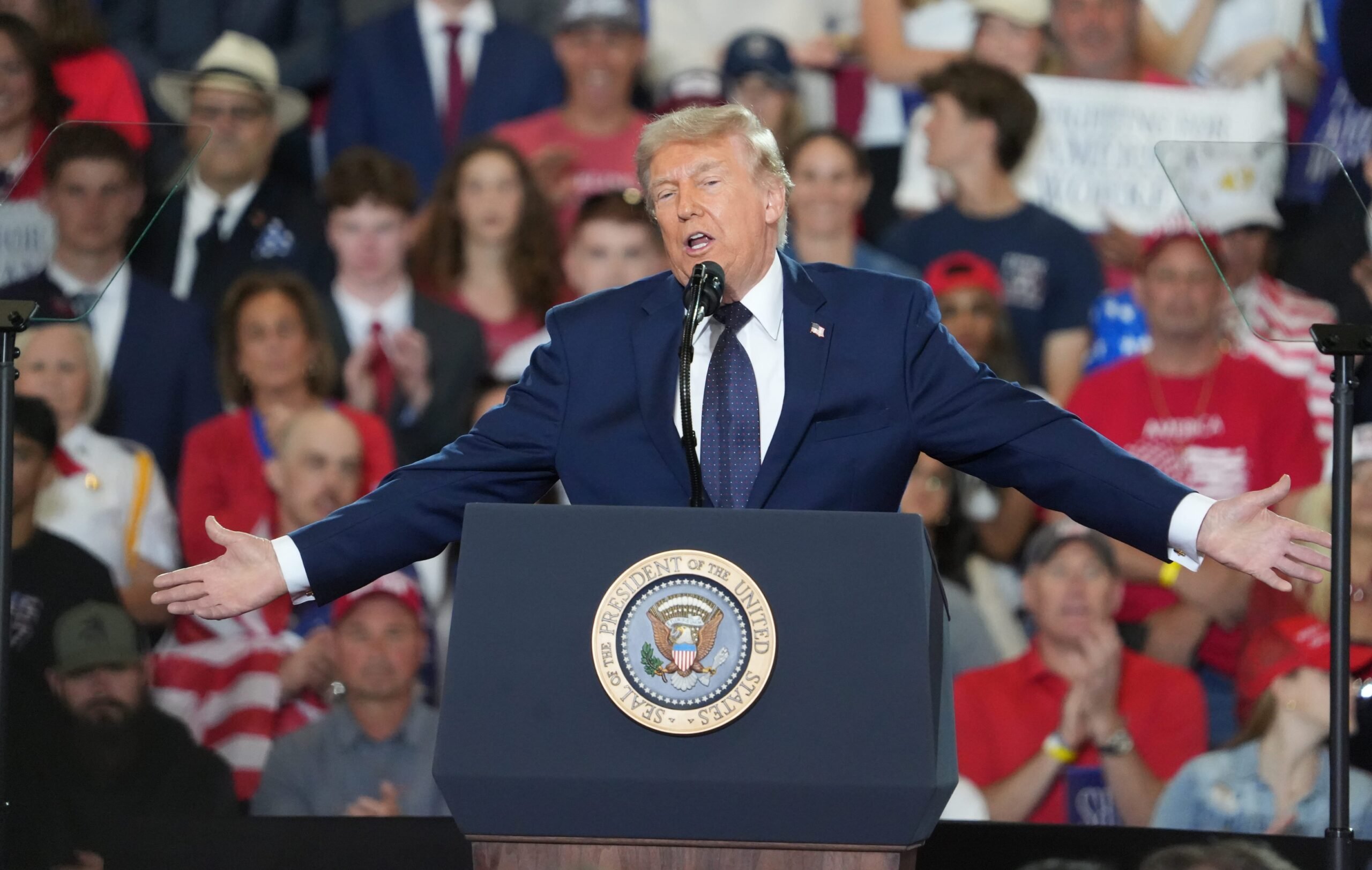
Whether the Garden crowd agrees is another matter. House Minority Leader Hakeem Jeffries, a Democrat and a Knicks fan, went further than any other public figure in criticizing the visit, suggesting Trump was “ruining” what should have been an unambiguous celebration for the city. New York City Mayor Zohran Mamdani took a different approach: he confirmed he would also attend Game 3 but would sit in “a very different section” from the president. That split — two powerful New Yorkers at the same arena, on the same night, rooting for the same team from opposite sides of the building — captures exactly the tension Silver is asking the league to absorb.
The logistical consequences have already landed on fans. The Knicks issued a security advisory Saturday warning that a strict no-bag policy would be in effect and that attendees should arrive at least two hours before tip-off to allow for TSA-style screening implemented by the U.S. Secret Service. Extra magnetometers will be placed inside the arena. The cheapest resale tickets to Game 3 were already trading above $4,000 on secondary platforms, with courtside seats listed at $220,000 on SeatGeek, NBC Sports reported. Silver acknowledged the disruption but predicted fans would be understanding. “There should be extra security for the president of the United States to be at a game,” he said, “but I think the fans are very understanding of that.”
The history Silver is navigating is more complicated than he let on. Trump and the NBA spent much of his first term in open combat. In 2018, he said neither the Cavaliers nor the Warriors would receive a White House invitation, prompting James and Warriors coach Steve Kerr to say neither team wanted to go anyway. Players across the league wore warm-up shirts protesting police shootings, and Trump responded by calling athletes who knelt during the national anthem an embarrassment. The league leaned explicitly Democratic in its public positioning. Silver himself navigated multiple friction points, from the 2019 China controversy to Trump’s attacks on players’ civic engagement.
None of that history appears in Silver’s Game 3 remarks. What appears instead is a portrait of Trump as a basketball guy, a New Yorker, a fan who watched Game 1 on television and wants to see the Knicks finish the job. Whether that reframing holds through Monday night — when whatever Trump’s courtside camera presence produces will generate its own cycle — is the question Silver cannot yet answer.
What is already clear is that Game 3 is carrying more freight than any single Finals game in recent memory. The Knicks, who swept the Cleveland Cavaliers to reach the Finals before winning Game 1 on the road 105-95 and surviving a frantic Game 2 finish in San Antonio, are one win from a commanding 3-0 lead. The team has not won a championship since 1973. The city has not seen a home Finals game since 1999. That context was supposed to be the story. Silver’s welcome of Trump made it a subplot in something larger and more unresolved.
The one thing Silver got right is that Madison Square Garden can hold a contradiction. It has before. Whether this particular contradiction fits inside a basketball arena without spilling onto the court is what Monday night will determine.
Related Posts