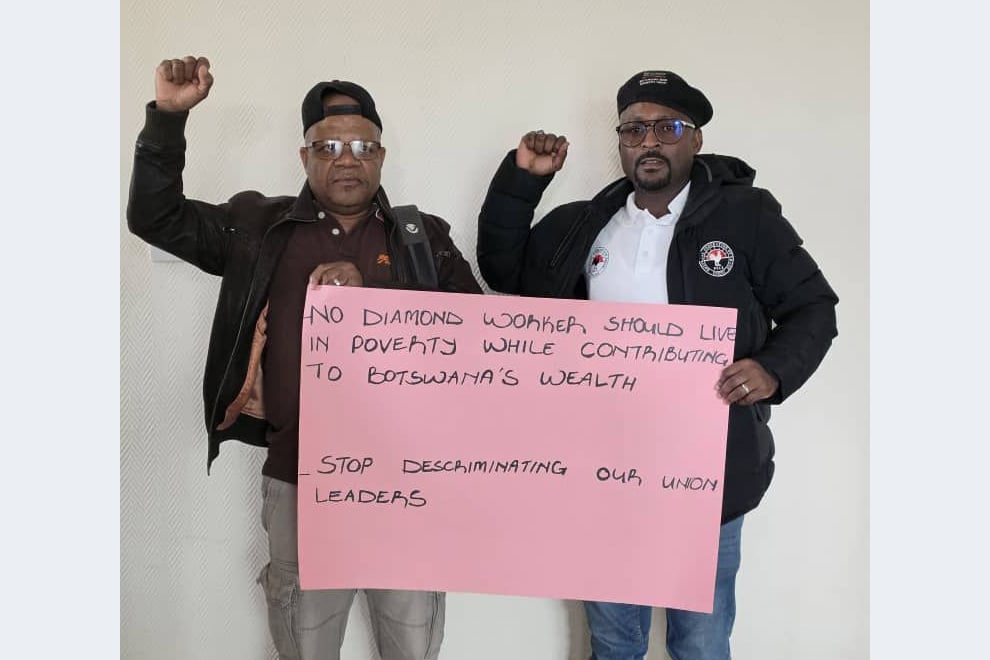

GABORONE, Botswana — Motshwegwa Rakhudu spent fourteen years installing equipment in the diamond mines that made his country rich, on the kind of rolling contract that everyone treated as permanent. He expected the work to carry him to 2027. Instead it ended without warning, and the shock, he said, was too much. He is one face of a reckoning that an entire nation built on a single stone is now being forced to have.
For Rakhudu the math is brutal and small. Jobs are scarce, he said, and the work that does exist outside mining pays far less; he would move into farming, but selling his car would only clear the loan on it. Multiply that arithmetic across thousands of households and it becomes a national condition. The diamond downturn, as Mbiganyi Gaekgotswe of the Botswana Mineworkers Union put it, is no longer just a business issue but a human one, reaching workers, families, contractors and whole communities at once.
What is unravelling is the foundation of one of Africa’s quietest success stories. Botswana turned the diamonds discovered after independence into roads, schools, clinics and decades of stability, a rare case of a resource making a country rather than wrecking it. But it did so by tying almost everything to the gem. Diamonds still account for roughly 70 percent of the country’s export earnings and about a third of government revenue. When the stone weakens, the state does too.
And the stone has weakened badly. Debswana, the venture between the government and De Beers that produces around 90 percent of the country’s diamonds, cut output by about 27 percent in 2024 and planned to cut further in 2025, Al Jazeera reported, as prices buckled under weak luxury demand and the rise of laboratory-grown diamonds that look identical and cost a fraction. A gem sold for centuries on scarcity is being undone by the discovery that it can be manufactured.
The numbers behind Rakhudu’s lost contract are stark at the national scale. Botswana’s economy contracted by about 5.3 percent in the second quarter of 2025, its sharpest fall since the pandemic, driven mostly by the slump in diamond production. For a middle-income country that had spent decades climbing, it is the first serious test of whether the model that lifted it can survive the thing that lifted it losing value.
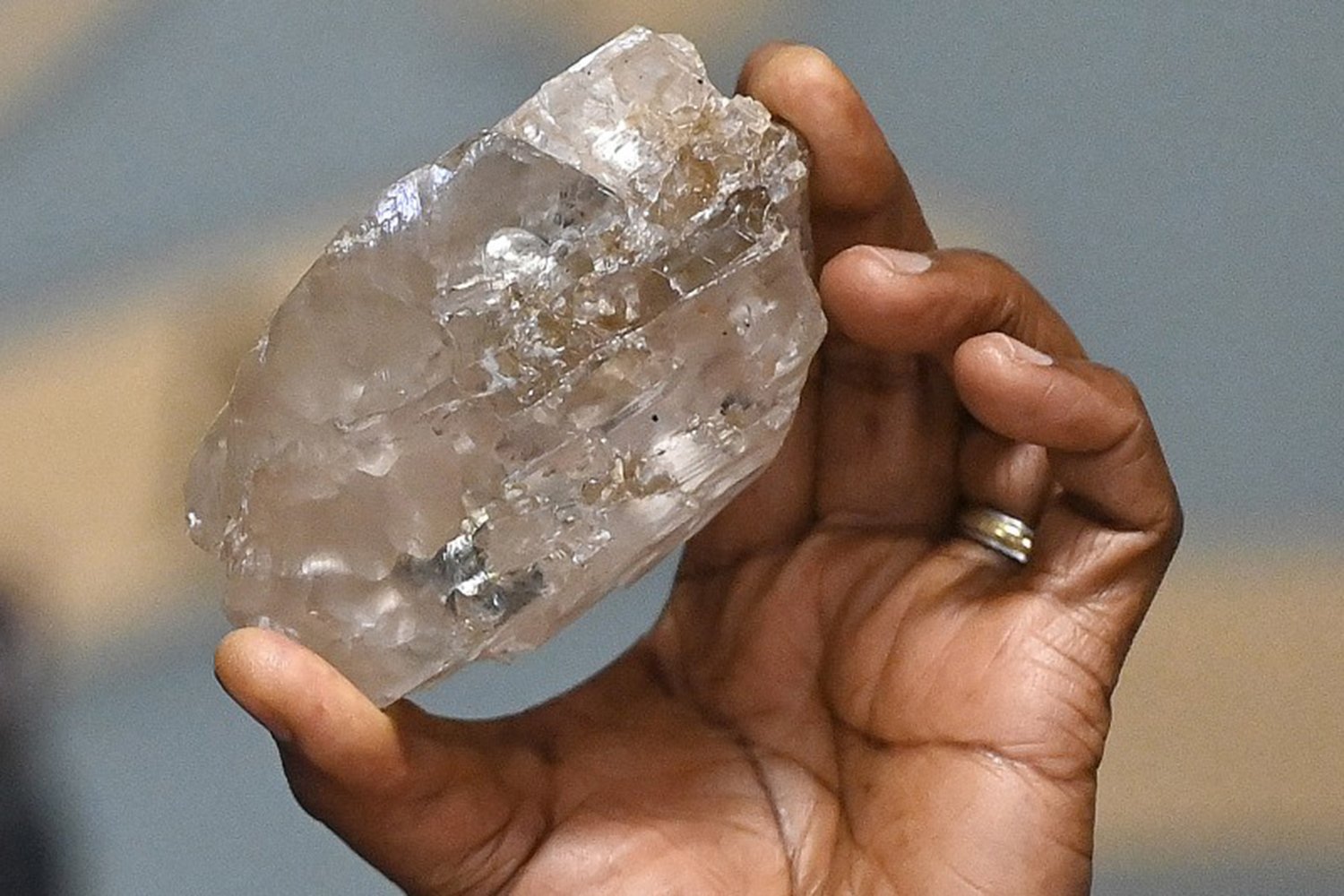
It was not long ago that the story ran the other way. In 2024 Botswana unveiled a 2,492-carat stone from the Karowe mine, the second-largest diamond ever found, a glittering advertisement for a country that seemed to keep pulling fortune out of the ground. Two years on, the market for stones like it has thinned, and the same mines that produced that headline are the ones now sending workers home. The gap between those two images is the whole of Botswana’s problem.
The government’s answer is to become, urgently, something other than a diamond economy. Ministers have talked of absorbing the job losses by expanding copper mining and opening new projects, and of pushing into agriculture, tourism and technology, the standard menu for a state trying to break a commodity habit. It is the same pressure that has pushed other resource economies to act, from Indonesia seizing control of its commodity exports to South Africa’s slow turn next door. Diversification is easy to announce and slow to build, and the workers being let go now cannot wait for it.
Botswana is also looking outward for buyers and partners, courting Gulf states including the United Arab Emirates and Oman as it tries to loosen a century-old dependence on a single marketing channel for its stones. The instinct is sound, to widen the circle of customers beyond the traditional Western luxury market that is now retreating. Whether new buyers can replace falling prices, rather than merely rearrange who sells the stones, is the question those deals have not yet answered.
What no one in Gaborone can yet say is whether this is a cycle or a turn. Diamond prices have fallen before and recovered; lab-grown stones are a new thing, and it is not clear whether they have merely dented the market or permanently changed what a diamond is worth. The government is planning for the worse case while hoping for the better one, and the people losing their jobs are living in the space between the two.
For now the layoffs land one household at a time, on men like Rakhudu who did everything the old economy asked and find it no longer asking. Botswana proved that a country could be built on diamonds. It is now learning the harder lesson hidden inside that achievement, that a fortune resting on one stone is only ever as steady as the stone.