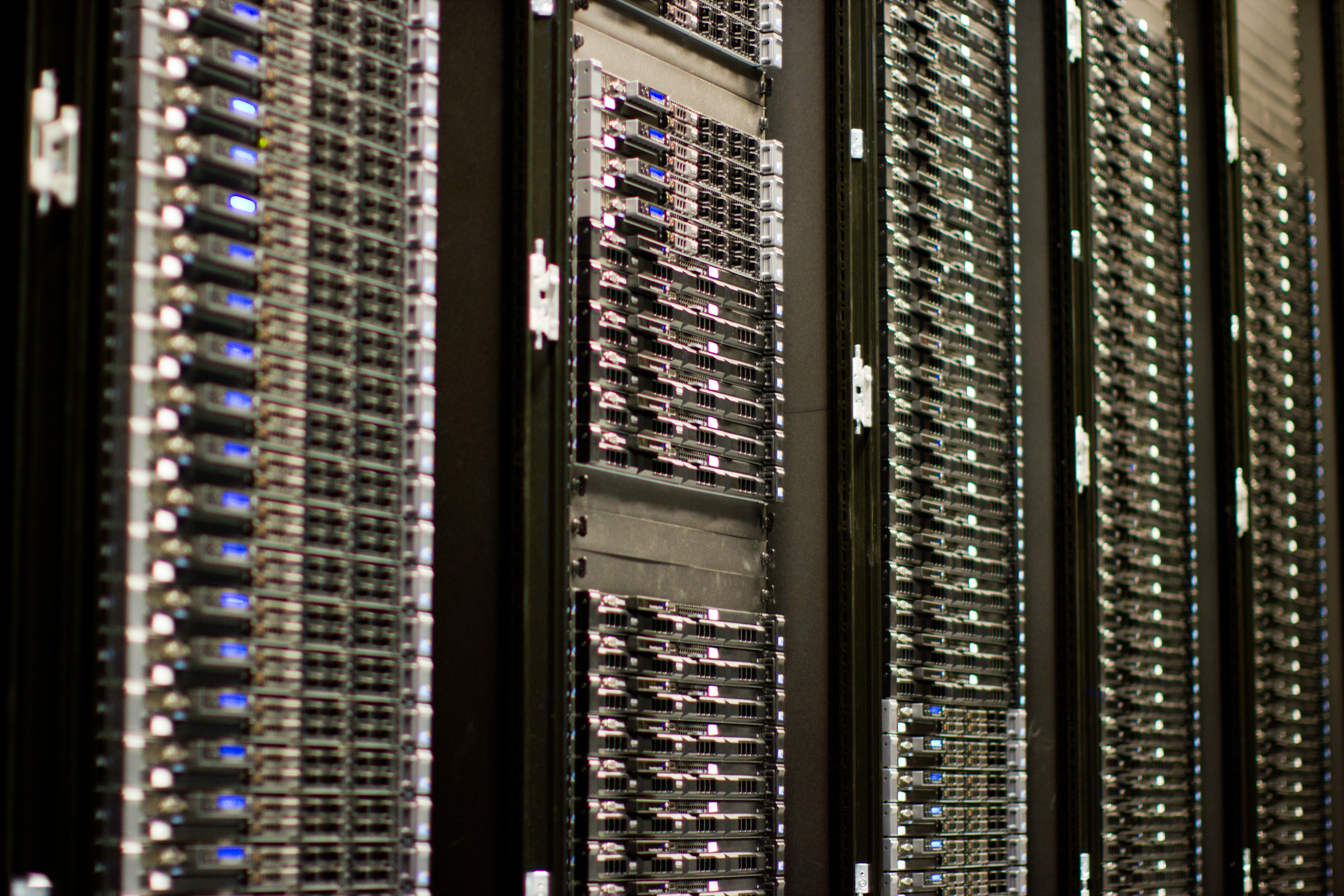

NEW YORK — Super Micro Computer has the kind of problem every hardware maker claims to want: roughly $39 billion in orders for its artificial intelligence servers. On Tuesday it told investors that filling those orders requires $7 billion of their money, and the stock fell more than 10 percent after hours.
The company, which trades on Nasdaq as SMCI, announced a stack of concurrent financings: $1.25 billion of common stock, $3.75 billion of depositary shares, and a $2 billion at-the-market program it does not expect to switch on until the third quarter of 2026. The proceeds buy components, the company said in its filing with US securities regulators, to satisfy approximately $39 billion of advanced AI server orders from more than 20 customers.
The announcement is a clean reading on where the AI buildout has arrived. The companies assembling the racks now sit so far ahead of their own cash that a record order book becomes a financing event. GPUs, memory and power components must be bought quarters before any customer pays for the finished machine, and the gap between what Super Micro has sold and what it can fund has grown to the width of a $7 billion share sale. The middle tier of the AI trade is financing itself like a construction firm.
Shareholders did the arithmetic immediately. New equity dilutes them, an at-the-market program promises a standing tap of further dilution at whatever the price happens to be, and none of the $39 billion is revenue yet. The backlog figure is the company’s own, orders can be rescheduled or resized, and the customers behind them were not named beyond their count. A stock that trades on the promise of AI growth fell more than 10 percent on the news that the growth must be paid for first.
The capital hunger runs through every layer of the stack this week. Apollo and Blackstone just closed $35 billion of private chip debt for Anthropic, Alphabet funded its AI infrastructure with the largest equity offering in history last week, and SpaceX is pricing the largest IPO ever on Thursday partly on a space-based AI pitch. Super Micro’s version is more old-fashioned than most: no private credit, just shares sold into the market to buy parts.

The timing is unkind. The chip complex is one week removed from Broadcom’s guidance miss erasing $1.3 trillion from semiconductor stocks, a selloff that made investors newly literal about the difference between AI demand and AI profit. Into that mood, Super Micro delivered a number that reads both ways: $39 billion of orders is overwhelming proof of demand, and $7 billion of required equity is the bill for believing it.
The company also carries history that makes some holders quicker to sell first and reconcile later. Super Micro spent late 2024 fighting accounting questions after its auditor resigned, a chapter it has since worked to close but one that taught its shareholder base to discount announcements that lean on the company’s own unaudited figures. A backlog is exactly that kind of figure.
What Tuesday’s filing does not say is the part that decides whether the raise was cheap or ruinous: which customers stand behind the $39 billion, what margin survives once the components are paid for at today’s prices, and how quickly orders convert to recognized revenue. Nor is there any guarantee about where the stock trades in the third quarter, when the $2 billion at-the-market tap is due to open onto whatever price the market has left.
In this market the sellers of shovels no longer simply collect money. They raise it. The order book says demand is close to infinite. The after-hours tape says somebody still has to pay for the metal up front, and on Tuesday that somebody was the shareholders.