
JOHANNESBURG — For the first time in more than two decades, the news out of South Africa’s economy is the kind its government has waited a generation to deliver. Africa’s most industrialised economy expanded by 0.5 percent in the first three months of 2026, its sixth consecutive quarter of growth, according to data released on Tuesday by the national statistics agency. The figures landed days after Fitch Ratings lifted the country’s sovereign credit rating for the first time in roughly 21 years, a pairing that has handed Pretoria its most encouraging economic week in memory.
The growth was broad on the production side. Finance led, expanding 0.9 percent, while agriculture grew 3.9 percent in its own sixth straight quarter of gains, powered by field crops and a strong fruit harvest, with trade and transport adding further support, the official figures showed. On the spending side, households and government both consumed more, exports edged higher and imports fell back sharply.
Fitch’s upgrade, from BB- to BB, rested on something South Africa has rarely been praised for: fiscal restraint. The agency cited average primary budget surpluses of about 1 percent of GDP over four years, a debt burden lower than it had feared when it cut the country’s rating in 2020, and a debt profile built on long maturities mostly denominated in the local rand rather than foreign currency. South Africa was only the second G20 economy Fitch upgraded this year, in a stretch when several wealthy, investment-grade states were being moved the other way.
That detail matters more than a single notch might suggest. For years the major Western ratings agencies have functioned as a kind of gatekeeper over developing economies, their downgrades raising borrowing costs and their pessimism shaping how global capital treats the Global South. An upgrade for a founding member of the BRICS bloc, delivered while richer Western borrowers slip, complicates the familiar story in which discipline is said to flow from the North and dysfunction from the South.
South Africa’s turn also fits a wider effort by developing economies to loosen the grip of Western finance. Nigeria has moved to bypass Western bond markets in favour of Gulf capital, and Russia’s flagship investment forum recently closed with deals signed by scores of nations sidestepping sanctions. Pretoria’s improving numbers give that argument, that the centre of economic gravity is shifting, a concrete data point rather than a slogan.
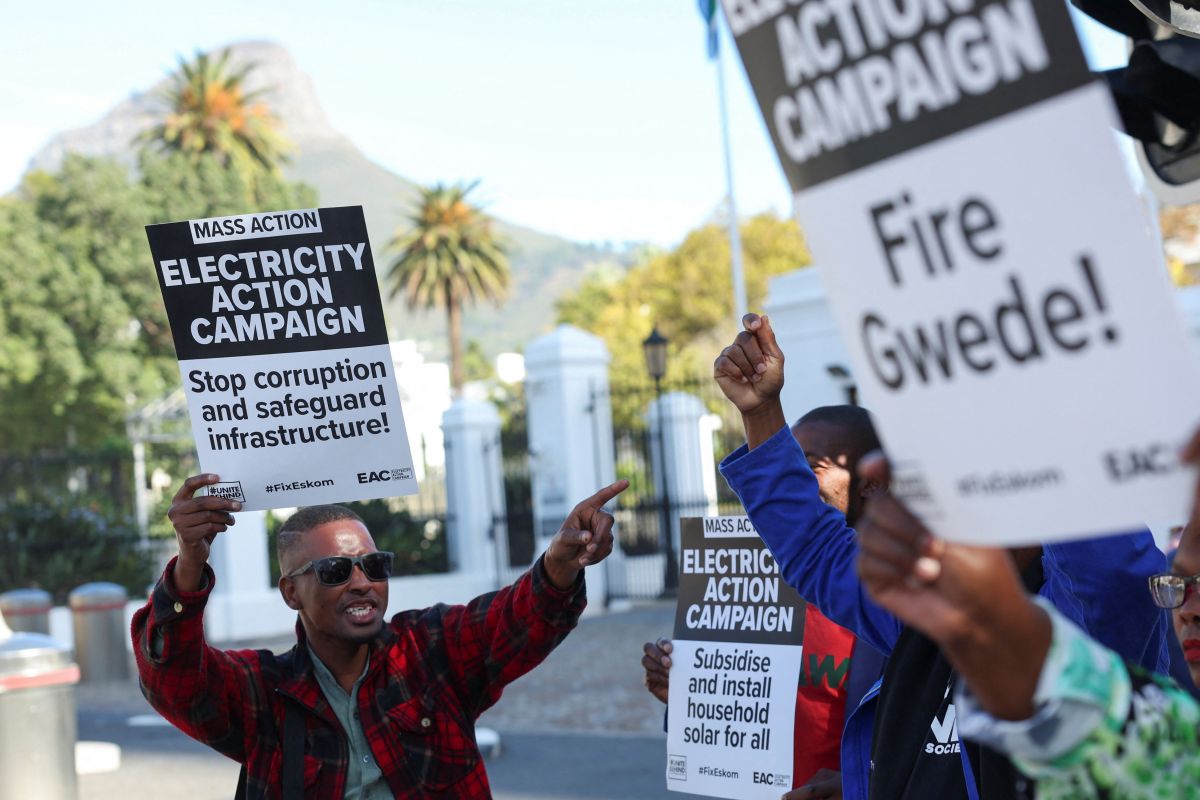
The picture is far from uniformly bright. South Africa’s secondary sector, the factories and heavy industry that once defined the economy, shrank 1.3 percent, its sixth straight quarterly contraction, extending a long deindustrialisation that years of blackouts and decaying infrastructure have long chronicled. Fixed investment fell during the quarter, a worrying signal for future capacity. Growth of half a percent, while welcome, is nowhere near the pace needed to dent an unemployment rate that remains among the highest in the world.
The recovery is unfolding under the government of national unity formed after the African National Congress lost its outright majority, an arrangement markets had feared would produce paralysis and which has instead, so far, delivered a measure of fiscal continuity. Whether that holds as coalition partners jockey for advantage is the open question hanging over every forecast for the year.
For the bloc South Africa helped found, the timing is useful. As the expanding BRICS group debates how to admit new members and build alternatives to Western financial plumbing, having one of its anchor economies post growth and earn an upgrade strengthens the case that the grouping is more than a club of strugglers. It also hands Pretoria a stronger voice in those arguments.
None of this rewrites South Africa’s deeper problems overnight. The energy system remains fragile, inequality is staggering, and the agricultural gains that flattered this quarter can reverse with a single bad season. But a sixth straight quarter of growth and a first upgrade in a generation are not nothing, and they arrive at a moment when much of the wealthy world is being told to expect less.
What the numbers cannot yet show is whether this is a genuine turn or a pause in a longer decline. The fiscal discipline is real and the ratings vindication is earned, but the factories are still closing and the investment is still leaving. South Africa has proven it can stabilise. Whether it can grow fast enough to matter for the millions still locked out of its economy is the test no quarterly release has yet answered.