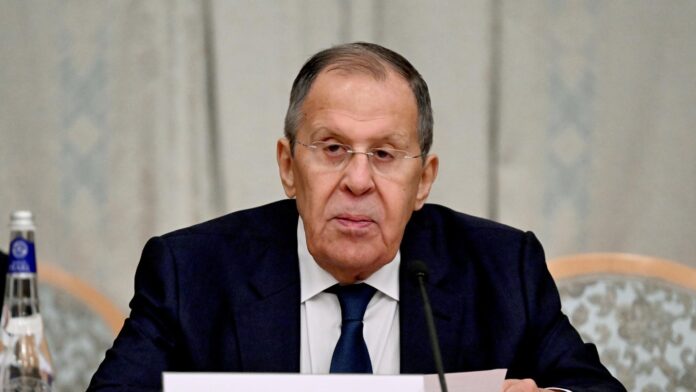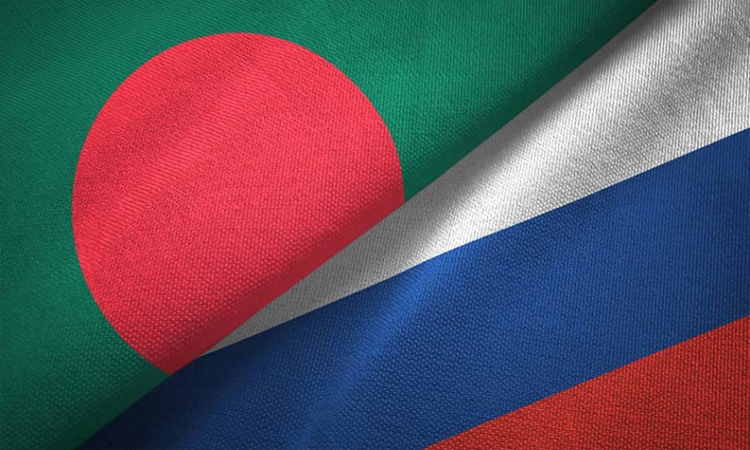

MOSCOW — The endorsement Dhaka has been waiting for came on Monday, but it arrived wrapped in a condition that BRICS itself has not yet resolved. Russian Foreign Minister Sergey Lavrov, meeting his Bangladeshi counterpart Khalilur Rahman at Zinaida Morozova’s Mansion in Moscow, said Russia would look favorably on Bangladesh’s candidacy for full BRICS membership — once the bloc’s self-imposed pause on new admissions comes to an end.
What Lavrov did not say was when that would be. The pause, he explained, was agreed upon by existing member states after BRICS doubled in size from five to ten countries in 2024, with Egypt, Ethiopia, Iran, Saudi Arabia, and the UAE joining in a single expansion round. The bloc’s leadership concluded it needed time to adjust to that growth before absorbing more members. The decision left a long queue of aspirants — Bangladesh, Turkey, Azerbaijan, and others — in formal limbo with Russian sympathy but no timetable.
The meeting between Lavrov and Rahman was the first at this level between the two countries since September 2023, when Lavrov visited Dhaka. Rahman, a Harvard-trained economist who became Bangladesh’s foreign minister in February after Tarique Rahman’s government won parliamentary elections, is on a three-day visit to Moscow at Lavrov’s invitation. He also met leadership of the Federation Council of the Russian Federal Assembly and is scheduled to visit Rosatom, the state nuclear energy corporation overseeing the Rooppur Power Plant — Bangladesh’s most consequential infrastructure project with Russia.
The BRICS membership question carries a specific complication for Bangladesh that most applicants do not share. Bangladesh is already a shareholder member of the New Development Bank, the BRICS-backed multilateral lender headquartered in Shanghai. It joined in 2021 alongside the UAE, and the bank has since expanded its membership further to include Egypt, Algeria, Colombia, and Uzbekistan, according to the NDB’s latest figures. Lavrov acknowledged this directly at the press conference, noting that Bangladesh is very satisfied with its participation in the bank.
That creates a situation with no clear precedent in BRICS history. Bangladesh has financial access to the bloc’s most tangible institution but no seat at the political table. The bank lends money; full membership confers voting weight in geopolitical coordination, trade framework discussions, and the shared currency negotiations that BRICS members have been pursuing with increasing intensity. For Dhaka, the gap between the two categories is not academic.
BRICS now has 11 full members, following Indonesia’s formal entry in January 2025. The bloc also established a formal partner country track designed to manage applicant demand without forcing immediate full accession — a structure that reflects the political strain of the 2024 expansion, which moved faster than some founding members had expected. The pause on full membership, and the creation of that partner tier, are both symptoms of the same organizational stress.
Bangladesh’s case is also complicated by the region. India currently chairs BRICS in 2026, and New Delhi has historically been cautious about expansion that dilutes its own weight within the bloc. It supported the 2024 round but has not publicly signaled urgency on a second wave. Whether India would raise objections to Bangladesh’s candidacy — given their complex bilateral relationship and the political transition Dhaka went through in 2024 before Rahman’s government took power — is one of the unresolved variables that Lavrov’s statement does nothing to clarify.
What Monday’s meeting did clarify is the framework Russia is using to manage expectations. Lavrov’s phrasing — “we will look favorably” — is conditional on a group decision, not a bilateral one. Russia cannot grant Bangladesh BRICS membership any more than it could be denied by any single member acting alone. The endorsement matters for optics and for diplomatic positioning, but it advances Bangladesh’s candidacy only to the extent that Moscow’s support carries weight when the pause eventually lifts and member states discuss who gets in first.
The broader agenda of Rahman’s Moscow visit extended well beyond BRICS. The two ministers discussed cooperation on trade, energy, and education, areas where Russia-Bangladesh ties have deepened steadily. Bilateral trade has consistently exceeded two billion dollars annually in recent years, with Russia exporting industrial equipment, mineral fertilizers, and wheat while importing Bangladeshi garments and seafood. The Rooppur Nuclear Power Plant — the first unit of which was commissioned in late April — was described by the Russian Foreign Ministry as the flagship project of the bilateral relationship.
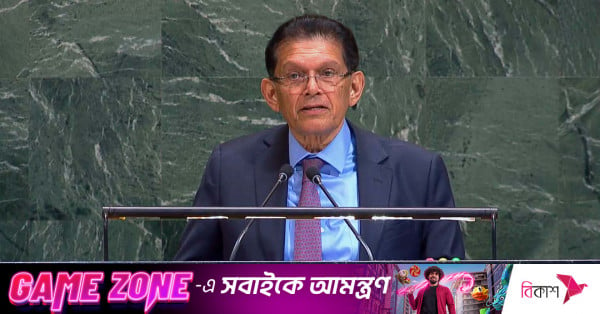
Rahman’s election as president of the 81st session of the UN General Assembly also featured in the talks, according to Russian Foreign Ministry spokeswoman Maria Zakharova, who said Moscow attaches particular importance to bilateral coordination within UN structures given that new role. That conversation was the subject of a separate session held earlier on Monday, in which Lavrov committed Russia to defending the UN’s coordinating function against what he described as efforts to undermine it.
The BRICS question, then, is one thread in a broader reset of relations between Moscow and Dhaka’s new government — a government that took power under very different circumstances than its predecessor, and one that has moved with notable speed to engage major powers across both the East and the West. What Russia will actually do when the expansion pause ends, and whether Bangladesh ends up in the first tranche of new admissions or a subsequent one, remains the question that Monday’s press conference left unanswered.
–Input From Sputnik.