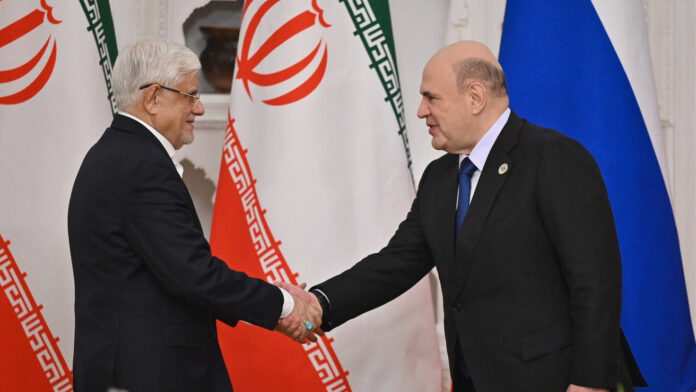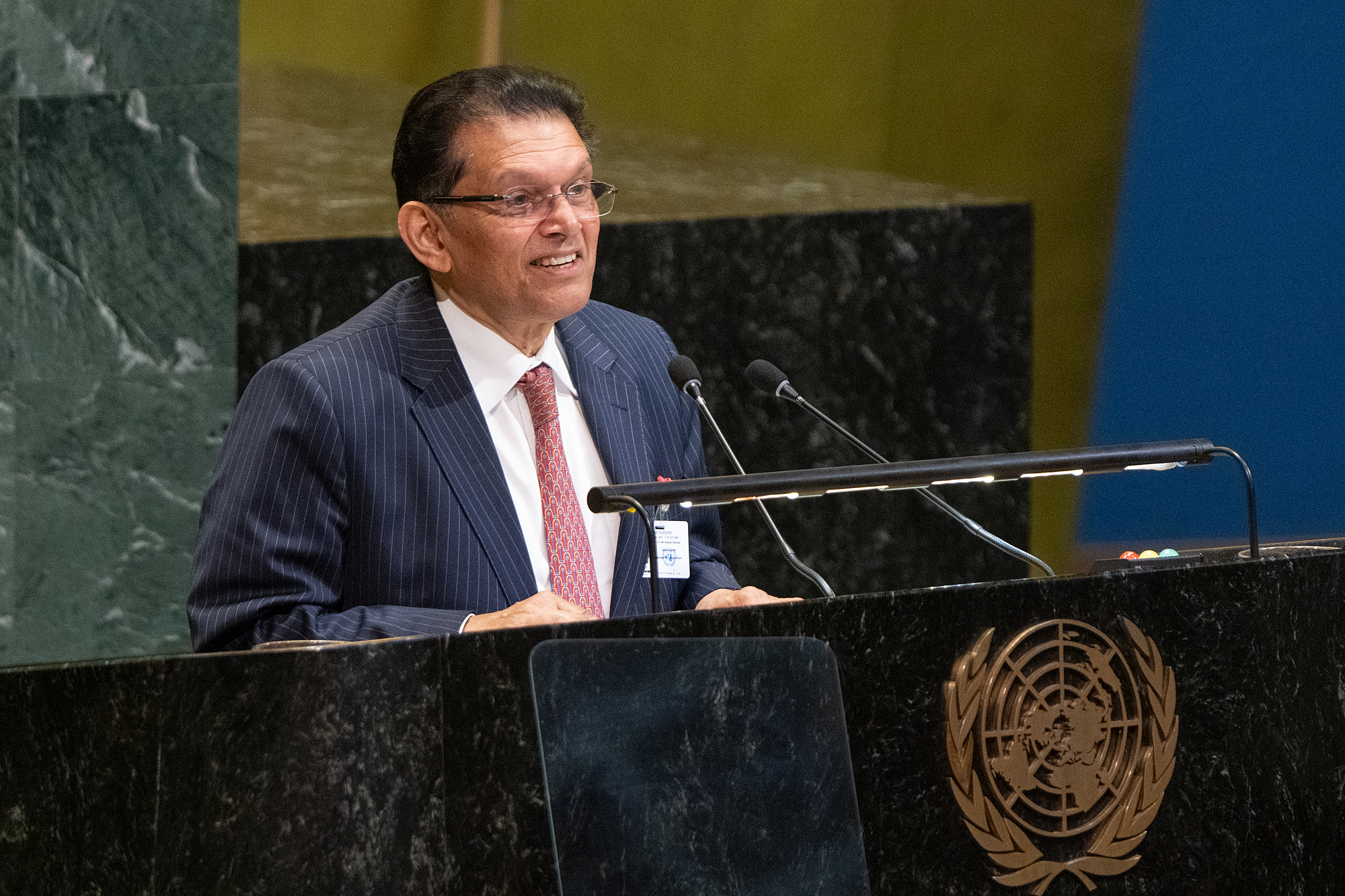

MOSCOW — Khalilur Rahman had been in office as Bangladesh’s foreign minister for less than four months when he won the most competitive election for the UN General Assembly presidency in recent memory, beating Cyprus’s envoy by eight votes in a secret ballot. On Monday, in his first visit to Moscow in his new capacity, Russia made clear it had noticed.
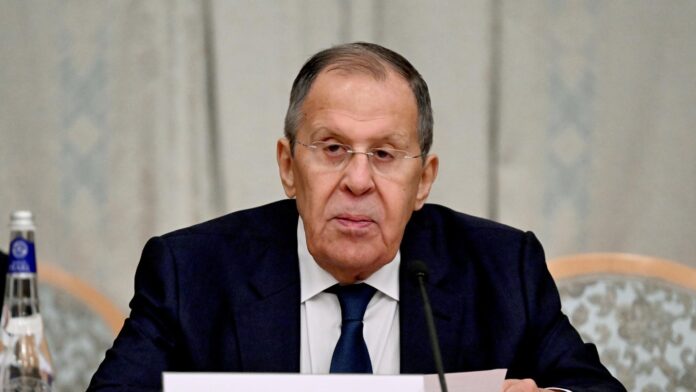
Foreign Minister Sergey Lavrov told Rahman that Russia welcomes his intention to make the General Assembly’s work more effective and would do its utmost to support the restoration of the UN’s central, coordinating role in global affairs, according to a readout from the Russian Foreign Ministry. The statement was calibrated — not a vague endorsement of the Assembly, but a specific commitment to a vision Rahman had articulated in his own election remarks: reforming the world body and strengthening multilateralism at a moment when both are under strain from every direction.
The setting carried weight. Rahman, who has spent more than two decades inside the UN system itself — serving in senior positions in New York and Geneva after studying at Harvard and Tufts — was visiting Moscow as the incoming steward of the Assembly’s 81st session, which opens in September. That session will be shaped, more than any other in recent years, by one overriding question: who succeeds António Guterres as Secretary-General when his term expires on December 31. Rahman will be directly involved in facilitating that process.
Russia’s engagement with that question is not neutral. Moscow has long argued that the UN’s current architecture systematically favors Western influence — a critique it has pressed in forums ranging from BRICS ministerial meetings in New Delhi to bilateral conversations with Security Council reform co-facilitators. Reuters reported that Russia has consistently framed expanded Global South representation at the Security Council as a core demand, while retaining the veto that gives it structural power over any outcome. The Bangladeshi presidency, coming from the Asia-Pacific group in the rotation system, fits that narrative with unusual precision.
What is less clear is whether Moscow’s stated enthusiasm for a stronger, more representative UN maps onto a genuine willingness to change how Russia actually uses the institution. Lavrov said in May that a new Secretary-General could help restore order in global affairs, a remark interpreted by several analysts as a signal that Russia wants a successor to Guterres who will be less critical of Moscow. At the same time, Russia’s UN Ambassador Vasily Nebenzia has publicly challenged UN reports on the Russian operation in Ukraine, threatening counter-reporting — not exactly the posture of a country seeking to bolster the Secretariat’s credibility.
Rahman’s own agenda gives Moscow something to work with. In his election remarks at the General Assembly, the Bangladeshi diplomat laid out six pillars for his presidency: peace and security, the 2030 development agenda, climate change, human rights, emerging technologies including artificial intelligence, and UN reform. The last item aligns closely with positions Russia has championed through BRICS. Calls for expanding the Security Council and rebalancing global power have grown louder across the developing world, and Russia has consistently positioned itself on the side of that demand — though critics note that Moscow’s veto power gives it little incentive to follow through.
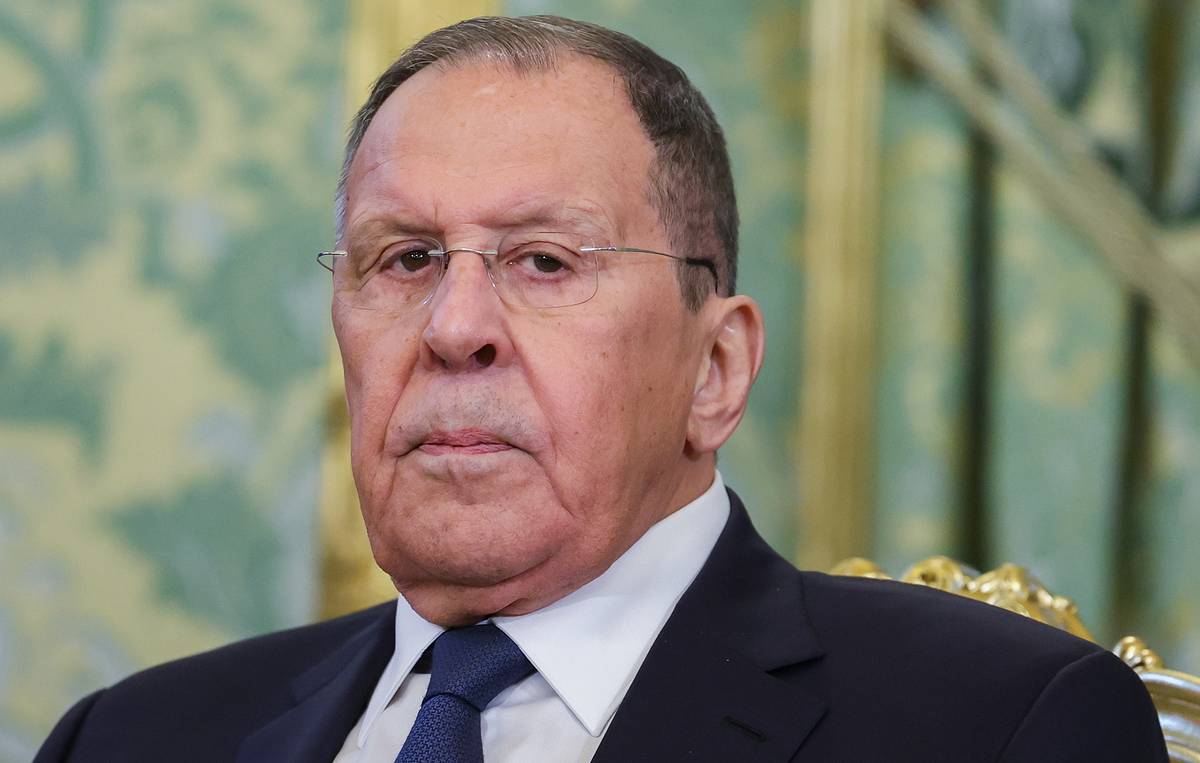
Monday’s meeting in Moscow was not solely about the General Assembly. Rahman’s itinerary also included meetings with the leadership of Russia’s Federation Council and with senior officials from Rosatom, the state nuclear corporation. Bangladesh and Russia have maintained bilateral trade at over two billion dollars annually for several years, and the Rooppur nuclear power plant — built with Russian technology and financing — remains one of the most consequential infrastructure projects in Bangladeshi history. The economic dimension of the relationship has survived political shifts in Dhaka that might otherwise have complicated ties with Moscow.
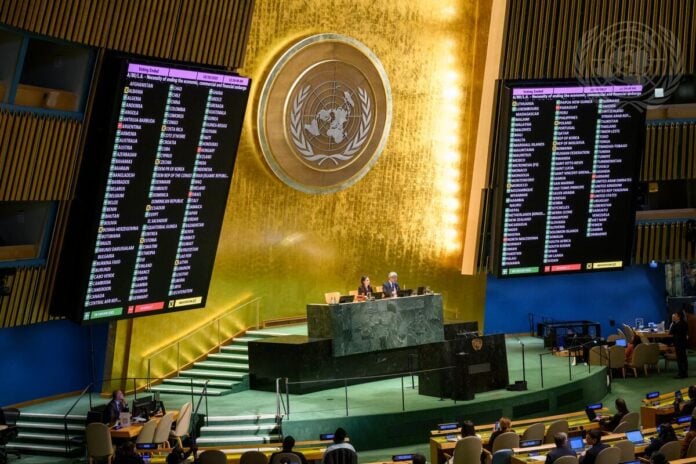
Rahman was sworn in as foreign minister only in February, after serving as national security adviser under Chief Adviser Muhammad Yunus following the political upheaval that reshaped Bangladeshi governance in 2025. His election to the UNGA presidency — secured by 99 votes against 91 for Cyprus’s Andreas Kakouris in a 190-ballot secret vote on June 2 — was the tightest such contest in years, and it came despite the abstention politics that typically disadvantage candidates from countries navigating relations with both Washington and Moscow simultaneously.
Whether Lavrov’s pledge of support translates into substantive cooperation during the 81st session depends on questions that neither side addressed publicly on Monday. The Secretary-General selection process will require consensus that has historically been shaped by the Security Council’s permanent members. Russia’s veto, like those of the United States, China, France and the United Kingdom, will ultimately determine who leads the Secretariat for the next decade. Rahman’s ability to shepherd that process — and to make the General Assembly’s broader reform agenda more than a talking point — will be tested well before the session even opens.
What remains unresolved from Monday’s meeting is whether Moscow and Dhaka discussed the substance of any reform proposals or traded only in affirmations. The Russian readout was brief, and the Bangladeshi side had not yet published a parallel account. UN News reported that Rahman’s term as Assembly president begins on September 8, giving him roughly three months before the opening session to build the diplomatic capital his reform agenda will require. That window is narrow, and Russia’s goodwill — however sincerely expressed on Monday — is one variable among several he cannot yet control.