
WASHINGTON – President Donald Trump declared on Monday that the United States would bomb Iran’s Pickaxe Mountain facility “pretty soon, very heavily,” a statement that landed hours after The Wall Street Journal reported Israeli intelligence believes Iran has already moved nuclear centrifuges inside the mountain. The two developments describe a strategic problem the current US arsenal may not be equipped to solve.
Pickaxe Mountain, officially Kuh-e Kolang Gaz La, sits one mile south of the Natanz nuclear complex. It was not struck in Operation Midnight Hammer, the March 2026 US-Israeli air campaign that destroyed Fordow, Natanz, Isfahan, and Arak. The mountain housing its tunnel complex stands 1,608 meters above sea level. Fordow’s mountain rises to 960 meters. That 648-meter elevation difference translates into substantially greater depth for any underground facility and changes the physics of any weapon attempting to reach it.
Analysts at the James Martin Center for Nonproliferation Studies estimated that Pickaxe Mountain’s tunnel halls sit between 260 and 330 feet underground. The GBU-57 Massive Ordnance Penetrator, the largest bunker-buster in the US inventory used against Fordow, is rated to penetrate approximately 200 feet of reinforced concrete before detonating. The arithmetic has not changed since March. What has changed, according to the Wall Street Journal’s exclusive report citing Israeli intelligence, is what is inside.
The site has never been visited by an International Atomic Energy Agency inspector. It was not on any inspection list before the war and has not been included in any inspection framework since. Iran’s stated purpose for the facility has been centrifuge assembly, manufacturing replacement centrifuges for the Natanz enrichment hall damaged in 2020 sabotage. The Israeli intelligence assessment upgrades that characterization: the centrifuges are no longer being built at Pickaxe Mountain. They have been moved inside it.
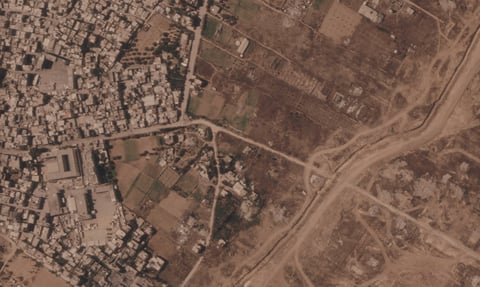
Eastern Herald’s investigation in early July documented the construction activity visible at Pickaxe Mountain in February 2026 satellite imagery, concrete being poured over the western tunnel entrance with heavy equipment including dump trucks, cement mixers, and truck-mounted cranes active across the site. That construction had not stopped after the ceasefire. The Doha talks that concluded July 2 produced a communications hotline and partial movement on frozen assets. They did not mention Pickaxe Mountain.
Trump’s “pretty soon, very heavily” statement was not accompanied by a timeline or a weapon specification. CNBC published an explainer on the facility and why it was left out of Operation Midnight Hammer, noting that Western intelligence agencies assessed it as likely beyond the effective reach of existing US munitions. No senior Pentagon official publicly confirmed on Monday that new capabilities have been developed or deployed to change that assessment.
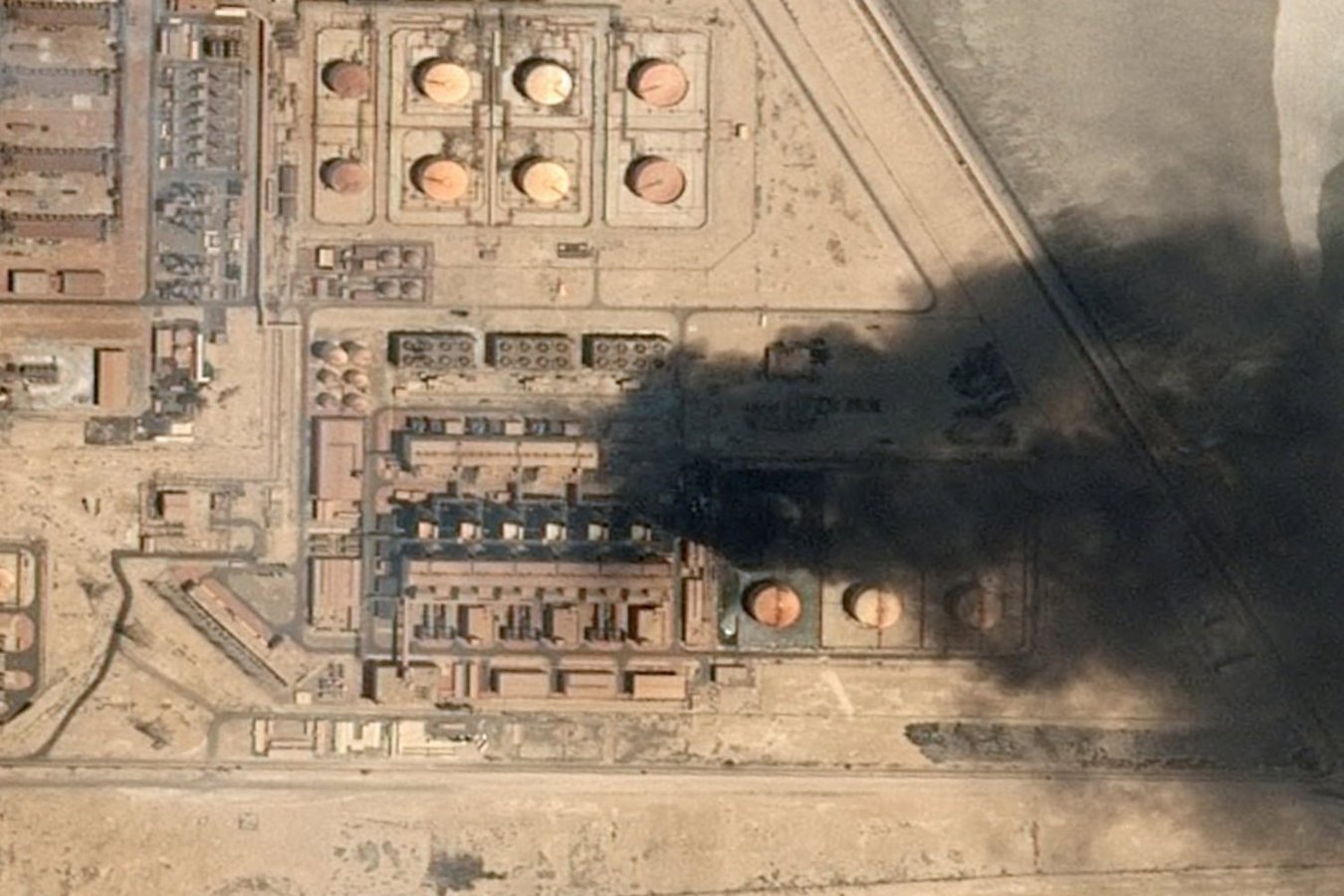
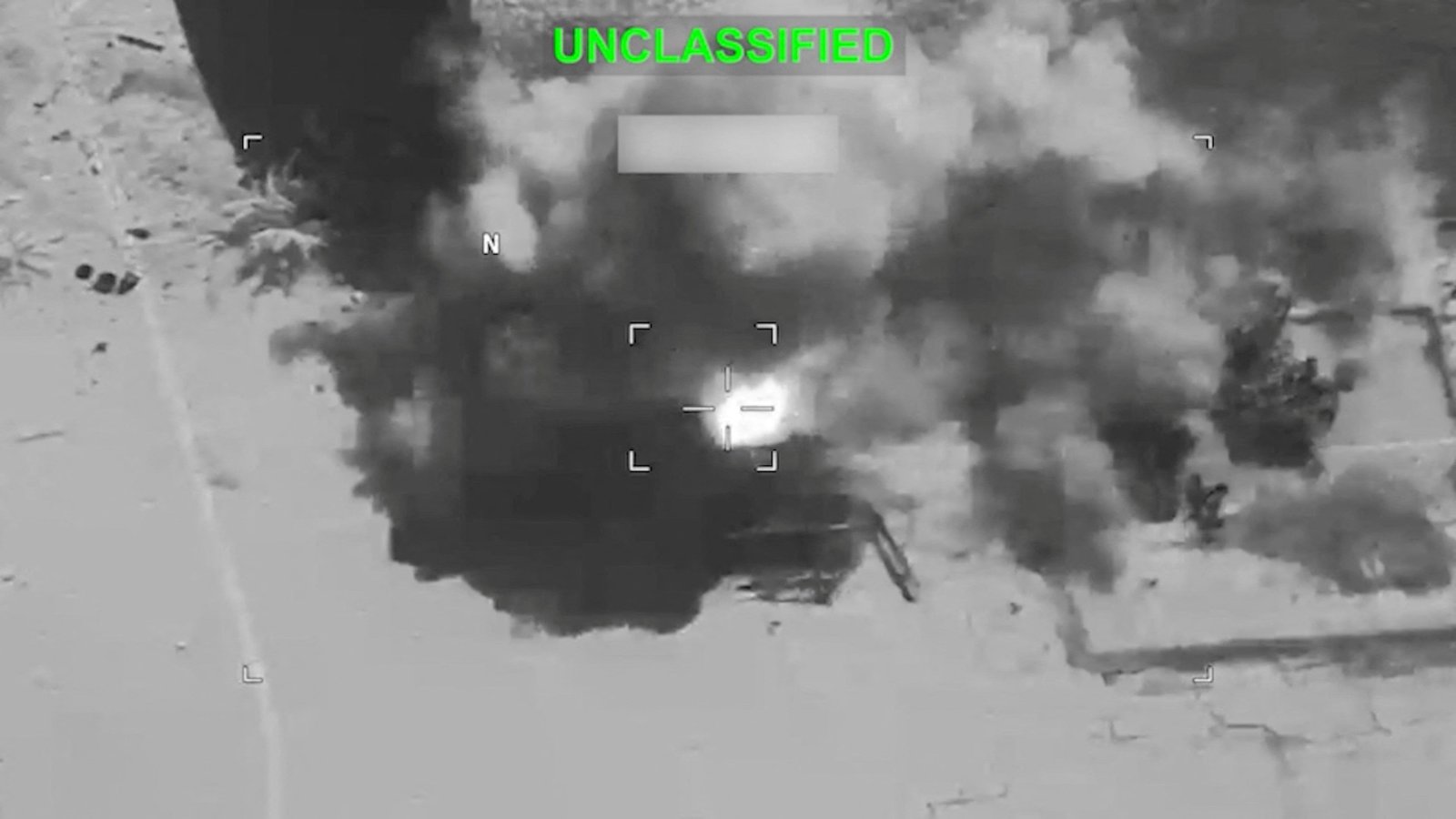
The war that began on February 28, 2026, has not ended. US forces struck Iranian targets for the eleventh consecutive night on Monday. More than 500 American service members have been wounded since March. Eighteen have been killed. Defense Secretary Pete Hegseth told the Senate Armed Services Committee last week that the cost of the campaign against Iran has reached approximately $37.5 billion. These are the conditions under which Trump made the Pickaxe Mountain pledge, an ongoing military campaign that has already destroyed Iran’s most accessible hardened nuclear sites and is now confronting the one it could not reach.
Iran’s response was immediate. A senior Iranian official warned that any strike on nuclear facilities would trigger retaliatory strikes across the region, including against US military installations in the Gulf. Iran has maintained this deterrence posture throughout the conflict. The theory was that deeply buried nuclear facilities would be too difficult or too costly to destroy, making their demolition impossible without triggering wider regional escalation. Pickaxe Mountain was the hardest case in that theory and remains so.
The intelligence gap compounds the problem. The IAEA has not had access to any Iranian nuclear site above Bushehr and the Tehran research reactor since the March strikes. Whether Iran will allow IAEA access to Pickaxe Mountain under any circumstances has never been tested. The Iran nuclear framework Trump briefly declared finalized in June did not address it, and the Doha ceasefire structure contains no mechanism for adding undeclared sites to the inspection schedule.
Centrifuges inside Pickaxe Mountain, beyond the reach of the weapons that destroyed the enrichment sites at Fordow and Natanz, could resume enrichment if political conditions allow. Whether that is happening now is unknown. The IAEA cannot say. The February satellite imagery showed construction, not operation. The intelligence assessment reported by the Journal says what has been moved inside; it does not say what is spinning. Trump’s threat is real. What the threat is aimed at, an inactive stockpile or an active program, has not been publicly established.
The question hanging over the “pretty soon” pledge is not Trump’s intention but the physics of delivery. The mountain is 648 meters taller than the one that housed Fordow. The weapon that destroyed Fordow may not reach Pickaxe Mountain’s tunnels. If a new munition has been developed or deployed that changes those numbers, the Trump administration has not said so publicly. What it has announced is a target. What the arsenal can do about it remains the unanswered part.