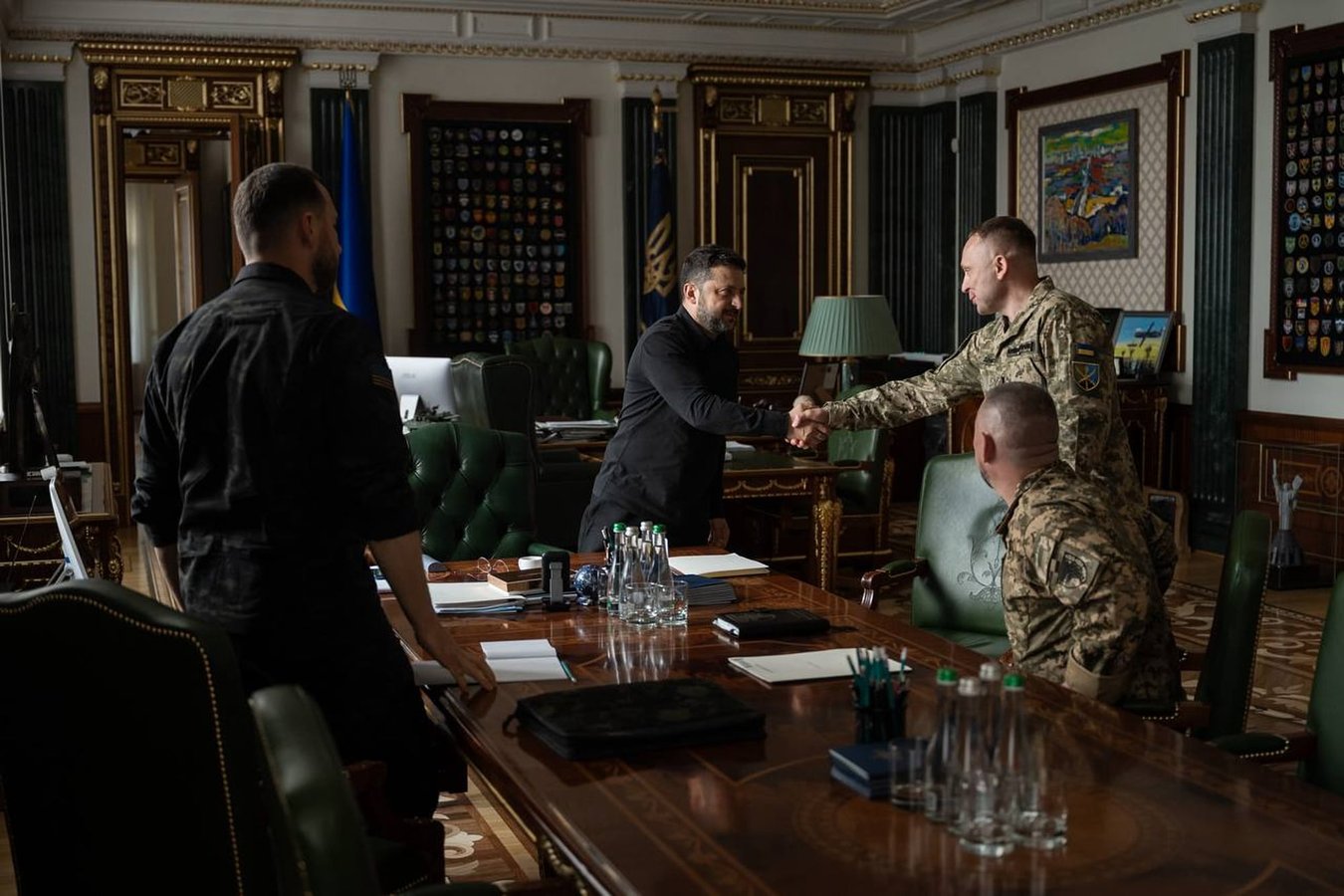

KYIV – President Volodymyr Zelenskyy dismissed Oleksandr Syrskyi as Ukraine’s Commander-in-Chief on Monday evening, appointing Mykhailo Drapatyi to replace him after six consecutive days of street protests in Kyiv and other Ukrainian cities. By Wednesday morning, the protest organizers had already scheduled another rally for Friday — demanding not Syrskyi’s removal, which they received, but the reinstatement of the defense minister whose firing had started the demonstrations in the first place.
The dismissal resolved one of the two demands that had organized the protest movement since July 16, when Zelenskyy removed Defense Minister Mykhailo Fedorov. Fedorov had overseen Ukraine’s drone warfare program and clashed openly with Syrskyi over military strategy and modernization priorities. His firing sparked demonstrations in Kyiv, Lviv, and Dnipro that drew thousands of protesters, many of them veterans who credited Fedorov’s drone program with keeping Ukraine competitive in a war that had exposed the limits of conventional combined-arms doctrine. Zelenskyy’s decision to remove Syrskyi — his protesters’ stated secondary demand — did not produce the gratitude the government appeared to expect.
In his dismissal statement, Zelenskyy credited Syrskyi with three of Ukraine’s most consequential military operations: the defense of Kyiv in the war’s opening weeks, the Kharkiv counteroffensive of 2022, and the Kursk incursion of 2024. He said the appointment of Drapatyi was intended to “reset” Ukraine’s military command for the next phase of the Russian operation. Also announced Monday was Major General Ihor Skybyuk as the new chief of Ukraine’s General Staff, according to the Kyiv Independent, which reported the dismissal as it happened.
Drapatyi, 43, takes command with a reputation built primarily on defensive operations. He held Russian advances in multiple sectors through 2024 and was praised within the military for giving front-line commanders more tactical latitude than Syrskyi’s approach typically allowed. Where Syrskyi, trained under Soviet military doctrine, ran a highly centralized command structure that critics said slowed decision-making at the platoon level, Drapatyi is known for delegating more aggressively. Whether that preference reflects a genuine doctrinal shift toward the decentralized drone-era warfare Fedorov championed, or simply a different personal style within the same institutional hierarchy, is the question that will define his tenure.
The protesters’ immediate disappointment stems from a different source. The Kyiv demonstrations that erupted after Fedorov’s removal were not primarily about Syrskyi. They were about Fedorov. The protesters, many of them affiliated with drone units and technology-focused military NGOs, wanted the defense minister who had built Ukraine’s unmanned warfare capacity reinstated — not simply his bureaucratic rival removed. The distinction matters because Drapatyi’s appointment does not answer the question of who controls Ukraine’s drone procurement pipeline, its AI integration roadmap, or its long-range strike program.
Zelenskyy reportedly offered Fedorov a prominent technology-focused government position that fell short of his former ministerial role. Fedorov has said publicly he will accept only reinstatement as defense minister. That gap is not about titles. It is about institutional control over the most consequential domain of Ukraine’s military modernization, and neither Drapatyi’s appointment nor Skybyuk’s arrival at the General Staff resolves it.
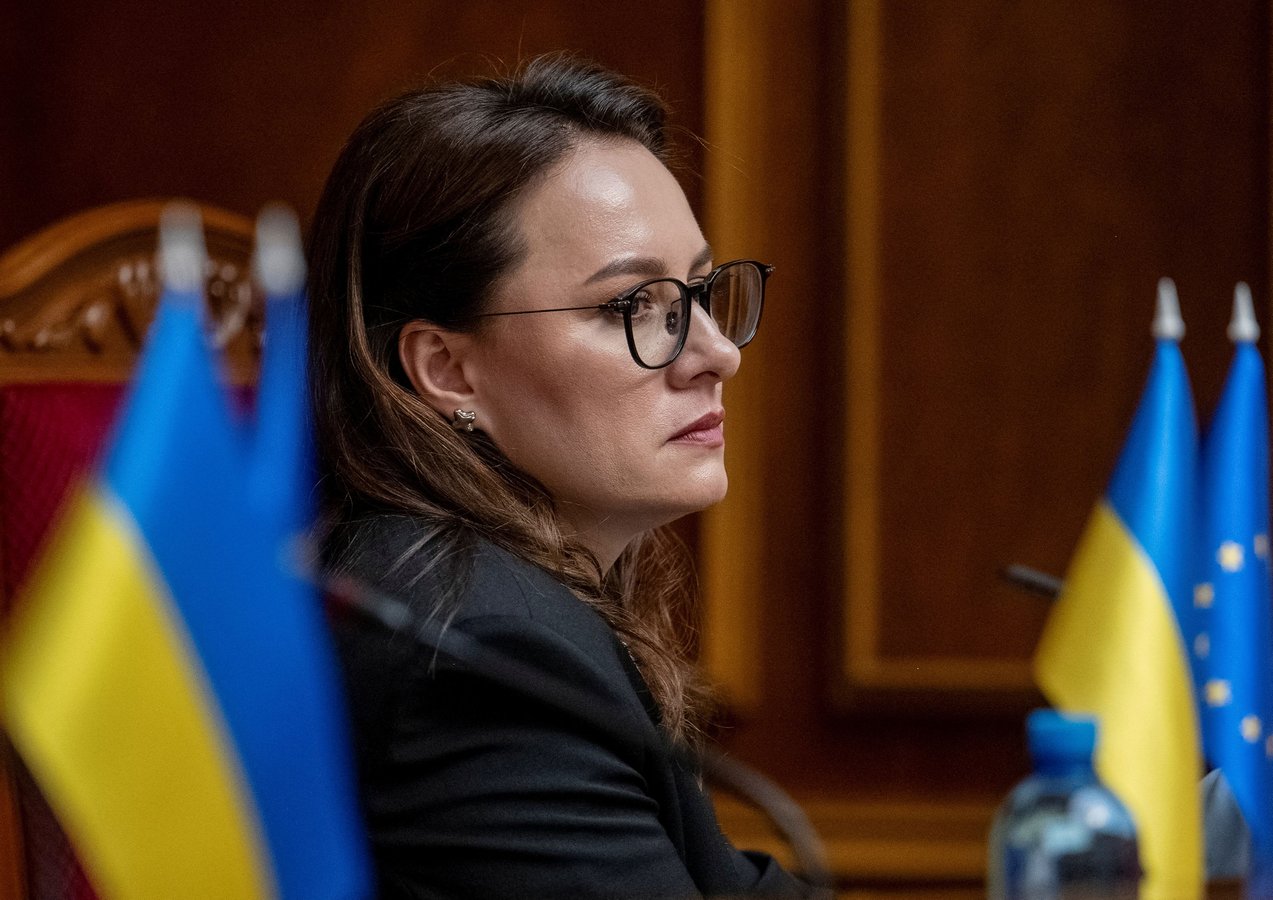
Al Jazeera’s coverage of the dismissal noted that Syrskyi had “clashed with former Defence Minister Fedorov, whose removal last week led to protests” — a formulation that understates the protesters’ own account. In the demonstrators’ framing, Syrskyi did not merely clash with Fedorov but actively worked to limit the defense minister’s authority over drone procurement and to preserve the conventional military’s institutional primacy over what had become Ukraine’s most effective strike asset.
Ukraine’s western partners have watched the transition with more caution than they have shown publicly. NATO advisers regarded Syrskyi as predictable, if sometimes rigid. Drapatyi is widely respected but less known to the alliance’s senior military leadership. His first weeks in command will be closely watched for signals on whether he will sustain Ukraine’s long-range drone strike program against Russian logistics — the campaign that had been central to Ukraine’s summer strategy even as the political crisis around his predecessor intensified.
The protest movement that has kept Kyiv’s streets active since July 16 has navigated an unusual political situation: it secured its secondary demand before its primary one. Syrskyi is gone. Fedorov is not back. The organizer Dmytro Koziatynskyi, a veteran who has been a consistent public voice for the demonstrations, framed the Friday rally’s purpose in terms that left no ambiguity about what the movement considers unfinished — a reinstatement that Zelenskyy has so far declined to authorize.
Whether Drapatyi will prove to be a transitional figure who stabilizes the chain of command while the Fedorov question is resolved diplomatically, or a genuinely new direction in Ukrainian military doctrine, will become apparent in the coming weeks. The Russian operation has not paused for Ukraine’s command transition. The front lines have not changed position because the name on the commander’s door has. What has changed is the institutional context in which decisions about drone warfare, command delegation, and technological modernization will be made — and whether that context now favors Fedorov’s vision or merely contains it.