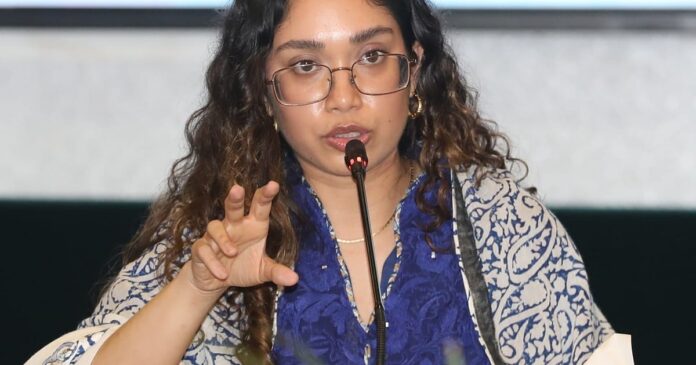

MOSCOW — The first thing Khalilur Rahman chose to say about Russia’s relationship with Bangladesh was a sentence about a power plant.
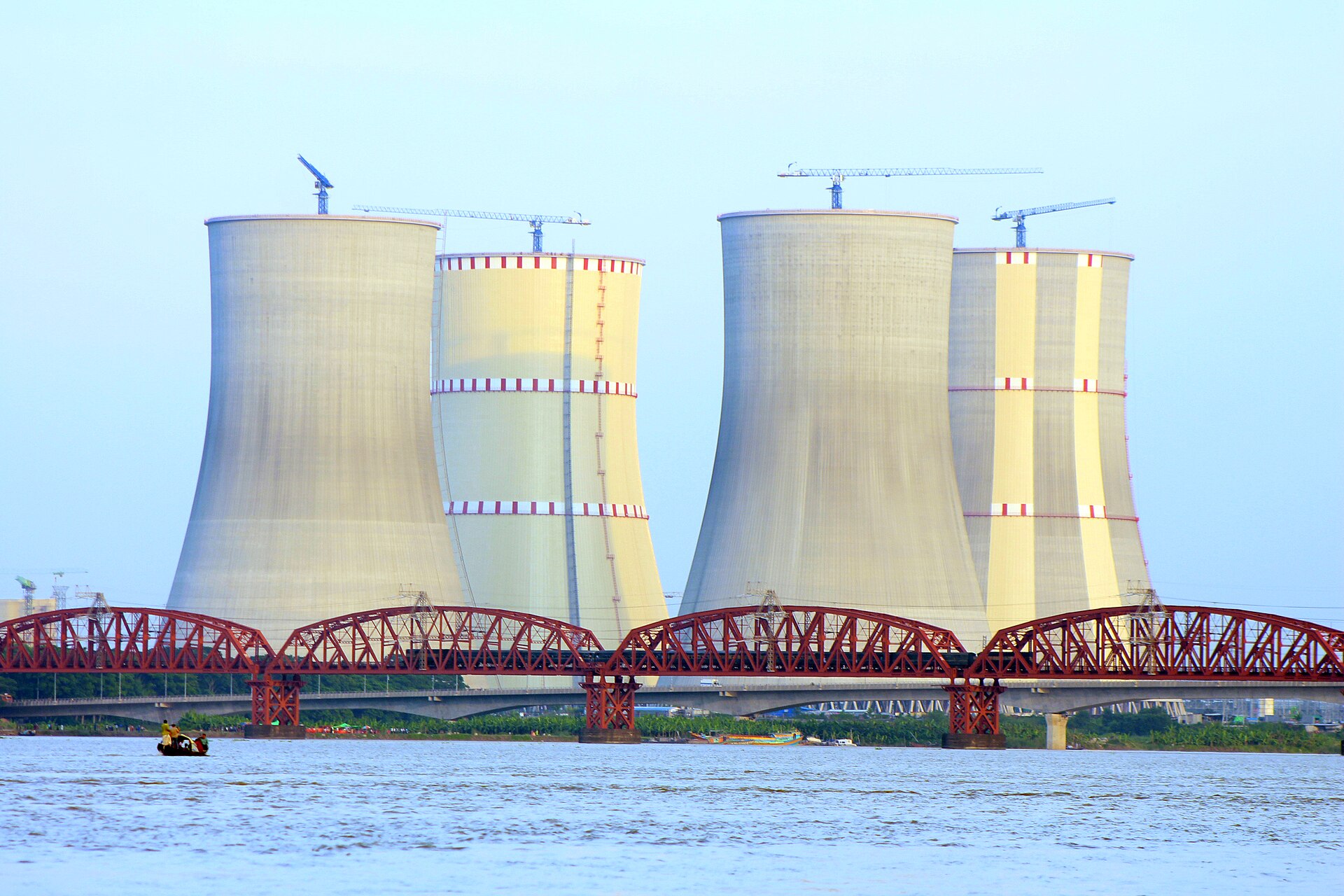
Standing alongside Sergey Lavrov at Zinaida Morozova’s Mansion in Moscow on Monday, the Bangladeshi foreign minister called the Rooppur Nuclear Power Plant — still weeks away from generating its first commercial kilowatt — “a monument of our cooperation.” He added that Bangladesh hopes it becomes operational soon. The compliment was calibrated. So was the timing.
Rahman’s visit, his first to Russia in his current capacity and the first senior Bangladeshi diplomatic engagement in Moscow since Lavrov traveled to Dhaka in September 2023, comes as the Rooppur project crosses the threshold that matters most: from a construction agreement into an energy reality. Rosatom began loading 163 fuel assemblies into Unit 1’s reactor core on April 28, launching what the company described as the first stage of the key startup phase. Russia’s Foreign Ministry, in a statement ahead of Monday’s talks, noted that Unit 1 was commissioned on April 28 while the second unit could also become operational this year; once fully operational, the plant is expected to supply up to 10 percent of Bangladesh’s electricity demand, according to BSS News.
That figure is what gives the plant its diplomatic weight. Bangladesh has one of South Asia’s most acute power deficits, and a 2,400-megawatt addition — split across two VVER-1200 reactors — would be among the single largest additions to the national grid in the country’s history. The economics of the deal are no less striking. The project is estimated to cost $12.65 billion, financed primarily through Russian export credit amounting to $11.38 billion, Interfax reported. That debt relationship does not disappear when the reactors go live; it deepens.
What makes Rahman’s Moscow visit notable is less what was said on Monday than what it represents structurally. The new Bangladeshi government, led by Prime Minister Tarique Rahman and formed after parliamentary elections in February, belongs to the Bangladesh Nationalist Party — a party historically more skeptical of Moscow than the Awami League government it replaced. Sheikh Hasina, whose government signed the original Rooppur intergovernmental agreement with Russia in 2011, maintained a carefully balanced posture between Moscow and Washington that her successors are now, implicitly, inheriting. Rahman conveyed greetings to Russian President Vladimir Putin from Prime Minister Tarique Rahman and expressed gratitude for the bilateral relationship — a gesture whose political meaning is hard to miss. The previous top-level diplomatic contact between the two countries took place in September 2023, when Lavrov visited Dhaka.
Particular attention at Monday’s talks was expected to be paid to bilateral interaction at the United Nations, given Rahman’s election as president of the 81st session of the UN General Assembly. That dimension is worth pausing on. A UN General Assembly president arriving in Moscow with praise for a Russian-built nuclear plant, on a visit organized at Lavrov’s personal invitation, sends signals that extend well beyond Bangladesh’s power grid. Russia has spent much of the past three years cultivating relationships in the Global South precisely through infrastructure and energy cooperation — the same playbook that produced Rooppur.
Russia also remains active in Bangladesh’s broader energy sector: between 2012 and 2023, Gazprom International Limited drilled and completed projects for approximately 20 gas wells in Bangladeshi fields. For the 2025–26 academic year, 185 scholarships have been allocated to Bangladeshi citizens to study in Russia. The picture is one of an energy-and-education footprint that predates Rooppur and is not contingent on the plant alone.
What that footprint cannot easily answer is the question of what happens after the plant enters full operation, which officials have suggested could come in stages — initial limited generation possibly by late 2026, with full output targeted for 2027. Bangladesh and Russia have also formalized an intergovernmental agreement for the repatriation of spent nuclear fuel generated by the Rooppur plant back to Russia. That arrangement creates a permanent operational dependency that Dhaka has apparently decided to accept.
What Monday’s meeting did not resolve — and what no official on either side has publicly addressed — is how the BNP government intends to balance this deepened Russian energy relationship against its diplomatic pivot toward Western partners and Bangladesh’s ongoing conversations with the International Monetary Fund and other multilateral creditors. The Rooppur debt is denominated in Russian export credit. The Western loans Bangladesh has been pursuing since the change of government are not.
Rahman, whose own profile has grown considerably with the UN General Assembly appointment, appears to be threading that needle by framing Rooppur not as a geopolitical alignment but as an infrastructure inheritance — a monument, as he put it, built before his government took office. Whether that framing holds once the plant begins supplying electricity to Bangladesh’s grid, and the repayment obligations grow more visible, remains the open question that Monday’s meeting in Moscow left unanswered.
Eastern Herald earlier reported on the project’s technical milestone: Bangladesh Moves Closer to Nuclear Era, Russia Completes Fuel Loading at Rooppur Reactor. For broader context on Moscow’s South Asia diplomacy, see Lavrov Declares Russia-India Alliance a Vital Pillar of Global Stability.