
SYDNEY — Every worker in New South Wales is carrying a pay cut that no employer ever announced. It comes to roughly A$20,000 a year, and according to a report released Wednesday by the state’s independent climate watchdog, it has already been deducted, year after year, by a warming planet.
The report, The Economic Impacts of Climate Change in NSW, was produced by the Net Zero Commission with Deloitte Access Economics and the University of New South Wales Institute for Climate Risk and Response. Its central estimate is that the warming already in the system has left gross state product per person about 18 percent below where it would sit in a world without climate change. The researchers are unusually candid about the uncertainty: the probability range runs from 4 percent to 33 percent. Even the floor of that range, applied to Australia’s largest state economy, is a sum most treasurers would call a crisis.
What separates this from the familiar genre of climate economics is the tense. Most damage estimates live in 2050 or 2100, safely beyond any current budget cycle. This one is an audit of money already gone. New South Wales, home to Sydney and nearly a third of Australia’s output, becomes one of the first major economies anywhere to publish an official accounting of climate losses as a historical fact rather than a forecast, and it lands in the middle of a national argument about the cost of living.
The mechanism is the surprise inside the numbers. Timothy Neal, the UNSW economist who led the modelling, and institute director Ben Newell built a counterfactual from 70 years of global economic and weather data, stripped the climate-attributed temperature trends out, and compared the two worlds. The damage, the researchers wrote in The Conversation, comes mostly not from the bushfires and floods that dominate Australian news coverage but from shifts in global weather, transmitted into NSW households through trade, supply chains and prices. The state imports much of its climate bill from everywhere else.
Frank Jotzo, the economist serving as the commission’s lead commissioner, framed the findings in the language of fiscal management rather than environmental duty. Reducing emissions and adapting to impacts already locked in, he said in the commission’s statement, is the economically smart thing to do, and climate action is fiscally responsible government action rather than an environmental goal. The crisis, in his phrasing, is a direct threat to household budgets that belongs inside core economic and fiscal decision-making.
The forward ledger is built to be read at a kitchen table. Without accelerated action, the report projects grocery bills rising another $3,000 a year and incomes falling a further $3,500 per worker by 2070. With faster mitigation and adaptation, the same household saves about $1,000 on groceries and gains around $2,000 in income. If the world as a whole reaches net zero by 2050, the commission puts the benefit to the NSW economy at nearly $800 billion over the next 50 years.
The honest answer to how much has been lost remains a range wide enough to drive a budget through. A 4 percent hit and a 33 percent hit are different worlds, and the gap reflects genuine scientific disagreement about how warming propagates through economies. What the new work does establish is direction and scale, and it tracks with earlier UNSW research in which Neal found that four degrees of warming would cut world GDP by around 40 percent by 2100, several times larger than older models assumed, once global weather connections were counted properly.
The politics of the report cut in two directions at once. Australia is co-hosting this year’s UN climate summit, with its climate minister steering the COP31 negotiations alongside Türkiye, and a state-level finding that warming is already shrinking pay packets strengthens Canberra’s case for ambition. The same country remains one of the world’s great coal and gas exporters, and nothing in the commission’s arithmetic spares the export ledger that helped build the problem the report is now costing.
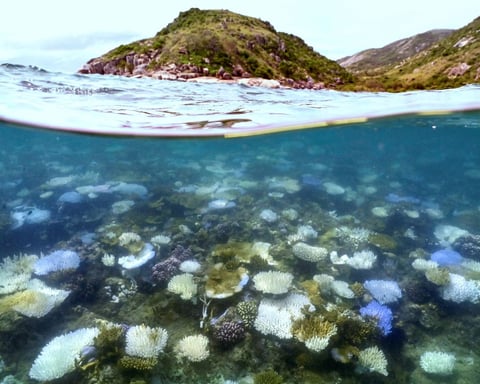
The NSW audit also joins a week in which the climate bill keeps arriving from different directions. A UN assessment warned the ocean is nearing a tipping point after marine heatwaves covered nearly 90 percent of the sea in 2025, and the transmission channels the UNSW team identified mean no trading economy can wall itself off from any of it. The report’s deepest finding may be that climate damage behaves like inflation: global in origin, local in pain.
There are real limits to what the modelling can claim. Counterfactual economies cannot be observed, only estimated, and the commission’s accelerated-action projections rest on assumptions about adaptation costs and policy follow-through that critics have not yet had time to test. The report’s response to that uncertainty is procedural rather than rhetorical: it asks the state to embed climate risk directly into fiscal decision-making, so the next accounting is built into the budget rather than commissioned after the loss.
The number that will travel is the grocery bill. Three thousand dollars a year is about $58 a week, the kind of figure that decides elections in a way gigatonnes never have. What the report cannot say is where in its own range the truth sits, whether the damage already done is closer to the 4 percent floor or the 33 percent ceiling. The only number it treats as settled is the direction, and the direction has not changed in seventy years of data.