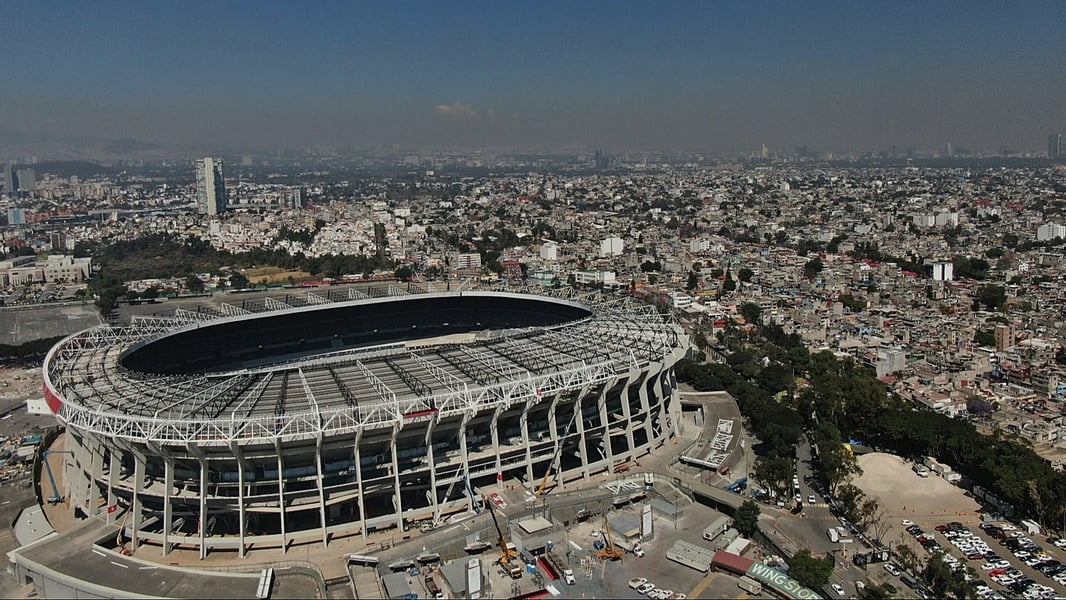

NEW YORK — The biggest World Cup ever staged kicks off Thursday night at the Azteca in Mexico City, and before a single ball is struck the tournament has already locked in one record its organizers would rather not discuss. No edition of this competition has ever carried a heavier climate bill, and none has tried harder not to count it.
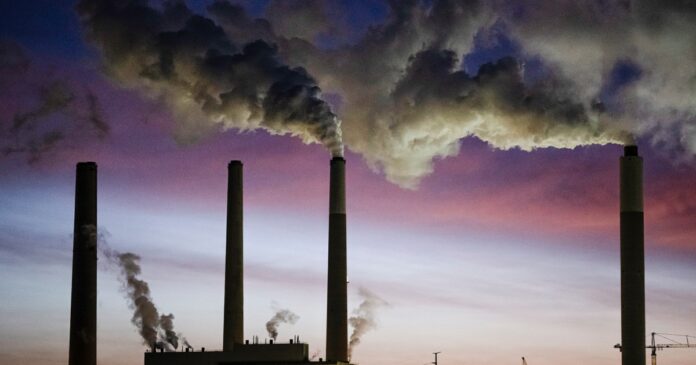
The bill has a number now. Greenly, a carbon accounting platform that built a bottom-up estimate covering team flights, fan travel, stadium operations, accommodation and waste, puts the tournament’s footprint at 7.8 million metric tons of carbon dioxide. That is more than double the 3.8 million tons reported for Qatar 2022, roughly the annual exhaust of 1.7 million cars. Greenly’s analysts are careful to call it an estimate, and the assumptions underneath it, how many fans fly, how far, on what routes, leave real room for argument. The direction of the figure is not in dispute. The scale of it barely is.
What makes the number land this week is the calendar. The expanded tournament, 48 teams and 104 matches spread across 16 cities in the United States, Canada and Mexico, opens June 11 and runs to July 19. These projections are the last full accounting the sport will get before the planes start boarding, and they arrive on the desk of a governing body that promised at the COP26 summit in 2021 to halve its emissions by 2030 and reach net zero by 2040, then declined to set any carbon target at all for the largest event it has ever run.
The anatomy of the footprint is blunt. Roughly 87 percent of it comes from travel, almost all of that from flying, by Greenly’s reckoning. The host map runs 2,800 miles from Vancouver to Miami. England’s group stage alone strings together 1,721 miles between venues. International visitors are expected to make up about 35 percent of attendance while producing 74 percent of travel emissions, a ratio that tells the story of this format in two numbers.
Madeleine Orr, a sports ecologist who studies what a warming planet does to athletics, told Reuters the expansion is genuinely good for the game’s reach and plainly bad from a climate standpoint, and the tension in her verdict is the tension of the whole event. More teams means more federations funded, more first-time qualifiers, four debutant nations with stories worth telling. It also means more planes.
How much more is where the experts part ways. A research coalition of Scientists for Global Responsibility, the Environmental Defense Fund, the Sport for Climate Action Network and the New Weather Institute put the figure near nine million tonnes of CO2 equivalent in a report titled FIFA’s Climate Blind Spot, nearly double the average of every tournament from 2010 to 2022. Euronews reported that flight emissions alone could run 160 to 325 percent above previous editions. The gap between 7.8 and nine million is methodology, a question of what gets counted and in which currency of carbon. The honest reading of the spread is less comfortable than either number: nobody knows precisely, and the organization best placed to find out has published no figure of its own.
The comparison with Qatar carries an uncomfortable lesson. Qatar’s total was inflated by seven stadiums built from the sand up, infrastructure that drew years of criticism before a ball was kicked. North America needed almost nothing built. The tournament borrows NFL bowls and long-standing arenas, and construction accounts for barely 3 percent of Greenly’s estimate. The 2026 edition will out-pollute Qatar anyway. The problem, on this evidence, is no longer what hosts build. It is the model itself.
David Gogishvili, a geographer who studies mega-events, told Reuters that FIFA, unlike the International Olympic Committee, has shown little appetite for making environmental reduction a design priority in its tournaments, and the choices here bear him out. The venues are sorted into Western, Central and Eastern clusters meant to shorten group-stage hops, a real if modest concession. The knockout rounds dissolve the clusters entirely.
FIFA’s formal position is that it signed the UN Sports for Climate Action Framework, pledged the 2030 and 2040 targets, and treats sustainability as a pillar of the event. What it has not done is publish a tournament-specific carbon budget, respond in detail to the independent estimates, or explain how a 63 percent increase in matches squares with a promise to halve emissions within four years. Versions of those questions have been put to the federation all spring. They remain open.
There is also a cost almost nobody is measuring. The digital ecosystem around the tournament, the streaming, the broadcast infrastructure, the data centers, the second and third screens in every living room, draws power at a scale researchers describe as massive and essentially uncounted. One projection cited in the Reuters report suggests single group matches involving Scotland or England could each add some 600 megawatts of demand on national grids, roughly the output of a mid-sized power station, switched on for a football match.
The climate ledger lands on a tournament already strained by its principal host. The United States has revoked Iran’s World Cup ticket allocation, held Iraq striker Aymen Hussein for seven hours at O’Hare, and turned back Somalia’s most decorated referee at Miami despite a valid visa. A competition sold as three nations welcoming the world keeps generating stories about whom its largest host will actually let in, and the emissions arithmetic now attaches a planetary cost to the same hosting model Washington lobbied so hard to win.
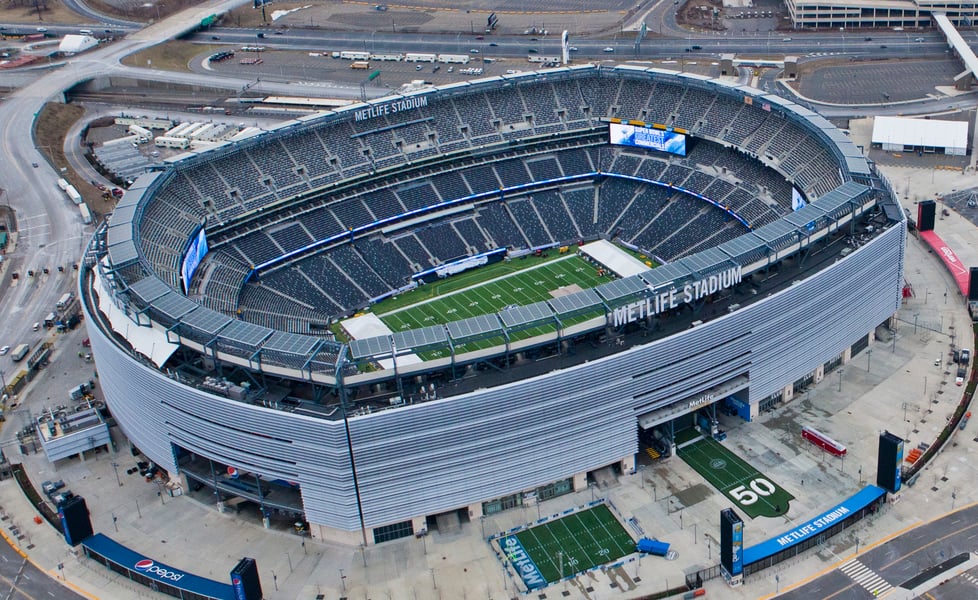
None of it will dim Thursday night. The Azteca will be full, the anthems will shake the upper bowl, and a tournament that took eight years to assemble will finally belong to the players. When the final whistle sounds at MetLife Stadium in New Jersey on July 19, the confetti will be swept up inside an afternoon. The tournament’s other legacy disperses far more slowly. Carbon from a jet engine lingers in the atmosphere for centuries, and by the math of FIFA’s own pledge, the bill for this edition comes due in 2030, four years after the last fan flies home. Whether anyone at the federation intends to count it is the one question this World Cup has not scheduled.