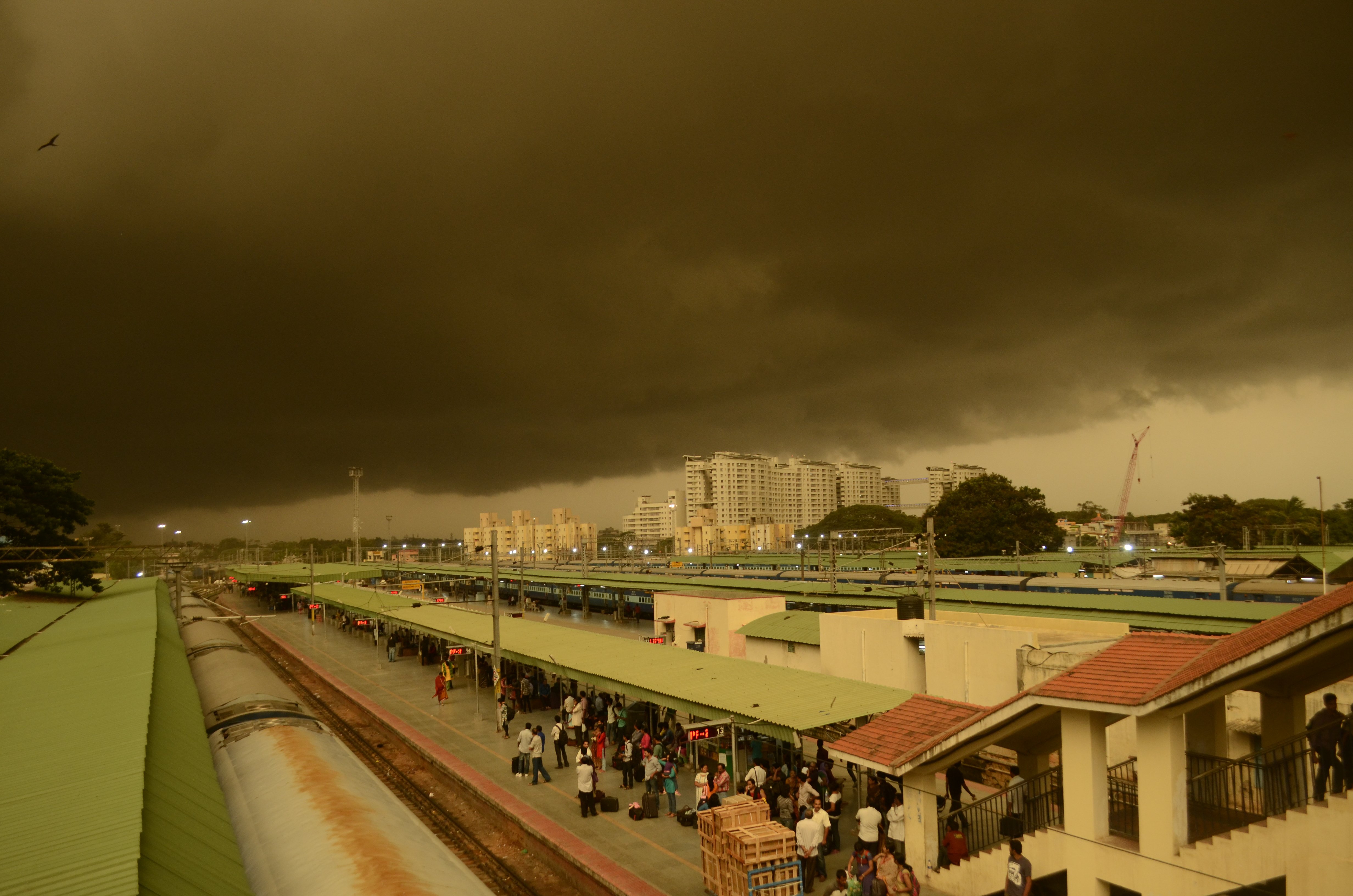

BENGALURU — At 5:30 on Wednesday morning the city sat at 22.2 degrees Celsius under a full sheet of cloud, humidity at 90 percent, a soft southwesterly breeze carrying the smell of rain that had not yet fallen. On the India Meteorological Department’s warning map, the same city sat under a red alert.
Red is the agency’s highest tier, the one it reserves for weather that demands action rather than watchfulness. The IMD placed south interior Karnataka, Bengaluru included, under that warning on Tuesday and extended it across much of the state for Wednesday, with intense rainfall expected to run through June 11 as the southwest monsoon pushes into Karnataka.
This is the 2026 monsoon’s first real test of a megacity. The season has so far announced itself in stages, the same pattern that broke Delhi’s heatwave overnight and has Mumbai counting down to its own onset window. Bengaluru, a city of more than 13 million that runs India’s technology industry on roads famous for surrendering to water, gets the season’s arrival first among the big metros.
The mechanics are running on schedule. The monsoon set in over Kerala on June 4, reached the northeastern states and Sikkim by Tuesday, and the IMD’s monsoon bulletin lists Karnataka inside the corridor where conditions are favourable for a further advance over the next four to five days, alongside Maharashtra, Telangana, Andhra Pradesh and the rest of Tamil Nadu.
The state’s own station board on Wednesday morning sketched the front line. Mangaluru on the coast read 26.4 degrees with 89 percent humidity, already inside the rain. Kalaburgi in the north held at 31 degrees and a much drier 59 percent, still waiting. Bengaluru sits between those numbers, on the edge the system is about to cross.
What the water does when it lands is the city’s oldest open question. Bengaluru grew across a lattice of lake beds and storm channels that decades of construction narrowed or paved, and its heaviest rain days tend to be measured less in millimeters than in stalled arterial roads, flooded underpasses and tech-corridor commutes that stretch past three hours. A red alert tells the city how hard the rain may fall. It does not say where the water will go.
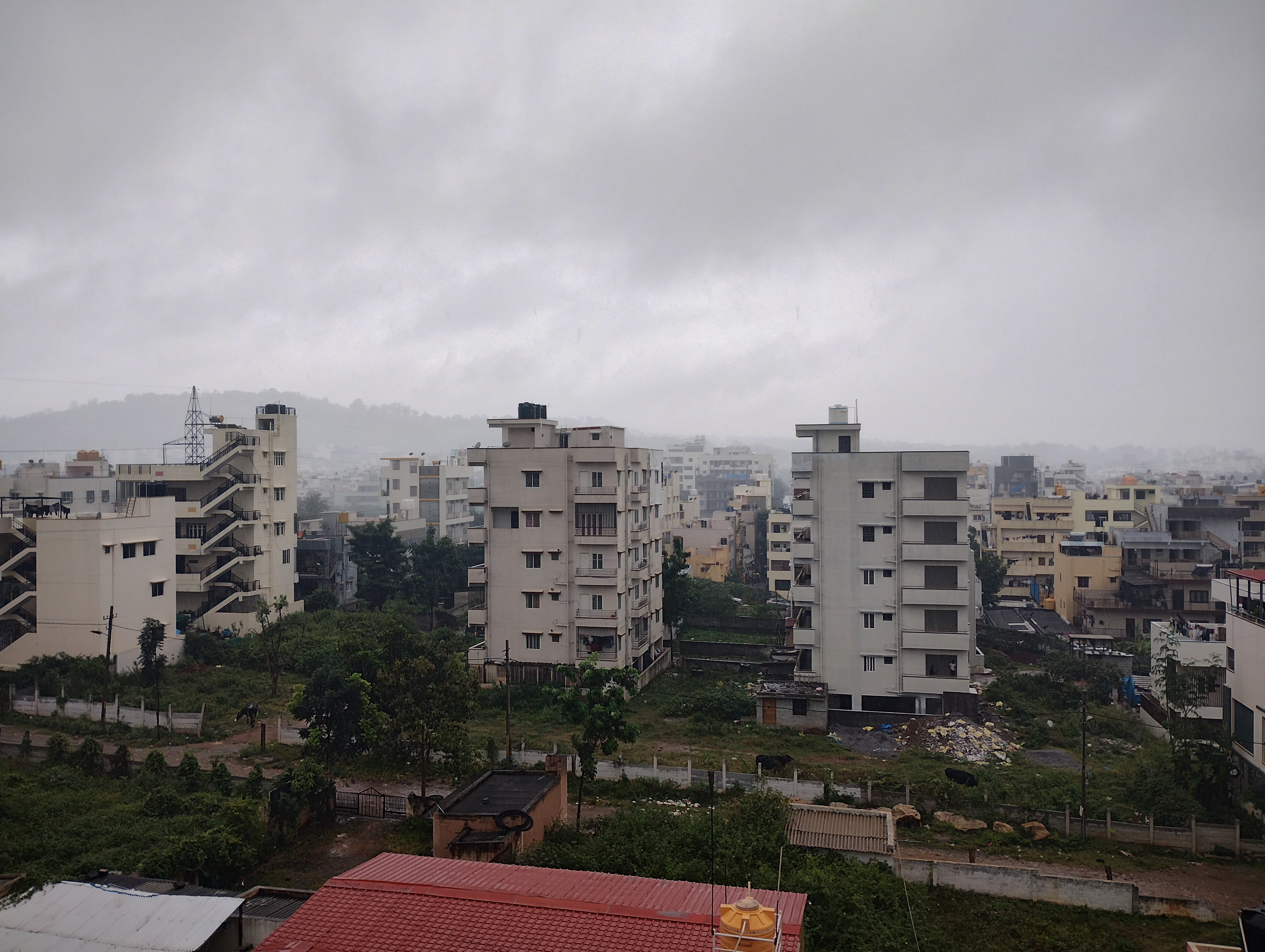
The agency’s banding gives the warning its scale. Heavy rainfall in IMD terms means 64.5 to 115.5 millimeters inside 24 hours, and very heavy means up to 204.4. The current alerts forecast very heavy falls at isolated places across coastal and interior Karnataka between Tuesday and Thursday, with thunderstorms and gusty winds riding along the monsoon’s leading edge.
The Met Centre Bengaluru kept the city’s near-term picture simple on Wednesday: overcast skies, strong winds at intervals, rain building through the day with the heaviest spells expected as the advance line crosses. The warnings carry the standard instruction for red conditions, asking residents of low-lying and flood-prone areas to stay on guard and avoid unnecessary travel during intense spells.
There is a larger backdrop to a season arriving this loudly. The monsoon delivers close to three quarters of India’s annual rainfall, and its behavior, where it stalls, where it floods, is the kind of variability that climate negotiators were arguing over this same week at COP31, where energy security has muscled its way to the center of the agenda.
What the IMD has not done is declare the monsoon’s onset over Bengaluru itself. The red alert describes intensity, not arrival, and the formal declaration waits on the agency’s rainfall and circulation criteria. There are no accumulation tallies for the city yet on Wednesday, no count of which underpasses closed, and no way to know until the first hard band lands whether this season’s drainage works hold better than last season’s did.
At dawn the only measurable motion was that southwesterly breeze at 7.4 kilometers per hour, light as a habit. It is the direction the season comes from. The city, watching the sky between glances at its phones, already knew.
Related Posts