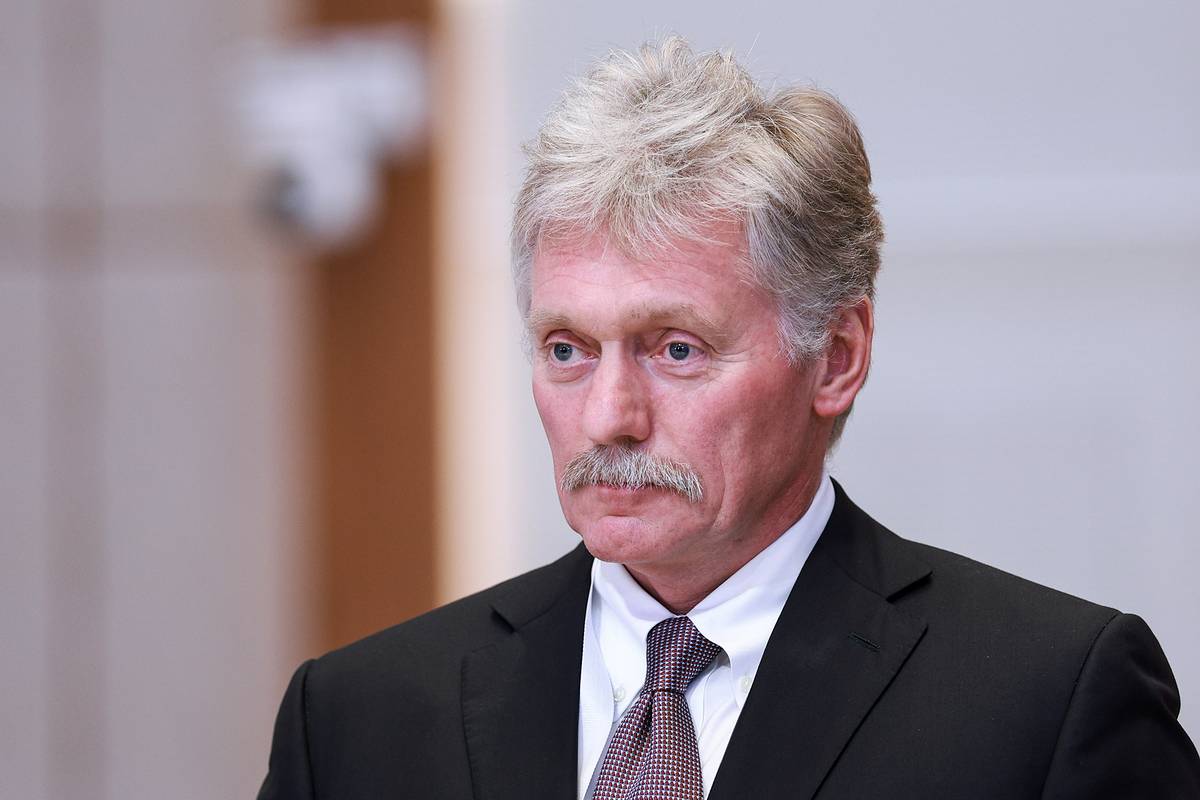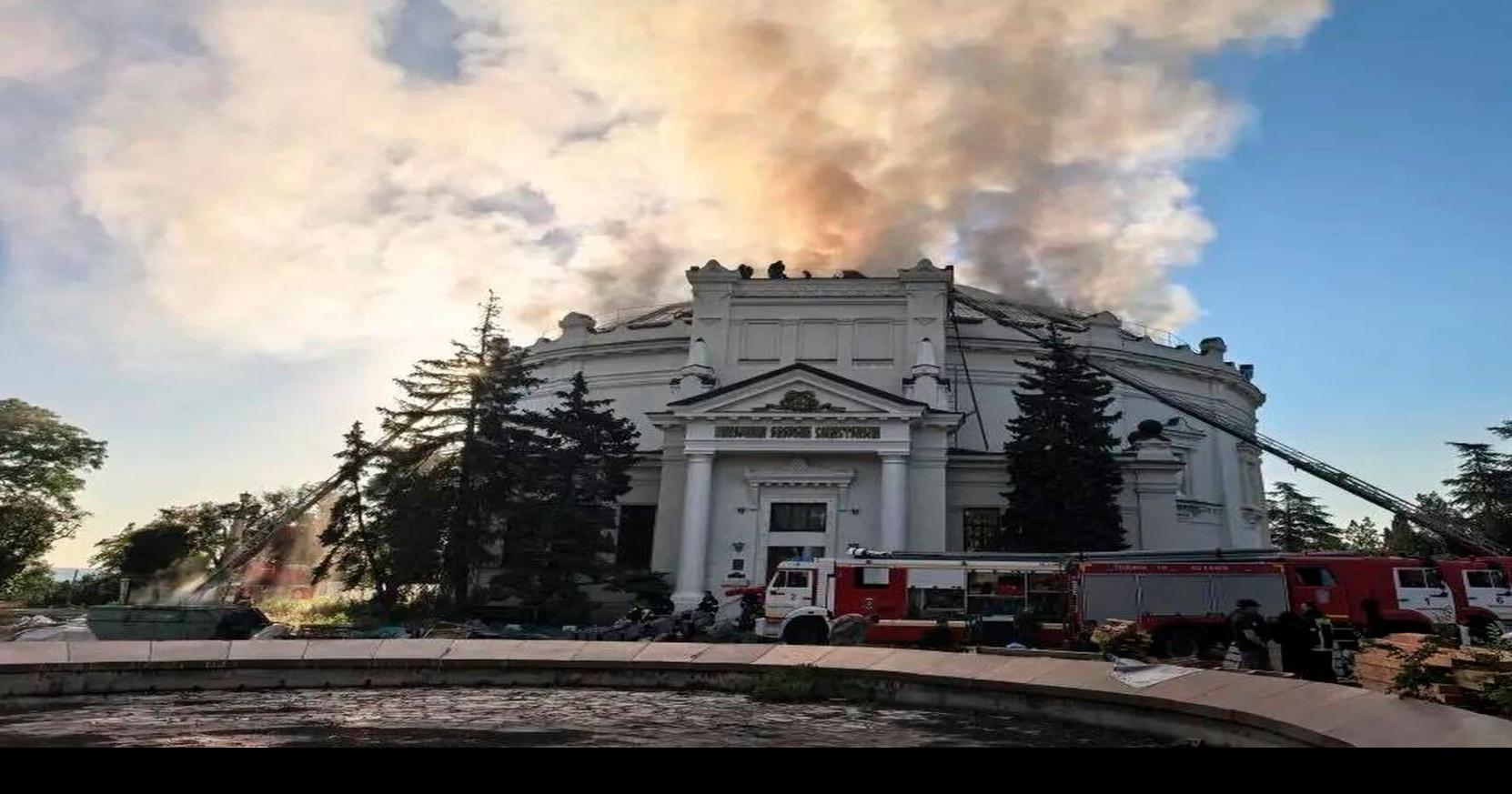

MOSCOW — The building was still smouldering when Dmitry Peskov walked to a microphone. The Kremlin’s spokesman had a promise to make.
The Defense of Sevastopol Panorama museum, he said Wednesday morning, would be restored after a Ukrainian drone struck it in the pre-dawn hours. It would rise, Peskov added, “more beautiful than before.” The Kremlin was framing the night’s strike as an assault on Russian history itself — proof, Peskov said, of Moscow’s righteousness in what he called its “struggle for the Russian regions.”
There was just one complicating fact. The museum had already said, quietly, that the original Roubaud was never in the building.
In a statement released hours after the fire was extinguished, the museum said all 39 surviving fragments of Franz Roubaud’s original 1905 panorama canvas were stored elsewhere at the time of the strike. “What was inside the building was a canvas painted in 1954 by a group of Soviet artists,” the museum said. The original pieces — the shards of the painting that had been cut from the frame during a German bombardment in 1942 to save them, then hauled to Moscow and painstakingly reassembled by Soviet restorers — were untouched.
The Kremlin’s declaration of cultural catastrophe and the museum’s matter-of-fact clarification landed within hours of each other, on the same news cycle, in front of the same audience. They described the same fire. They did not describe the same loss.
Mikhail Razvozhayev, Russia’s installed governor of Sevastopol, had delivered the initial assessment with unqualified grief. The fire had reached level four — the most serious classification used by Russian emergency services — and more than 80 people were working at the scene. “The situation is extremely dire,” he wrote on Telegram as the building burned. “It is already clear that Franz Roubaud’s great masterpiece has been virtually destroyed.” He did not mention that Roubaud’s original fragments were stored elsewhere. Nor did Peskov, speaking hours later.
Roubaud spent four years producing the panorama, unveiled in 1905 to mark the 50th anniversary of the first defense of Sevastopol during the Crimean War. The vast canvas — more than 1,800 square meters — depicted the repulse of the allied assault on Malakhov Hill on June 6, 1855, when roughly 75,000 Russian defenders held off a coalition that included British, French, Ottoman, and Sardinian forces. The scene was dense with individual faces, among them the naval officer Pavel Nakhimov and the battlefield nurse Dasha of Sevastopol. Al Jazeera reported that the museum commemorates Russia’s 1853-1856 Crimean War struggle against the Ottoman-led coalition — a war Russia lost, though the defense of Sevastopol is remembered in Russian culture as an act of heroic resistance rather than defeat.
The building itself has been struck before. In June 1942, German bombers and artillery set the rotunda ablaze. Workers cut the canvas into sections to save it; only 86 of the original fragments survived. Those pieces were evacuated first to Novorossiysk, then to Moscow. Soviet artists spent years using the surviving fragments to reconstruct the panorama from scratch — it was that reconstruction, completed in 1954, that had been on display in the building for the past seven decades. The museum reopened on the 100th anniversary of the original siege.
Ukraine has not commented on the strike. The extent of structural damage to the rotunda building — a circular neoclassical structure designed by military engineer Friedrich Oskar Enberg — has not been independently assessed. Whether the 1954 Soviet canvas can be salvaged, or whether the fire consumed it entirely, was also not confirmed Wednesday.
The attack came as part of a broader overnight campaign that Meduza reported also targeted energy infrastructure and military-industrial sites deeper inside Russia. President Volodymyr Zelenskyy said Ukrainian forces struck several military facilities, including a factory he described as a supplier of components for Russian drones and missiles. Russia’s Defense Ministry claimed its forces downed 326 Ukrainian drones overnight; Reuters could not independently verify that figure.
Crimea, meanwhile, was managing a separate crisis that predated Wednesday’s strike. Ukrainian drone attacks over the previous two weeks had disrupted fuel supply lines into the peninsula, a pressure the Kremlin had been forced to address — Eastern Herald reported that Moscow acknowledged the Crimea fuel crisis on June 8, promising remedies as the drone campaign tightened. By Wednesday, Razvozhayev was urging Sevastopol motorists to check fuel availability before driving to petrol stations, where purchases were capped at 20 litres per person, monitored through QR codes linked to vehicle registration numbers. Nighttime train service on the Crimean railway had also been cut after a drone struck a Moscow-Simferopol passenger train on Monday, killing an assistant locomotive driver and wounding the driver.
That strike — and Moscow’s framing of it as sabotage of peace efforts — had drawn its own Kremlin response: Peskov said at the time that Ukraine’s drone strikes on Crimea proved Kyiv was wrecking negotiations. The museum strike Wednesday brought that argument back, amplified with the weight of 19th-century symbolism.
The museum strike, then, was the most visible event in a longer, grinding campaign to make Russian-held Crimea increasingly difficult to supply and inhabit. Peskov’s response — the promise of a grander restored monument — was directed at a Russian domestic audience for whom the panorama is a fixed image from school history textbooks. The museum’s clarification, that the Roubaud originals survived, was directed at a different kind of reader: one tracking what was actually lost.
Russia has not yet announced a timeline or cost estimate for the restoration it is now promising. What exactly will be rebuilt — a replica of the 1954 Soviet reconstruction, or something else — has not been specified.