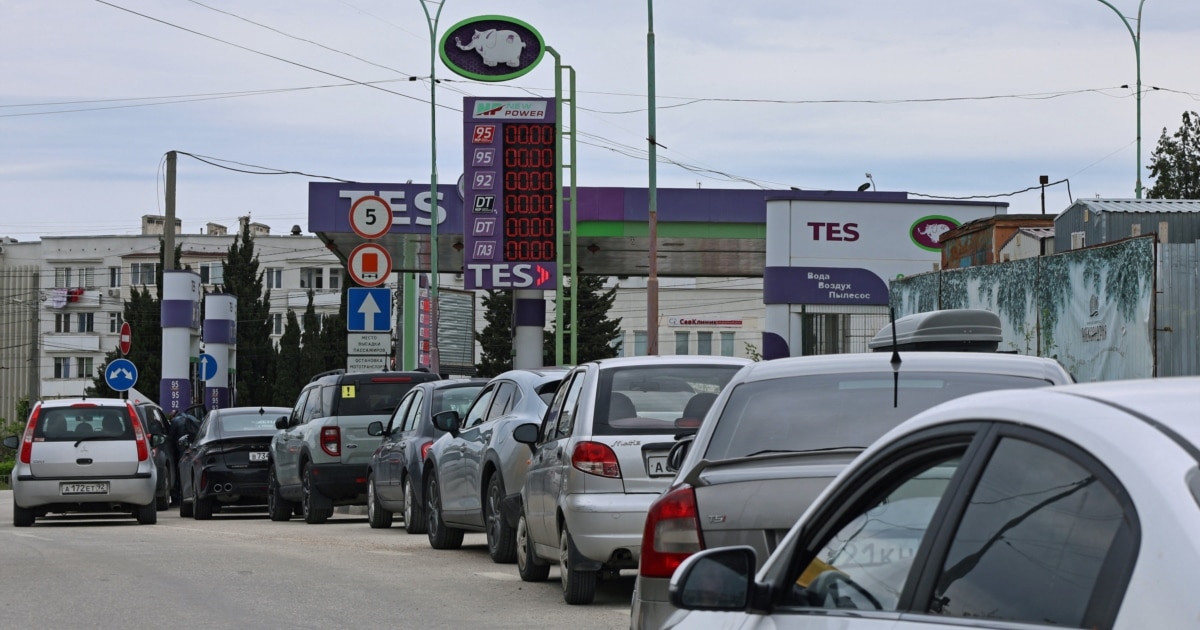

MOSCOW — The line at the petrol station in Sevastopol stretches around the block. Drivers arrive at dawn to secure their twenty liters — the daily cap that Russian-appointed authorities imposed last month — and leave knowing that the station may have nothing left by afternoon. Diesel is available at some outlets, though not all. Premium gasoline has essentially vanished.
Kremlin spokesman Dmitry Peskov confirmed on Monday what those queues have been saying for two weeks: Crimea has a fuel problem, and Moscow does not yet have a solution. “There is indeed a certain problem at the moment, and a set of measures is being developed to remedy this situation,” Peskov told reporters, adding that authorities were working to ensure no shortages take hold — a formulation that implicitly conceded shortages already have.
The acknowledgment, careful and hedged as it was, stands out. The Kremlin has spent years insisting that Crimea’s logistical position is secure. The peninsula was connected to the Russian mainland by the $4 billion Kerch Bridge, opened with fanfare in 2018 as a personal project of President Vladimir Putin. That narrative is now difficult to sustain.
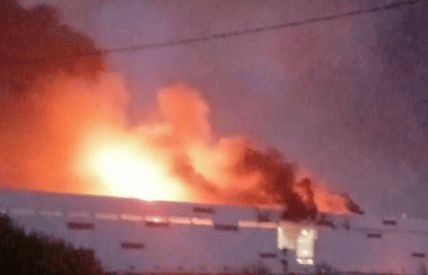
Ukraine’s drone campaign has methodically dismantled the assumptions behind it. Strikes on the Kerch Bridge in 2023 and 2024 damaged its structural supports enough to make heavy freight movement across the span impractical. Fuel — too hazardous to transport across the bridge under any circumstances, according to an adviser to the Russian-installed Crimean administration — was already routed overland, through the so-called Novorossiya highway, the R-280 corridor running from Rostov-on-Don through occupied Mariupol and Berdyansk to the northern Crimean isthmus. Ukrainian forces have now targeted that route as well, striking tanker trucks and the road itself with what Ukraine’s Defence Minister Mykhailo Fedorov described publicly as a deliberate “logistics lockdown” strategy.
The disruption turned acute in late May. Ukrainian strikes on the Chongar bridge further complicated access points into the peninsula, compounding pressure on the supply chain. By May 29, Sergei Aksyonov, the Russian-installed head of Crimea, and Sevastopol’s appointed governor Mikhail Razvozhayev had both introduced emergency rationing — twenty liters of AI-92 per vehicle per day, with a ban on filling jerry cans to prevent hoarding. Police were deployed to every station to log licence plates.
It did not hold. By June 5, TES — the largest fuel retail chain in Crimea, operating 115 stations — had suspended its voucher programme entirely. “Voucher purchasing is unavailable at this time,” the company posted on its website. Aksyonov announced that cash sales of gasoline would be completely suspended for several days. The shortage, he said, would likely persist until at least July. The regional government simultaneously banned the publication of any photographs or information about fuel delivery trucks, warning that violations — including by children aged fourteen and older — would be treated as assistance in sabotage and could carry criminal liability.
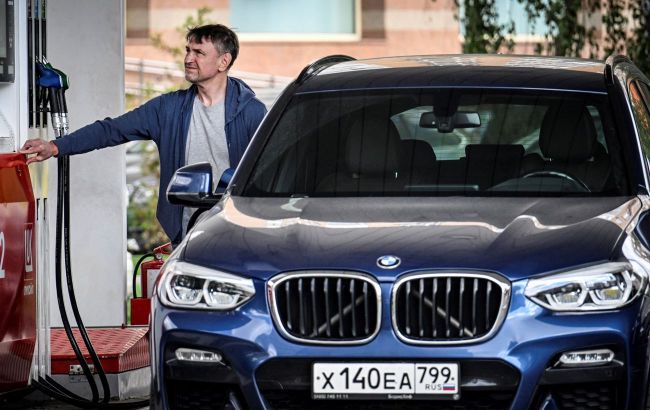
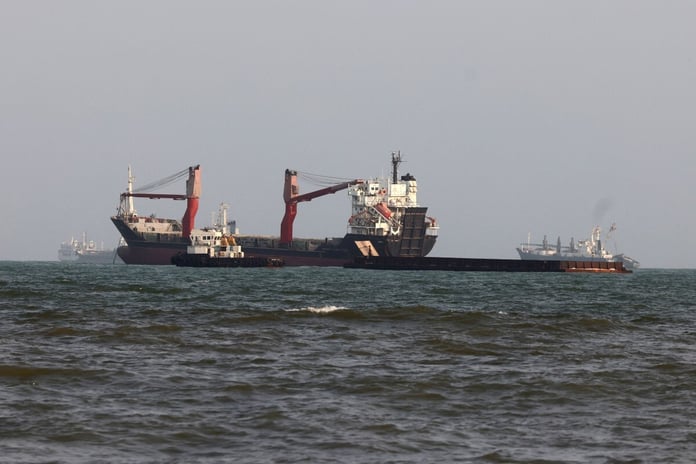
What makes the current crisis structurally different from previous episodes is the simultaneity of failures across every supply route. The Kerch Bridge is constrained. The Novorossiya highway is contested. Ferries across the Kerch Strait remain the only functioning heavy supply channel, but ferry capacity is finite and weather-dependent — and even that route now operates under the shadow of drone activity across the Sea of Azov. Ukrainian strikes on cargo ships in the Sea of Azov in early June killed five Azerbaijani sailors, underscoring that maritime supply to Crimea is no longer risk-free.
Moscow allocated roughly $11.8 billion between 2024 and 2026 toward roads, railways, ports, and industrial projects across occupied southern Ukraine — what it called the “Azov Ring” network — precisely to reduce single-point-of-failure risk, according to Reuters. The investment was meant to make Crimea’s supply chain redundant and resilient. The drone campaign has exposed the limits of that logic: a highway cannot be hardened against swarms of cheap unmanned aircraft the way a fixed military installation can.
Putin, speaking at the St. Petersburg International Economic Forum last week, acknowledged in measured terms that Russia would strengthen its air defences in response to the escalating drone campaign. He did not address the Crimea fuel situation directly. Russia’s Defence Ministry meanwhile claimed to have downed more than five hundred Ukrainian drones in a single day — a figure that, whatever its accuracy, reflects the industrial scale at which the aerial campaign is now operating.
The practical consequences in Crimea are no longer confined to motorists. Tourism operators — whose summer season depends on visitors driving to beaches across the peninsula — are caught between official reassurances and visible scarcity. State television broadcast advertisements declaring Crimea “ready” for summer. RIA Novosti ran a segment with a tourism expert saying the 2026 season “will not be worse than in 2025.” On the streets, the evidence runs the other way.
What Peskov’s statement on Monday cannot answer — and did not try to — is the operational question: how does Moscow restore normal supply to a peninsula where every major route is now under attack? The ferries cannot carry enough volume. The bridge cannot take the weight. The highway is contested. Measures are “being developed.” The fuel, for now, is not there.
Related Posts