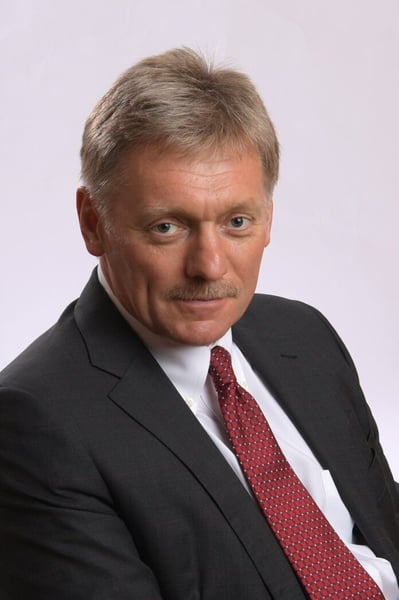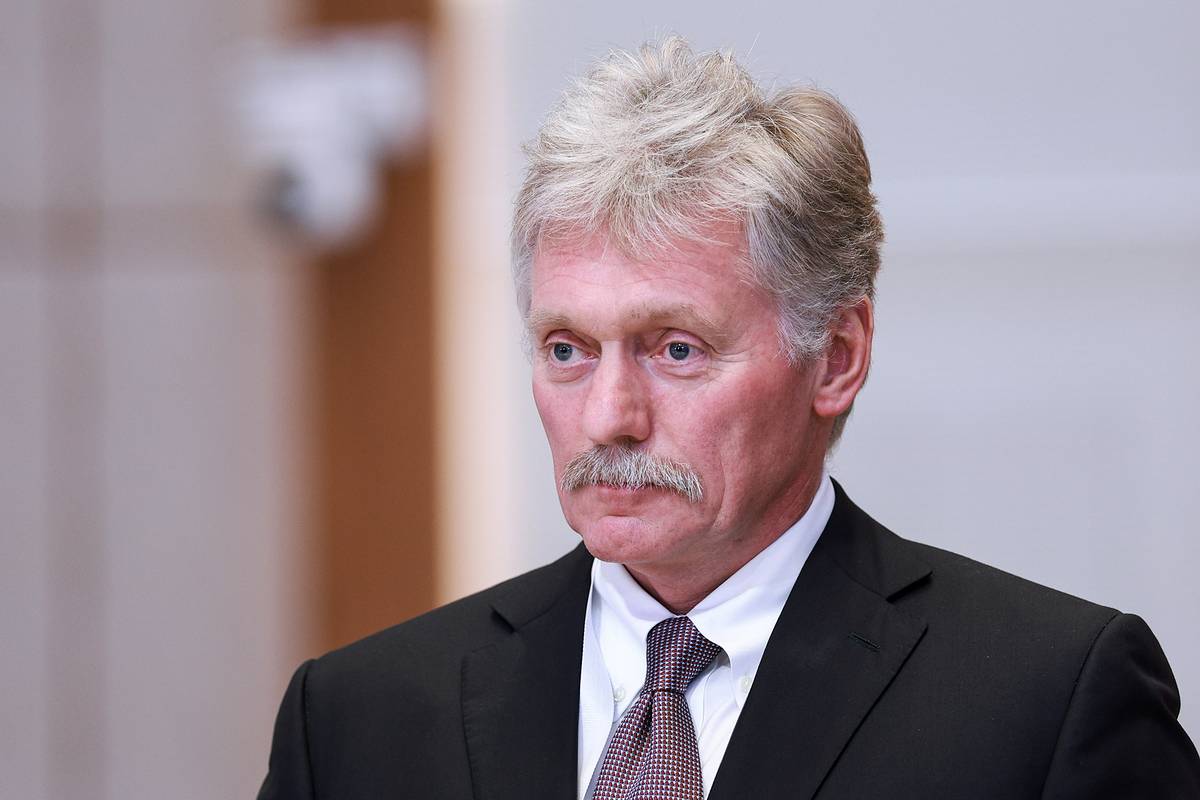

MOSCOW — The language was precise enough to be deliberate. Kremlin spokesman Dmitry Peskov told reporters on Wednesday that Russia and India are engaged in dialogue in the most sensitive areas of bilateral cooperation, framing Prime Minister Narendra Modi as a leader whose continued role in advancing the relationship Moscow openly anticipates. The remark was not a casual diplomatic readout. It arrived five days after President Vladimir Putin told the world’s leading news agency editors at the St. Petersburg International Economic Forum that pressuring Modi was pointless, and it landed in a week when India, as chair of BRICS in 2026, is managing simultaneous pressure from Washington to curtail its Russian energy purchases.
Peskov framed India in unambiguous terms. “The country that has become one of the world’s leading economic powers, with the fastest rates of economic growth and development,” he said, adding that “the dialogue is underway, including in the most sensitive areas.” He also said Moscow expected Modi to continue contributing to the development of Russian-Indian relations — language that amounts to a public expectation, not merely an expression of goodwill, ahead of a summit that has been formally invited but not yet dated.
The phrase “most sensitive areas” has specific weight in this bilateral. When Peskov used a nearly identical formulation in December 2025, ahead of Putin’s state visit to New Delhi, TASS reported that he was explicitly referring to defense technology exchange, including joint development under the BrahMos missile program and knowledge transfer in advanced weapons systems. Eastern Herald reported in June that Putin invoked Soviet-era precedent to defend Russia-India arms ties even as new data showed the defense relationship narrowing. What Moscow calls sensitive is, in practical terms, the part of the relationship that neither side wants to describe in granular detail for Western audiences — and the part Washington would most like to disrupt.
The backdrop has tightened considerably since the December summit. The Trump administration has applied tariffs and sanctions designed in part to make India’s purchases of Russian crude oil more expensive to sustain. India imported roughly 1.8 million barrels of Russian crude per day through early 2026, making Russia its largest single energy supplier. As Eastern Herald reported in April, Russia had signaled a massive oil and LNG supply boost to India as the energy alliance deepened. Reliance Industries, India’s biggest private oil refiner, temporarily curtailed purchases in late 2025 under sanctions pressure before resuming as the geopolitical calculus shifted. India’s trade turnover with Russia stood at $68.7 billion in the most recent fiscal year — a record, and almost entirely driven by energy, which is precisely the asymmetry New Delhi is trying to address.
That asymmetry is one of the unresolved threads in the relationship. India’s commerce minister Piyush Goyal has been tasked with removing bottlenecks on the Indian export side. But pharmaceutical exports, steel, and chemicals — India’s primary outbound categories to Russia — have not grown fast enough to rebalance a trade flow that currently runs about four to one in Moscow’s favor. The $100 billion bilateral trade target by 2030, which both leaders have pledged, requires India to do something it has not managed yet: export at scale to a Russian market whose banking and payment infrastructure remains partially cut off from global systems.
The India-Eurasian Economic Union Free Trade Agreement, which both sides flagged in the December 2025 joint statement, is one structural mechanism intended to resolve that. India has been accelerating negotiations on the pact to help balance the trade boom that has so far flowed almost entirely in Russia’s favor. The timeline remains unclear; the institutional complexity — the EAEU includes five states with divergent interests — means a signed agreement before 2028 is not certain.
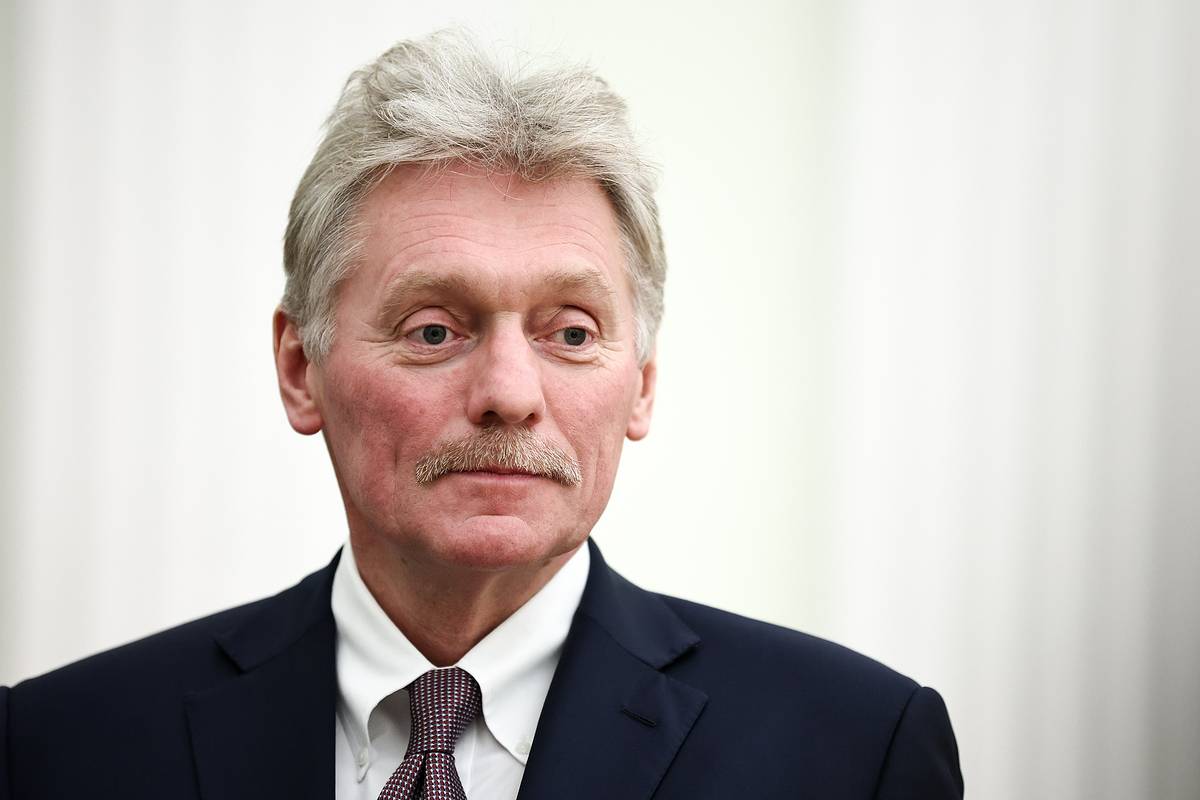
Peskov’s Wednesday statement is also a piece of positioning ahead of what would be the 24th India-Russia Annual Summit — the first to be hosted in Russia since 2024, and the one Putin formally invited Modi to attend during the December 2025 New Delhi summit. No dates have been announced. Lavrov, speaking at a bilateral conference in March, said Moscow was looking forward to welcoming Modi and confirmed preparations were underway. The summit, whenever it occurs, will be the first time Modi travels to Moscow in a formal summit capacity since his July 2024 visit, which itself had been the first in five years.
Putin’s statement at SPIEF last Thursday was the most direct recent expression of where Moscow believes the relationship stands. He said he had not seen any serious adverse effects from Washington’s pressure on India’s ties with Russia, called Modi a wise and balanced leader, and said India would continue to choose its partners based on national interest, price, and technology advantage. The technology advantage framing is the tell: it is an argument aimed not at the West but at New Delhi, positioning defense and civil nuclear cooperation as the leg of the relationship that energy alone cannot provide.
India’s National Security Adviser Ajit Doval visited Moscow last August for an NSA-level strategic dialogue that covered defense and security cooperation directly. That visit, confirmed by the Indian Embassy in Moscow, included meetings with the head of Russia’s Security Council and other senior officials. What emerged from those talks has not been publicly detailed — which is, in a sense, the point Peskov was making on Wednesday.
What neither Peskov’s statement nor any of the surrounding diplomatic signaling can answer is whether the pace of the relationship’s deepening is fast enough to outrun the constraints closing around it. India’s ability to expand defense-technology cooperation with Russia depends partly on whether it can avoid secondary sanctions exposure for the companies and institutions involved. That calculus is one New Delhi has been managing carefully — publicly emphasizing strategic autonomy while quietly maintaining the channels. Whether the summit invitation becomes a summit, and when, is the next signal to watch.