
WASHINGTON — On Tuesday evening, the US House of Representatives passed a bill designed to impose sanctions on those obstructing humanitarian access to Sudan. Within hours, the United Nations announced that the bridges and roads those aid routes depend on were being destroyed faster than any legislation could address.
The legislation, the U.S. Engagement in Sudanese Peace Act (HR 1939), cleared the House with bipartisan support. But according to sources who spoke to Sudan Horizon, the provisions that had most alarmed Khartoum — clauses that would have stripped the Sudanese government of its diplomatic recognition at the United Nations and severed ties with its foreign missions — were removed entirely before the vote. What remained, those sources said, did not deviate substantially from the pattern of prior congressional resolutions on Sudan, and drew heavily from the framework of the 2002 Sudan Peace Act.
That quiet narrowing of the bill’s scope matters because it reflects the limits of what Washington is actually prepared to do to the government in Khartoum — even as Congress votes, in theory, to hold perpetrators of atrocities accountable. The most politically consequential threat, delegitimizing the Sudanese state itself, was quietly set aside before the bill reached the floor.
The bill that passed still carries real weight on paper. It mandates sanctions against individuals and entities found to have committed war crimes or genocide in Sudan since April 2023, or who have obstructed humanitarian assistance. It calls for expanding an arms embargo to cover all of Sudan, supports monitoring any future ceasefire, and extends the position of special envoy for Sudan through December 2029. The bill also authorizes the State Department to support the deployment of a multinational protection force. Whether any of that translates into pressure that actually changes the behavior of the Sudanese Armed Forces or the Rapid Support Forces depends on a legislative process that remains long and uncertain — the bill still requires Senate action and the president’s signature before it carries the force of law.
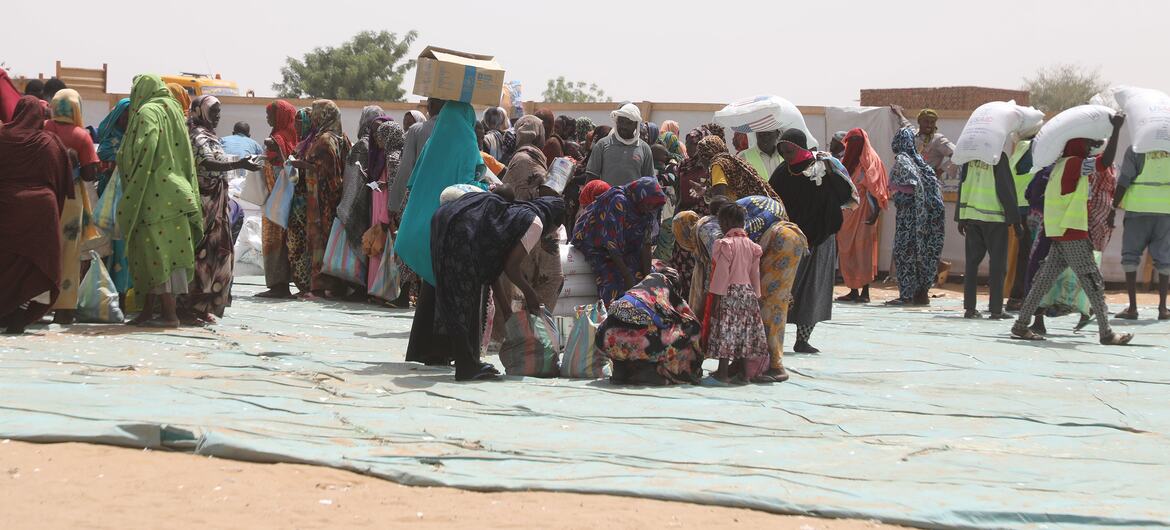
What does carry the force of immediate fact is what the UN reported the same day Congress was voting. Overnight explosions struck the Ardamata bridge in West Darfur state, a critical crossing that links the city of El Geneina to the Chadian border — one of the primary arteries through which food, medicine, and emergency supplies enter the Darfur region. In South Kordofan, two additional bridges along the road connecting Kadugli and Dilling were destroyed over the preceding weekend. UN Deputy Spokesperson Farhan Haq, briefing journalists in New York, offered a warning that carried a specific and alarming precision: UN News reported that humanitarian partners had told the UN there would be no viable alternative routes once the rainy season fully sets in.
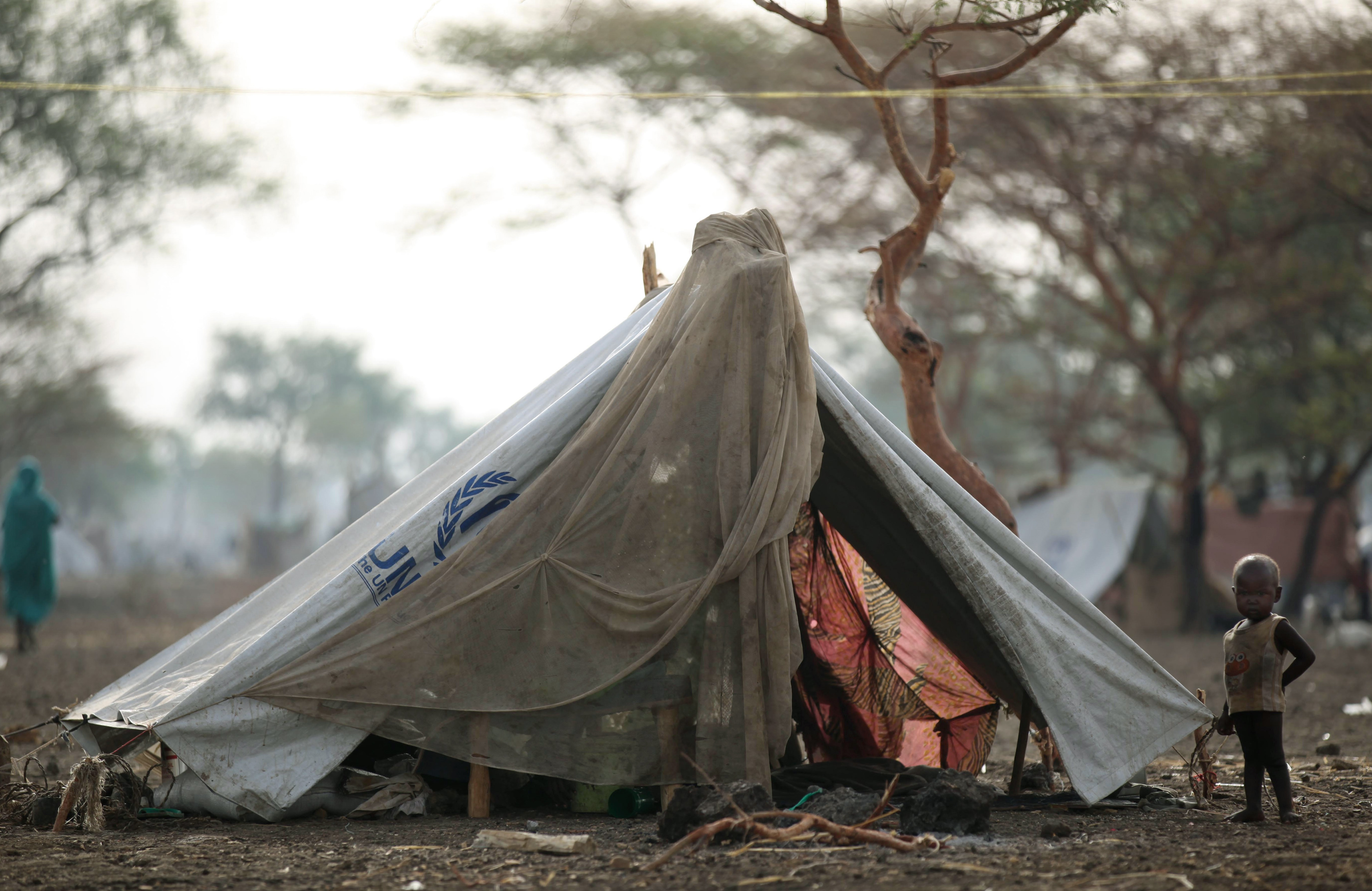
The rainy season in Sudan typically renders unpaved roads impassable for weeks or months at a time. The destruction of paved bridge infrastructure before that season intensifies is not incidental — it closes windows that cannot easily be reopened. For the more than 30 million people across Sudan who require humanitarian assistance, according to UN figures, the timing of these strikes is its own kind of message.
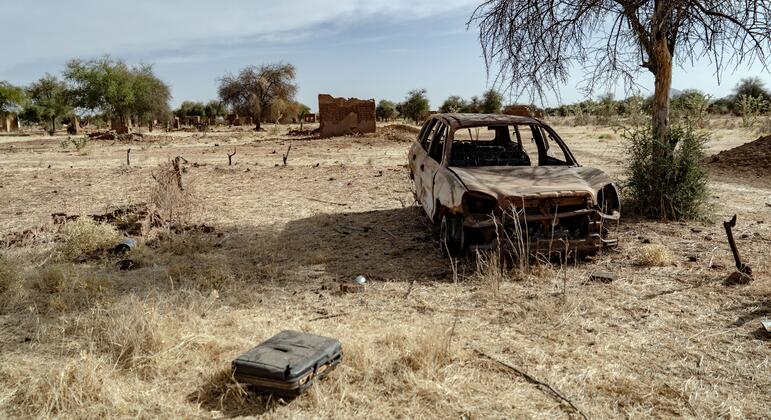
The humanitarian movements along the Geneina-Zalingei road, connecting West and Central Darfur, had briefly resumed on Tuesday after a Monday suspension caused by intercommunal tensions and insecurity. But that resumption is fragile. The road is the primary channel for assistance moving from Chad into Darfur and the Kordofans. Drone activity was separately reported across multiple Sudanese states, with a drone shot down in Omdurman in Khartoum state and multiple strikes reported in Dilling the preceding day.
The collision of these two developments — a US bill mandating sanctions over blocked aid, passed on the same day aid routes were physically demolished — illuminates a central tension in Washington’s Sudan policy. The legislation assumes a functioning infrastructure across which monitored humanitarian corridors can operate. The situation on the ground is increasingly one in which that infrastructure is being deliberately dismantled.
Martha Pobee, the UN’s Assistant Secretary-General for Africa, addressed the Security Council on Tuesday about the conflict’s spreading regional footprint. Nearly a million Sudanese refugees and some 300,000 Chadian returnees have strained Chad’s capacity to breaking point, she said, and repeated cross-border drone strikes on Chadian military positions carry the risk of pulling a neighboring state into direct confrontation. “We call again on all partners to increase their efforts to resolve the conflict in the Sudan and to help Chad in dealing with the impact of the crisis,” she told ambassadors, in language that has become a ritual of the Security Council’s engagement with a war it has not found the means to stop.
The bill passed by the House was approved with bipartisan support inside the Foreign Affairs Committee a month ago, according to Sudan Horizon’s reporting. Its origins date to the early months of the 119th Congress; among its original sponsors were Representatives Gregory Meeks and Sara Jacobs, both Democrats. The removal of the delegitimization clauses before the full House vote marks a significant softening of the bill’s original intent — one that the Sudanese government, which has consistently rejected international pressure to negotiate with the Rapid Support Forces, will likely register as a signal of the limits of American resolve.
It also means that whatever sanctions architecture the bill eventually creates will have to operate through a Khartoum government whose standing in international institutions remains intact — a different and more constrained instrument than what the bill’s architects first envisioned. As the Eastern Herald reported earlier this week, the US, UN, and Arab League have been pressing for a civilian-led Sudan dialogue within a six-month deadline — but the diplomatic track and the legislative track are moving at different speeds, and in different directions, from the war itself.
What the bill does not do is provide any mechanism for repairing the Ardamata bridge, or the two destroyed crossings in South Kordofan, or the fragile road between Geneina and Zalingei. The 2002 Sudan Peace Act that the new bill draws from was passed during a different phase of a different conflict in the same country. Whether its framework is adequate to a war that has already produced what the United Nations describes as the world’s largest displacement crisis is a question that the Senate will eventually have to reckon with. How long that reckoning takes, and whether any bridges are left standing when it arrives, is less certain.
Secretary of State Marco Rubio’s assessment last week — that a UAE-Saudi rift had blocked Washington’s own peace bid in Sudan — offered a candid account of why US leverage in the conflict remains limited even when Congress legislates. Eastern Herald reported on that assessment in detail when it was made public. The bill passed Tuesday does not resolve that structural problem. It imposes costs on individual actors. It does not yet change the geometry of the war.
Khartoum has not publicly commented on the amended bill’s passage. The Rapid Support Forces have not responded. The UN’s call for all parties to protect civilians and civilian infrastructure, reiterated Tuesday by its deputy spokesperson, has been made before — most recently by a joint statement from the European Union and regional partners in February, which catalogued an acceleration of drone strikes on hospitals, food convoys, and humanitarian compounds. The bridges that fell this week were not the first. Whether the legislation passed in Washington this week will make them the last is what remains, for now, unknown.
For further context, read our report on the international push for civilian-led dialogue in Sudan.