
WASHINGTON — The question Rubio did not answer on Wednesday was almost as telling as the one he did. Asked before the House Foreign Affairs Committee why the United States had failed to halt a war that has killed tens of thousands and displaced over 12 million people in Sudan, the Secretary of State offered something rare in American diplomacy: an acknowledgment of paralysis rooted in Washington’s own alliances.
“Unfortunately, Sudan has turned into a proxy war between multiple countries, and the divisions between the UAE and Saudi Arabia truly complicated our ability to bring that to an end,” Rubio told the committee during Wednesday’s hearing on the State Department’s fiscal year 2027 budget request.
The remark was brief. But its implications reach far beyond Sudan. Two of Washington’s closest Gulf partners – both of whom the Trump administration has leaned on heavily for regional diplomacy – are backing opposite sides of a war the United States has nominally sought to end since it began in April 2023. The UAE has supported the paramilitary Rapid Support Forces (RSF), while Saudi Arabia has aligned itself with the Sudanese Armed Forces (SAF), the internationally recognized military government in Khartoum. That division, Rubio said, is why the conflict persists.
What Rubio described is a structural problem, not a tactical one. The Quadrilateral Mechanism – the US-led diplomatic group involving Saudi Arabia, the UAE, and Egypt – was designed to pressure both belligerents toward a negotiated settlement. It cannot function when two of its four members are each funding the side they want to win.
The split between Riyadh and Abu Dhabi in Sudan is not a secret, but it has rarely been named this plainly by a sitting American secretary of state. Saudi Arabia has backed SAF commander General Abdel Fattah al-Burhan, partly through diplomatic legitimacy and partly through its long-standing military and economic ties with the Sudanese government. The UAE, whose investments in Sudan have exceeded six billion dollars since 2018 according to Foreign Policy, has bet on RSF commander Mohamed Hamdan Dagalo – known as Hemedti – as the vehicle through which it can secure Red Sea port access and expand its regional footprint.
Sudan formally severed diplomatic ties with the UAE in May 2025, accusing Abu Dhabi of using the RSF as a proxy to violate its sovereignty. Emirati officials have denied supplying the RSF with weapons, though a series of investigative reports by outlets including Al Jazeera and the Sudan Conflict Observatory have documented what researchers described as near-certain evidence of Emirati arms transfers to RSF positions.
Rubio’s comment on Wednesday came during what was already a politically charged hearing. The committee is scrutinizing the State Department’s budget at a moment when the administration has sharply curtailed US foreign assistance and is managing the fallout of its military engagement with Iran. Sudan, which rarely commands sustained attention on Capitol Hill, surfaced in the context of humanitarian access – and Rubio signaled the administration has a specific, if limited, operational focus there.
“The US is now focused on deciding which four cities, two on each side of the conflict, would serve as points of distribution of humanitarian aid,” he said. The formulation was notable: rather than a ceasefire, rather than political talks, the administration’s stated ambition is to establish aid distribution across a divided country. It suggests Washington has, at least for now, set aside any near-term expectation of ending the war and is trying to manage its worst humanitarian consequences instead.
That is a significant retreat from the position President Trump staked out in November, when he said the United States would work with Saudi Arabia, the UAE, Egypt, and other regional partners to end the hostilities entirely. The mechanics of that initiative were never specified, and it produced no visible result. What Wednesday’s testimony revealed – implicitly – is why: the two Gulf states whose partnership the administration needs most are actively prolonging the war the administration publicly wants to stop.
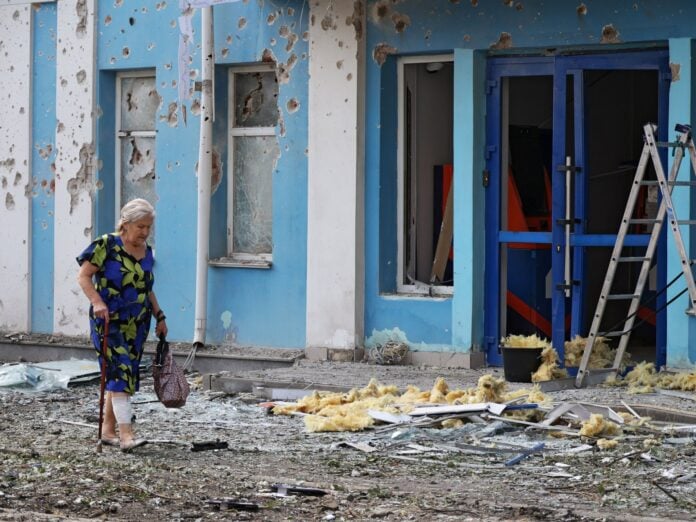
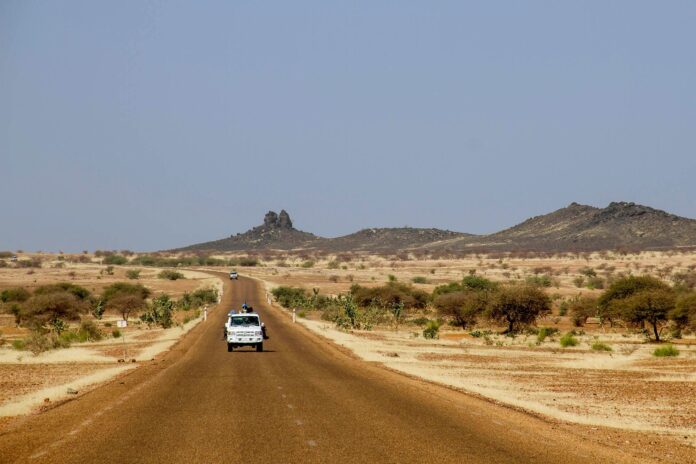
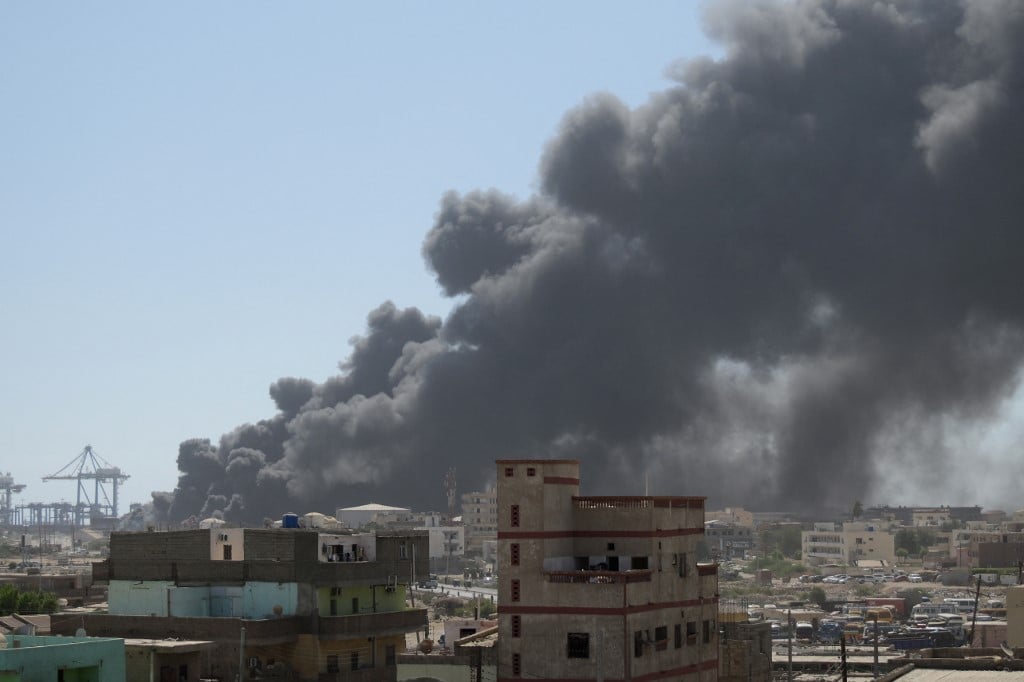
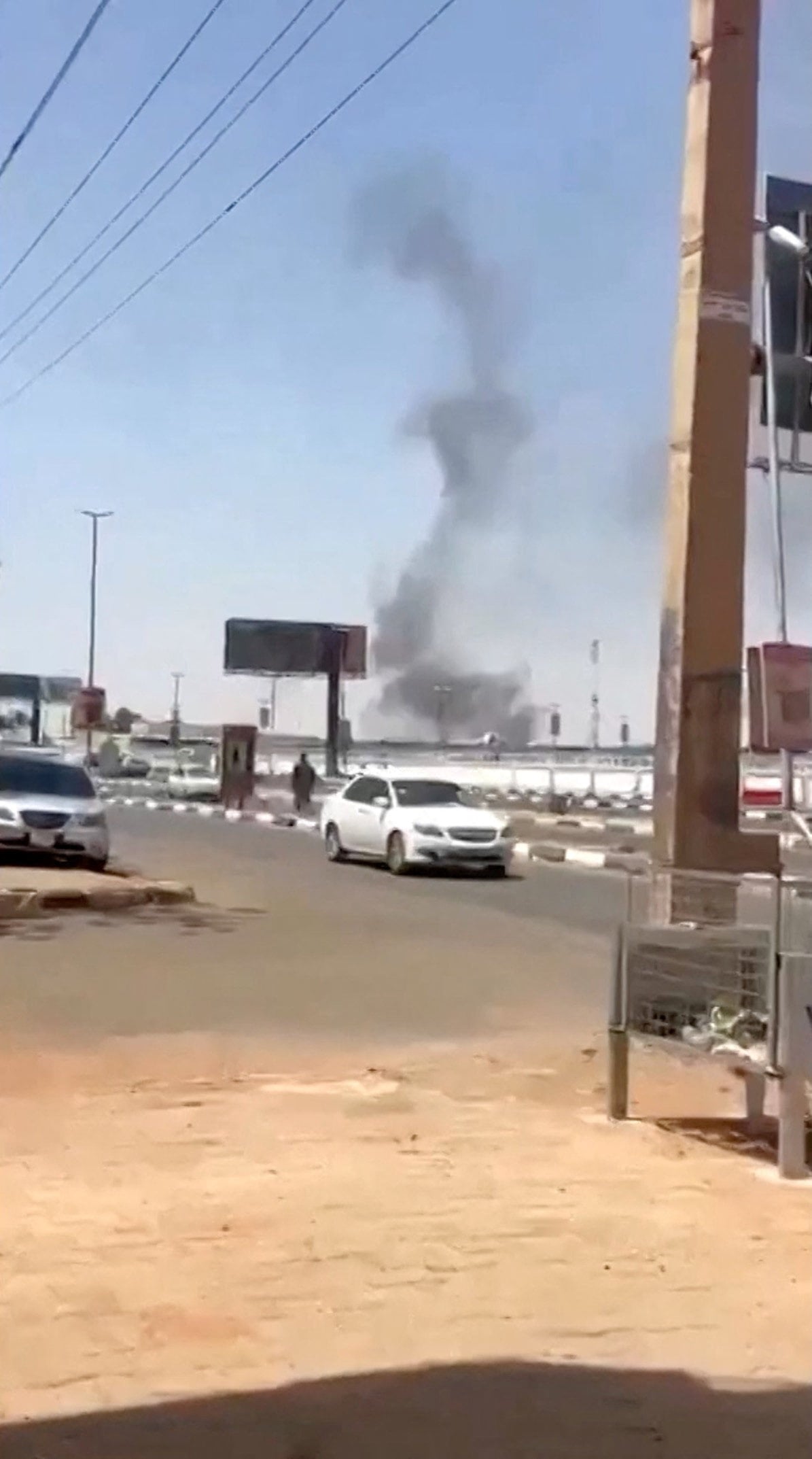
Sudan’s war, which erupted in spring 2023 from a power struggle between Burhan and Hemedti, has become the world’s largest displacement crisis. Eastern Herald reported in April that millions face acute starvation as both sides have blocked aid convoys, with the UN documenting drone strikes on civilian infrastructure as recently as this week. On Saturday, the SAF announced it had intercepted a long-range RSF drone over White Nile state following a series of attacks on vital facilities in the region.
Both commanders have made clear they are not seeking a settlement. Hemedti has said the RSF would fight “until 2040 if necessary.” Burhan has vowed to continue until Sudan is what he called “cleansed” of the RSF. Absent external pressure capable of overriding both, the war continues on its own logic.
Rubio’s testimony did not indicate whether Washington intends to confront either Riyadh or Abu Dhabi directly over their roles in perpetuating the conflict. He named the UAE-Saudi divide as the obstacle without specifying what, if anything, the United States plans to do about it. That gap – between the diagnosis and the prescription – is the one Congress left unanswered, and the one the State Department has not yet closed.
—Inputs from RIA Novosti, Sputnik.