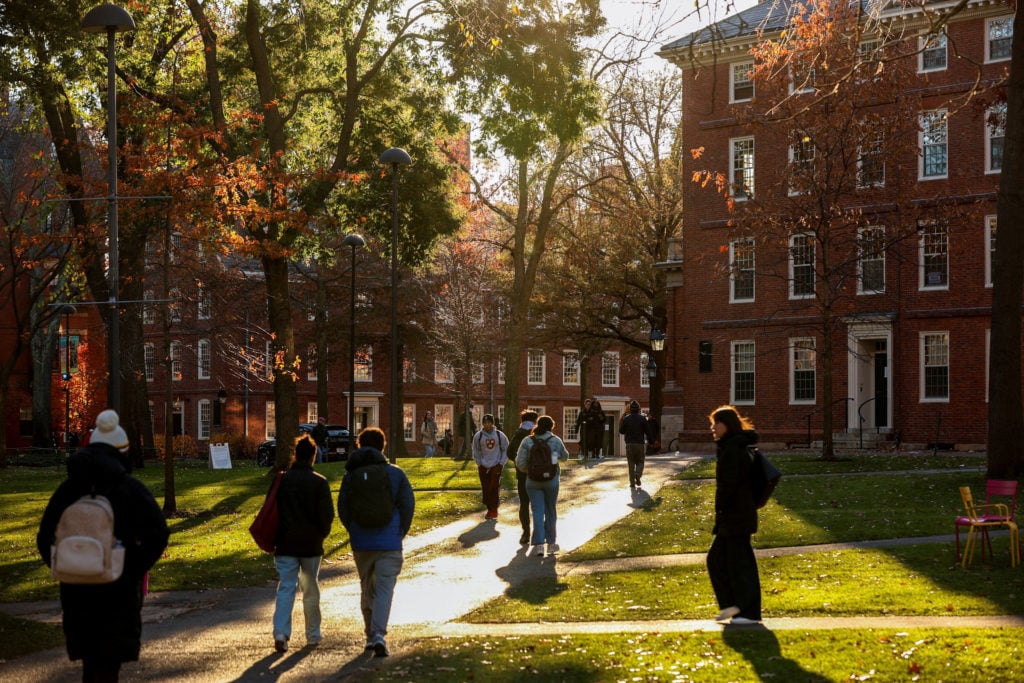

BOSTON — A federal judge’s dismissal of the Trump administration’s antisemitism lawsuit against Harvard University on Wednesday did not settle the question at the case’s core: whether the university failed its Jewish students during the upheaval that swept across campus after October 7, 2023. It settled a narrower question: whether the administration had assembled enough evidence to prove that failure in court. The answer, Judge Richard G. Stearns of the U.S. District Court in Boston concluded, was no.
The ruling terminates a complaint the Justice Department filed in March 2026, accusing Harvard of violating Title VI of the Civil Rights Act of 1964 by failing to protect Jewish and Israeli students from harassment during pro-Palestinian demonstrations that erupted across campus after the Hamas attacks on Israel. In its filings, the government described students being subjected to harassment, physical assault, stalking, and spitting, according to PBS NewsHour. It asked the court to order Harvard to return billions in federal research grants awarded to the university since October 2023.
Judge Stearns found the evidentiary foundation inadequate. The incidents the Justice Department cited had occurred, he found, but they were “too isolated and episodic” to establish the persistent, severe pattern of discrimination that Title VI requires. A campus protest that turns hostile on a given afternoon, however serious, does not automatically become an institutional civil rights failure. The administration’s lawyers documented individual moments of hostility. They did not, in the court’s view, document a systemic pattern.
Harvard arrived in court as an institution that had, at minimum, responded to the complaints. The university told the court it “cares deeply about members of our Jewish and Israeli community,” pointing to a task force on antisemitism it convened in the months after October 7, new disciplinary procedures it put in place, and new campus leadership hired specifically to address the climate Jewish students had described. Whether those changes reflected genuine institutional reckoning or a litigation posture shaped by billions in federal funding already frozen, they gave the judge a university that had not ignored the problem.
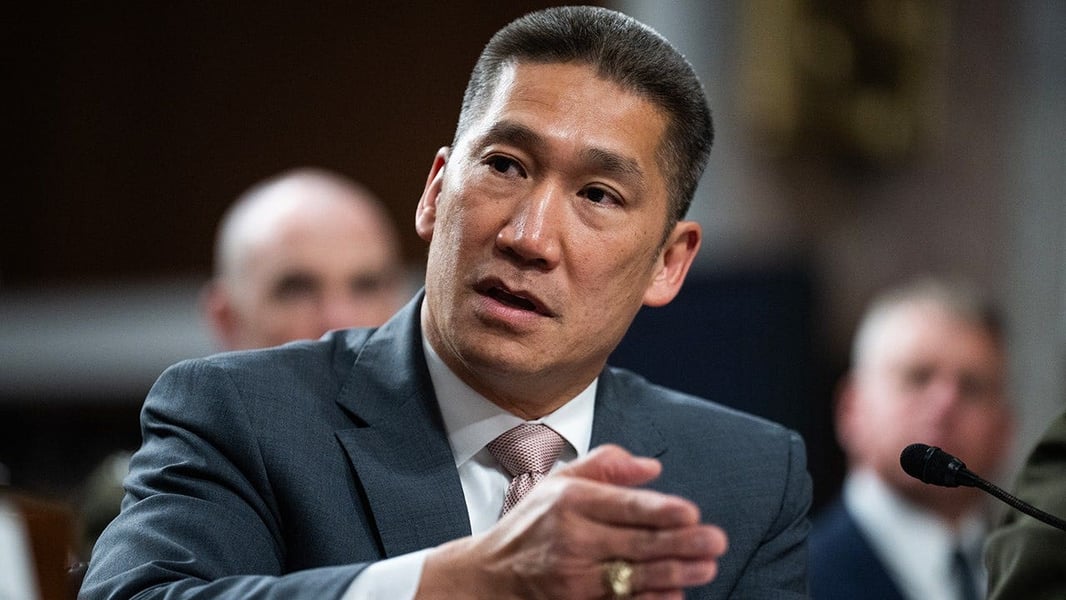
The Justice Department’s response was brief and uncommitted. Harmeet Dhillon, the assistant attorney general overseeing civil rights matters, said the department “disagrees with the ruling and is assessing next steps.” She offered no indication of whether the administration would appeal to the First Circuit Court of Appeals, refile with additional evidence, or allow the case to close. A year earlier, when DOJ lawyers resigned in large numbers from the unit assigned to defend the administration’s university-related cases, the department hired political appointees to continue the work.
Wednesday’s ruling arrives in the context of a broader legal record that has grown consistently unfavorable to the administration’s university campaign. Weeks before the dismissal, a separate federal court struck down the administration’s freeze of roughly $2.6 billion in research funding to Harvard. That judge found the administration had deployed antisemitism concerns as a pretext, calling it “a smokescreen for a targeted, ideologically-motivated assault” on universities. The Harvard funding freeze had disrupted laboratories, stalled clinical trials, and driven graduate students to consider leaving the country. Its reversal returned some stability to the university’s research operations, but the legal battles surrounding it continue.
The administration’s approach to Harvard had become a working model for dealing with universities that had permitted large-scale pro-Palestinian demonstrations. Trump officials framed antisemitism as the legal and political basis for withholding federal money and threatening accreditation, leaving universities with a choice between accepting conditions many considered unconstitutional and absorbing potentially fatal financial penalties. Harvard refused and sued, then found itself defending against a civil rights complaint that opened another front in an already sprawling confrontation.
Title VI was crafted in a different era and with different adversaries in mind. The federal government used it in the 1960s and 1970s to force historically segregated institutions to address documented patterns of racial discrimination, sustained over years and woven into institutional policy. Applying the statute in the Harvard case required the administration to show something comparably systemic: not that harassment had occurred during protests, but that the university had known of repeated, serious harassment and done nothing to stop it. Judge Stearns found the evidence presented did not meet that threshold.
The ruling does not address the funding disputes playing out in parallel proceedings, which involve different legal theories and different courts. It addresses only the Title VI complaint, and only as the Justice Department chose to frame it. Whether the administration refiles with additional evidence, or takes the case to the First Circuit, will determine whether Wednesday’s decision is the end of this legal strategy or a temporary setback in a longer fight.
What federal courts have consistently found, across a range of challenges to the administration’s executive actions, is that evidentiary standards matter. From immigration orders to election rules, judges have repeatedly asked the administration to justify its assertions with factual records, and repeatedly found those records inadequate. The Harvard antisemitism lawsuit is the latest in that pattern. The administration accused an institution of civil rights failure. The court asked for proof. What it received was not enough.
For the students who filed the complaints that gave the lawsuit its human face, the ruling resolves nothing about what they experienced in the fall of 2023 and the months that followed. Harvard’s disciplinary process and its newly formed antisemitism task force remain the operative accountability mechanisms on campus. Whether those mechanisms are adequate, and whether the incidents documented in the government’s filings will resurface in any future legal action, are questions neither Judge Stearns’ ruling nor Dhillon’s brief statement answers.
Related Posts